
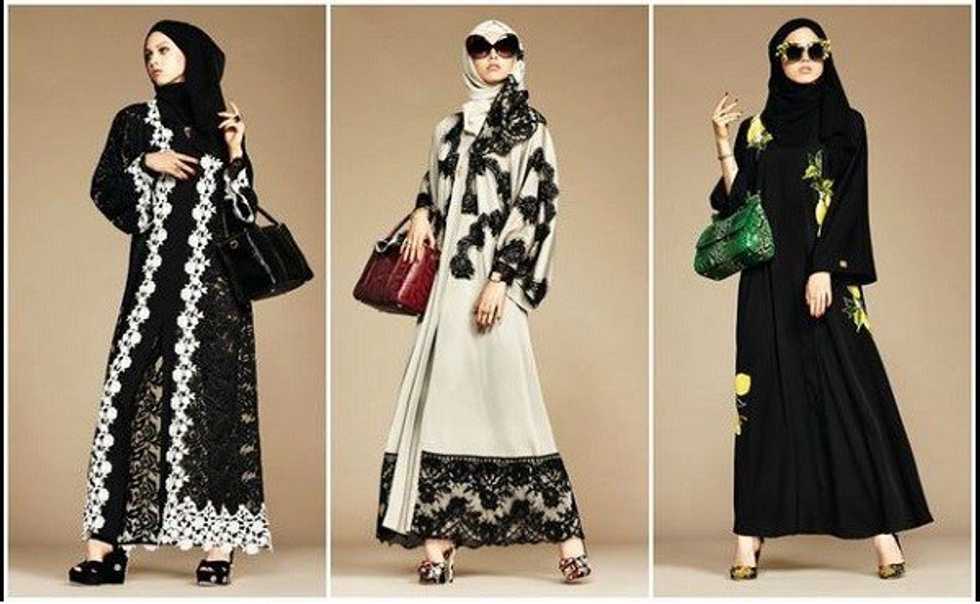
Over the years, many people have asked me about my headscarf. This is by far my favorite topic to discuss because my scarf has become one of the most integral parts of my identity. A month or two ago, I was ecstatic to find out that H&M and Dolce and Gabbana had featured covered models. My belief that modesty can be fashionable and edgy was finally being represented in mainstream fashion. But of course, there is always push-back. This past week, I watched a video in which French minister for women's rights, Laurence Rossignol, went on a public TV outlet and denounced these fashion brands' actions saying that they are "stepping back from their social responsibilities and in a certain way, they are promoting the confinement of women's bodies". This comment shocked, angered and saddened me as a young woman who proudly boasts her religious attire.
There are several reasons for women to be veiled.
One of my very good friends in high school, Hira Qureshi, started wearing hijab for a simple, powerful reason: because God had ordained it. To her, that was enough to cover up.
Another one of my good friends wore it because a family member had been diagnosed with cancer. This reminded her of how short life is and how she did not want to die not being the best version of herself. Again, an important and powerful reason.
I wore it because I had reached a level of mental maturity that led me to be comfortable in wearing the hijab. It's pretty difficult to explain if you haven't been through it but I'll try. It partly had to do with the fact that I was back home in Egypt. Being in a country where the majority of people are Muslim and not being covered was kind of off-putting but it didn't bother me enough to push me to wear hijab. Ever since I was a baby, I'd play dress up in the scarf, so I was already kind of familiar with the idea of being covered.
My parents were not very supportive of my choice. I was around 12 years old, and they were scared that if I came back to America at the end of that summer and if I saw how everyone else was not covered, I would regret my decision. I stuck by my choice and haven't regretted it for the past six years.
Since then, I've grown to understand the true meaning of the Hijab, and it has just made me love making this decision even more. The purpose of hijab isn't to cover yourself because boys have wandering eyes, and you need to protect yourself. Men are not sexually starved animals. A woman doesn't need to look a certain way to avoid those looks. Men should be able to control themselves and respect the woman in front of them regardless of how they dress.
Part of it was I wanted people to know I'm a Muslim. You can say it's my religious uniform. I'm comfortable with people knowing this part of my identity and I want them to know that they can ask me about it at any time. Secondly, I want the person talking to me to judge my personality based on the words I say and the quality of my thoughts and actions, not how I look. Lastly, I do it because it feels right. I've never felt freer. Some women get empowerment from dressing less, some from dressing more. Everyone should be able to do whatever the hell they want as long as it doesn't harm anyone. The only person I harm when I wear hijab is myself, when I can't fasten the pin and poke myself in the face.
Unfortunately, there are women around the world who are coerced into dressing a certain type of way. But it is not the scarf that is oppressive but rather the action of forcing someone to cover up that is. These women's voices are genuine and must be heard.
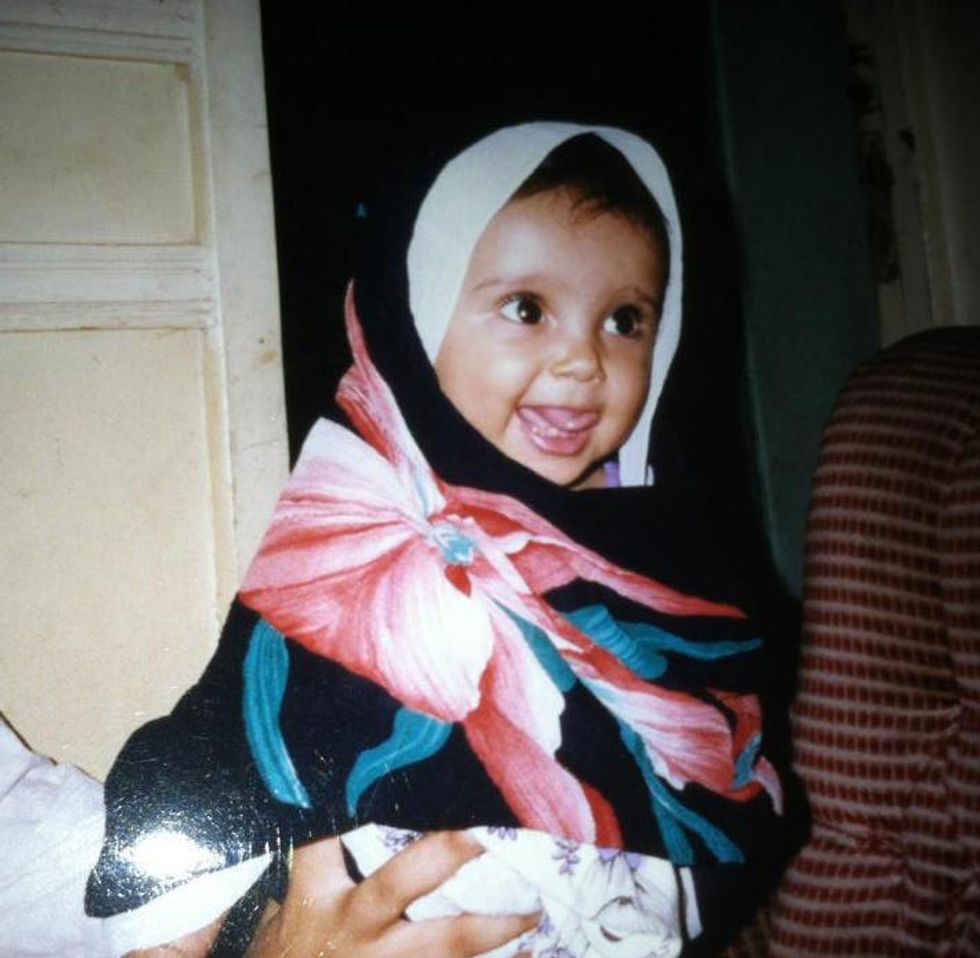
[I was a pretty damn cute Hijabi]
And just like there are many women who sport their hijabs, there are others who don't and their reasons are just as important and legitimate.
The majority of women I talk to who don't cover tell me the same phrase, "It's too much responsibility." Being labeled at a first glance and somehow being seen as the spokesperson for your entire religion is too much pressure. Being viewed as "extreme" and only as a symbol of your religion rather than a person who practices a faith is not what they want to sign up for. Everything you do will be seen as, "Oh I guess Islam says this."
One of my friends specifically told me that she had been covered before, but she was bullied by her peers relentlessly until she took her hijab off. The insults and lack of acceptance made her uncomfortable in her skin. She felt like she couldn't be herself. People passed judgement on her before they even met her. She wasn't ready for that kind of commitment.
The oppression people speak of when women are forced to wear the hijab is the same oppression that is present when women are forced to take it off. Every woman's experience with her religion is different and each and every story is relevant. To paint the canvas with a broad stroke is determinantal to both populations.
People see a veiled Muslim woman and associate certain personalities and characteristics with her. I've personally been thought to be quiet, submissive and oppressed. Things that are the entire opposite of me.
I am a strong, stubborn and out-going young woman. I rap Drake and J. Cole in my car on the way to school. I am a student at Nova Southeastern University. I am a proud sister of Sigma Delta Tau. I am a decent basketball player. I am a Muslim and I choose to wear the hijab.
To all Muslim women, covered or not, it is not your responsibility to defend or explain your religion. It is your choice. It is your decision. Choose to be comfortable in your body because in the end, you're going to be living with it for the rest of your life.
You keep doin' you booboo.