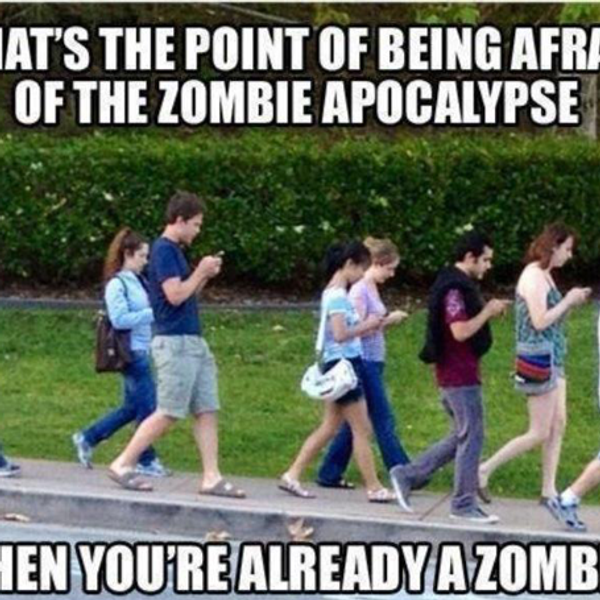

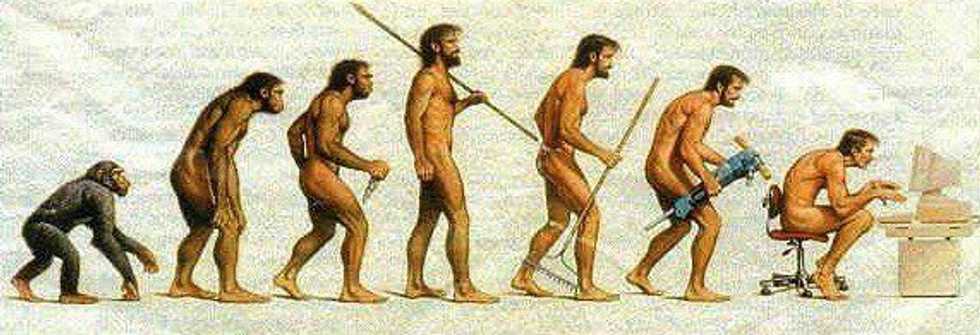
Technology has completely altered and revolutionized the way we talk, think, interact and go about our everyday lives. You’ve heard this all before -- that we’re connected with the entire world, but more disconnected than ever. That we share everything we do via social media, but only display the good parts of our lives while hiding the bad. That we yearn for constant engagement, but shy away from face-to-face interaction. You’ve probably also heard that humans now have a shorter attention span than that of a goldfish. In fact, you should be proud of yourself if you’ve even read this far.
I know I’m preaching to the choir when I say this, because none of this should come as a surprise to any of us. We’re all aware (painfully, perhaps) of the influence that technology has had on society, in particular the younger generations. But there’s one important aspect of this digital revolution that has affected us more than we realize, and that has not been sufficiently addressed.
Efficiency.
We’re always striving for efficiency, for ways to exert the least amount of effort and spend the least amount of time on something. Although this is extremely important and beneficial for certain parts of our lives, it’s ultimately detrimental. We’ve started to take shortcuts through just about anything. And in the process, we’ve started to take shortcuts through the human experience.
Think back to the last time you waited in line for something. Let’s say you were at Starbucks. The line was most likely out the door, so you probably put your head down with your earbuds in and your favorite apps in constant rotation on your phone. If you were smart, you would have ordered your drink in advance on the Starbucks mobile app so that you could eschew the torturously long line and, inevitably, spend more time on your phone in another location until your drink was ready. It sounds great on paper, right? Similar new technology and developments have certainly made our lives a little easier and a lot more efficient.
Now think back to the last time you waited in line for something before the age of smartphones. If you were with a friend, you probably made conversation with them as the line moved ever so slowly forward. But what if you were alone? What could you have possibly done to entertain yourself while awaiting your caffeine fix?
There are a few possible options. You might have just let your mind wander aimlessly. You might have people watched and taken in your surroundings. If you were daring, you might have even exchanged a few words with the stranger in front of you. But to be completely honest, I have no idea what you might have done because I myself cannot remember what I did while waiting in line before smartphones.
This is just one example of the many shortcuts that we’ve started taking through life. Before smartphones, we might have had a chance to make a new friend while waiting in such lines. We might have made a lot of observations about our surroundings by people watching. And in reality, the line would not have even felt that long because our attention spans were not so short.
We’ve taken shortcuts in other places as well. We text instead of making a call, because texting requires mere seconds of thumbs flying across a touch screen, but calling requires synchronous communication that might last a whole minute. We read books on our Kindles and our Nooks and our Macs so we can save paper and precious space that these works of literature take up. Environmental crises aside, isn’t there a little part of us that misses the feel and smell of those worn and torn pages? The average book weighs, at most, a few pounds. At what point did that become too much to carry? Because our iPhones, a measly five ounces, are certainly weighing us down more.
We have dating apps that require you to respond to someone’s message within 24 hours. Beyond that extremely narrow window of time, their message goes away, because if someone doesn’t check their phone, and that specific app, and formulate a thoughtful response immediately, they’re clearly not worth our valuable time. We go to coffee shops that have their Wi-Fi password on full display, because they’re operating under the assumption that we’ve come to study and sit on our phones, or that we can’t afford to spend a few hours using up precious data that probably costs less than the macchiato we just bought.
Above all, we are constantly seeking improvement and progress in society, and we demand instant gratification. But progress is not synonymous with positive (please see hoverboards as a reference). And stable is not synonymous with stagnant.
So don’t skip the Starbucks line and just see what happens. The time you would have saved by ordering in advance would have been spent on your phone anyways. Keep calling your friends, even if they don’t sound too pleased to hear your voice (I’m speaking from experience here – my apologies to all my friends that I call when I could easily just text). They’ll come around eventually. And most of all, stop taking shortcuts and just slow down. You’ll be surprised by how much more there is to see.