A couple months back, I got my very first job with a water treatment company. It has been absolutely astounding at the information I have discovered! That said, I have come across multiple consumers who are blind, and stay blind, to what's really in their city water.
Not only that, but my local city water company released information that we now have E. coli in our water; this just made everything worse when the county tried to fix it with loads of bleach.
But what really is in most city water? Well, this can differ from place to place, but one thing I do know is the point of receiving water is a whole lot worse than the point of distribution. Take a look at the following image:
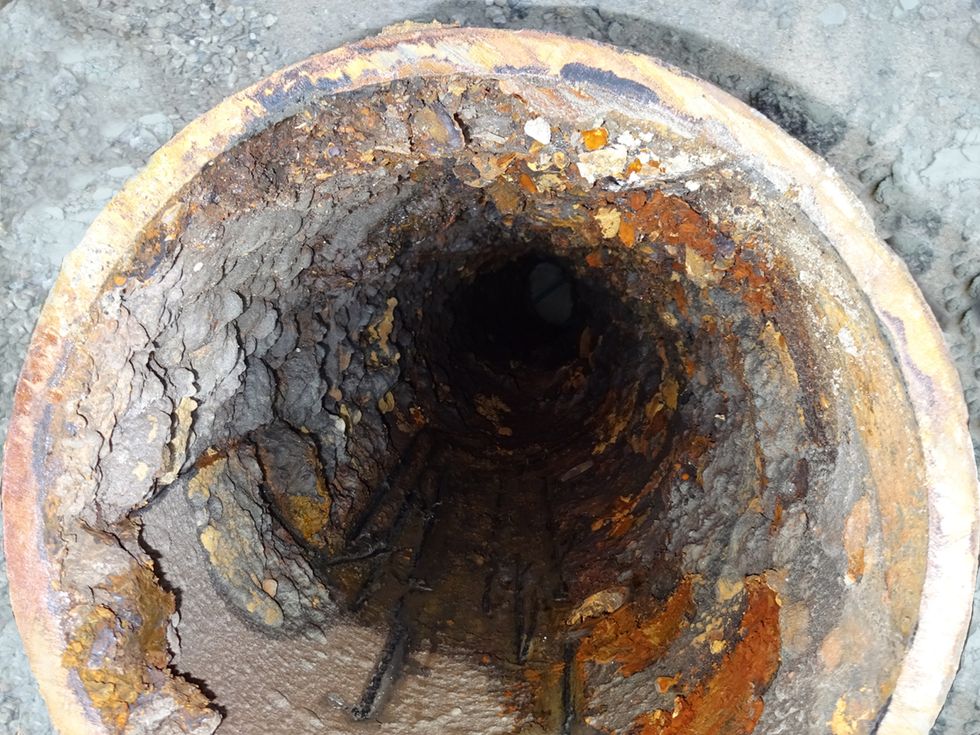
This is a picture of what's inside the main water line for Manhattan. Imagine what all can be picked up on its way to your sink, ice maker, washer, shower, etc. This means those silly, little water tests the city does periodically have nothing to do with you. Why? Those tests are performed at the point of distribution: aka before going through yucky water pipes.
The EPA guidelines allow for certain levels of many different substances such as fluoride, chloride, total dissolved solids, copper, aluminium, iron, sulfate, zinc, etc. The total dissolved solids (or TDS for short) can be anything that dissolves in water like salt, chlorine, magnesium, potassium, etc.
Scared yet? Me too, but there's even more to be aware of: primarily scaling. Scaling happens in your water heater, kettles, etc. I first noticed this in my tea kettle months before landing this job.

Obviously, that is a more major case of what happens over time, but you get the drift. This scaling is caused by limestone and other contaminants in your water. It can build up and cause appliances to use more power than before. Take a look at this water heater:
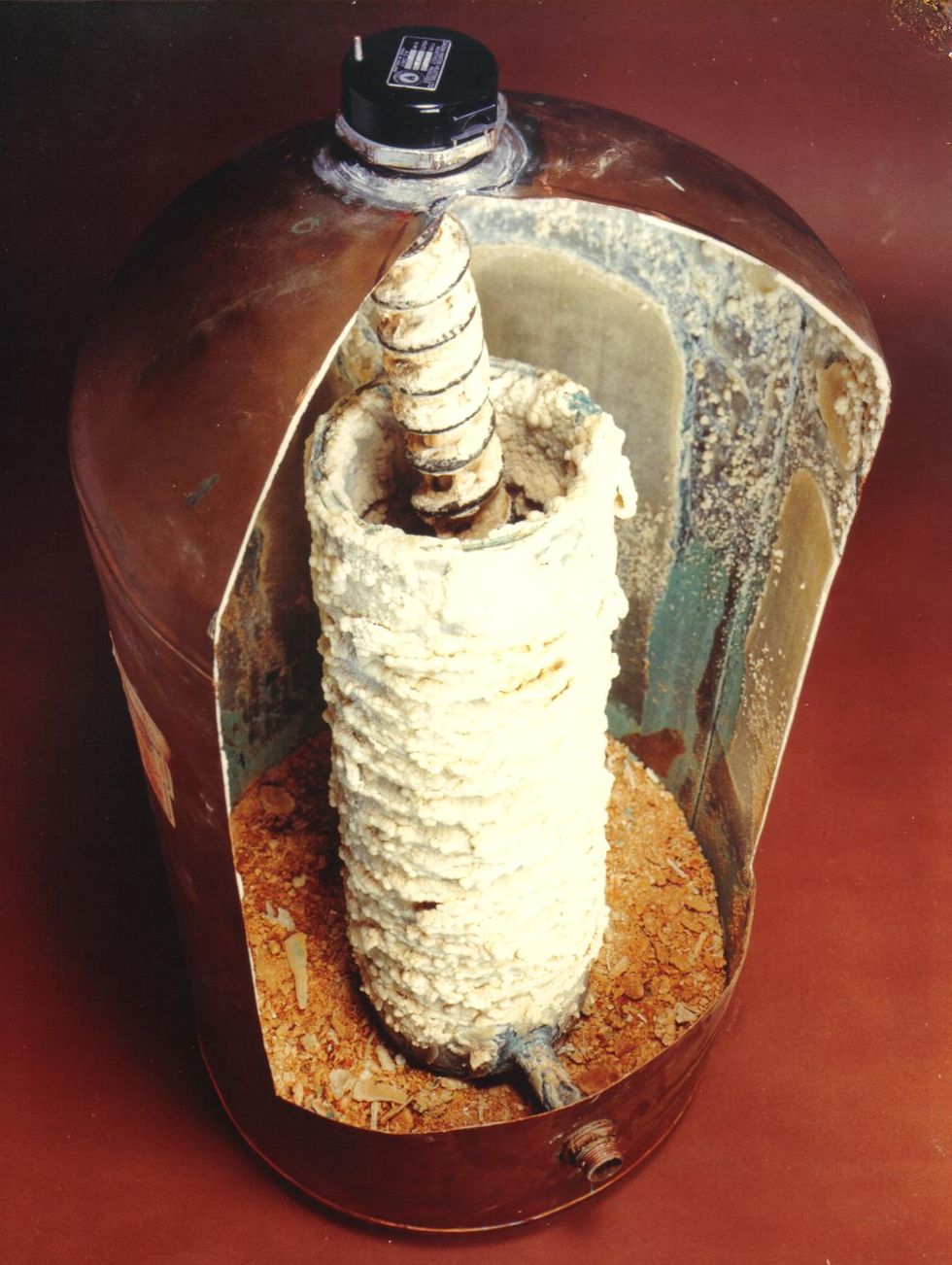
With time, you'll see that water heater becomes useless because of this one problem, and that's when you loose money going towards further investments to simply heat your water.
Too many people are drowning in these issues. So what can you do about this problem?
Well, one option is to invest in a water softener system, but not all softeners are the same. I would recommend calling up your nearest RainSoft company or a similar company to be sure you get the best recommendation possible.
Another way to help the situation is to take action! Speak to benefit everyone and talk with someone from the EPA or your local city water provider. You never know what one voice can do!