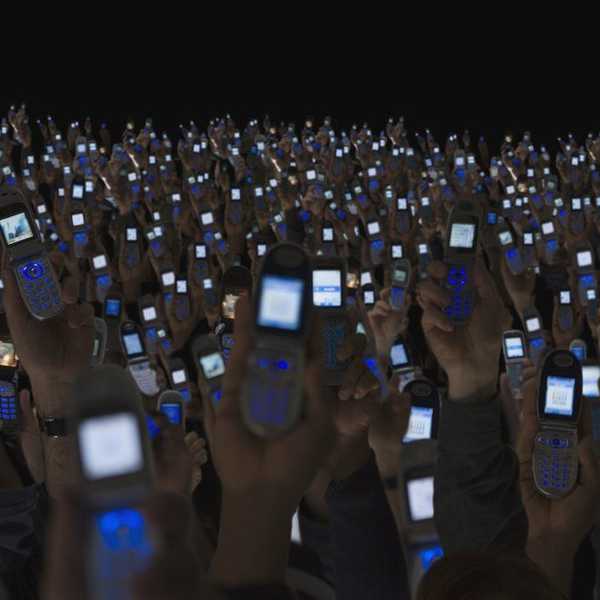
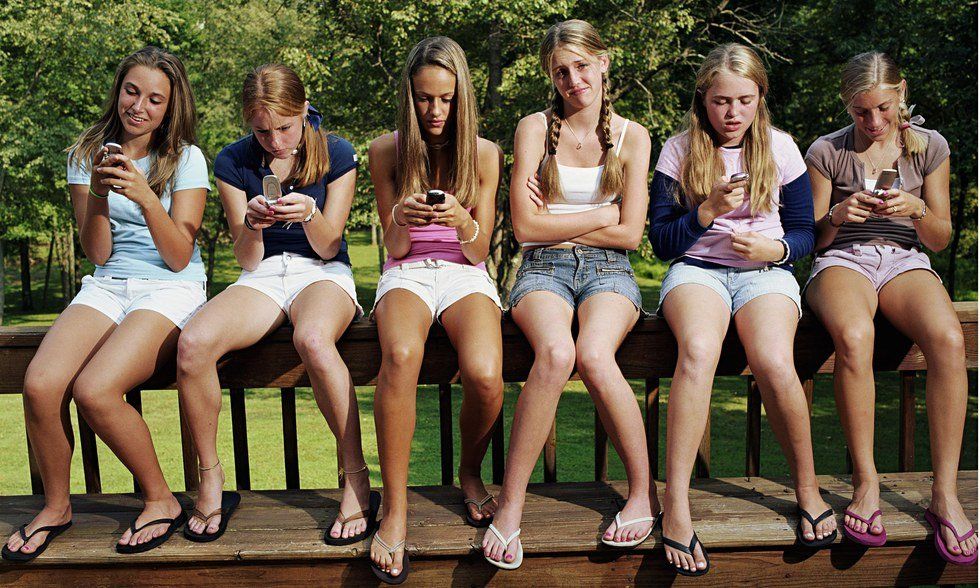
It's not unknown that texting, snapchatting, and direct messaging has become the norm for communicating in our generation. Mostly everything has become virtual. Communicating with friends, family, and even strangers has become something where a few taps of the thumb and some emojis has replaced an actual in-person conversation. People hide behind the comfort and the disguise of their phone or laptop screen.
Because the world has become so technologically driven there has become a disconnect between how people act online and how they act in person. People can be whoever they want to be behind their computer screen, but in person their true colors come out. Texting and social media are not reality. The emotions behind the message are invisible to the person receiving the message. The photos are cropped and edited to perfection.

There are instances where people's personalities are completely fabricated through the use of technology. A seemingly outgoing, chatty, and social person could be the exact opposite in reality. When you interact with this person in real life it may be a struggle to connect because of this fake persona they took on over text. Technology allows people to pretend to be someone who they are not.
Another way people tend to falsely present themselves is to paint the perfect online image of themselves. No one is that happy, that skinny, that busy, that popular, that perfect. Real people have flaws that platforms such as Instagram hide. The perfect beach photo could really be hiding a miserable and insecurity filled afternoon. A picture is worth a thousand words you just don't know what they are. Seeing others virtual selves drives people to be over critical of themselves.
An example of this is an Australian model on Instagram, Essena O'Neil, who claimed that this platform was "contrived perfection made to get attention” The captions on her photos were changed to reflect the reality behind the photo. They truly emphasized the disconnect between how she appeared online versus how she felt in reality.

I have a lot of respect for my friend who wrote an article about how she deleted her Instagram for her first semester of college so she could spend time really getting to know those around her instead of just basing how she viewed them off of an online edited profile. As she said "Insta-stalking someone doesn't even begin to scratch the surface of getting to know them as a person. I don’t want any preconceived assumptions about a person based on their Instagram presence to affect my chances of being their friend"
“The more time we spend interconnected via a myriad of devices, the less time we have left to develop true friendships in the real world.” -Alex Moritt
It's clear that virtual profiles and virtual communication skew reality. On that note, "Be careful who you pretend to be. You might forget who you are" -unknown