
It only makes sense to me that we should start from the beginning and work our way forward. It stands to reason that a well-rounded understanding of this country, its law, and its division will only come from knowledge about how we were assembled.
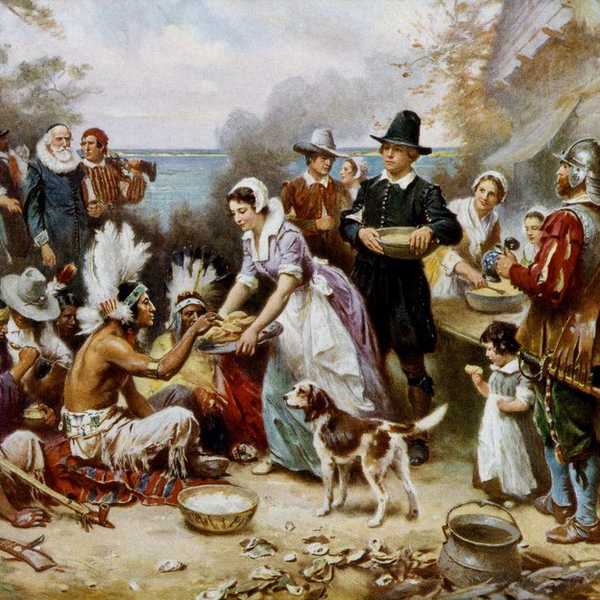
The history Place has a decently condensed timeline (although I have a supplementary link on the construction of race and the institution slavery here) about the colonization of America, but to be brief, America was “founded” (Can you really “find” a place that was already inhabited by millions of people?) by Christopher Columbus, or Cristóbal Colón, who’s landing in Hispaniola in 1492 made America susceptible to European colonization and resulted in the genocide of the Native American people through spread of diseases. Eventually, Spain’s power in our neck of the woods was diminished by England’s presence in much of what we now know as the 13 colonies that began the United States of America. 1607 marks the first permanent colony in Virginia and then because Native Americans were dying out and there was a need for more manpower, specifically men that were knowledgeable about certain crops, England participated in the transatlantic slave trade with the first Africans arriving in the colonies in around 1617.
All of that was roughly condensed and simplified on my part (I hope that you will take more time to look into the information that I presented starting with the links that I provided), but my point in emphasizing this specific sequence of events is to begin to show the pattern between race and greed. Servitude was not assigned to individuals based on their race until after a series of uprisings (i.e. Bacon’s Rebellion and John Punch). All races were working beside each other and social mobility was made possible by the fact that servitude was not a fixed position in the beginning. A series of laws were then written up and enforced to divide the servants and squelch the disruption. Whites were put against blacks and natives in the name of competition, then the division was validated through eighteenth and even nineteenth-century “science,” and voila! After years of ingraining an unhealthy and primitive mentality into the minds of the laborers, our government (or perhaps it would be better to describe them simply as “the powers that be”at that point time) had officially attached to our history a deep sense of distrust and misinformation. Race was not the initial dividing factor. The laws show a history in which the dividing factor was money through false implications of race. It’s a very crafty distraction seeing as how today’s more advanced scientific research has declared that race is not biological, but a part of a social construction that we have devised.
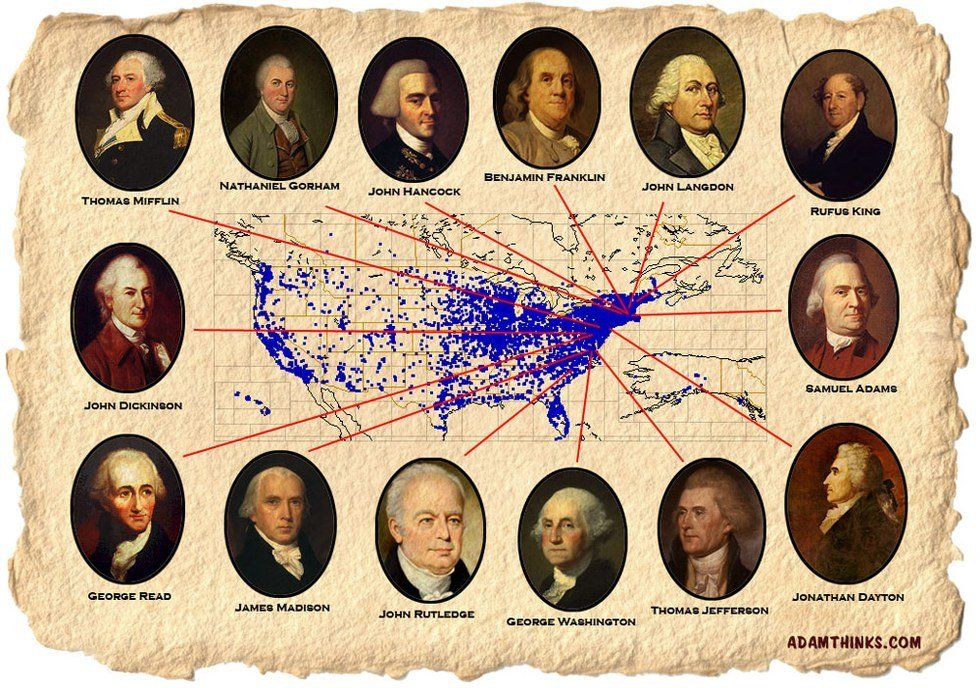
Now we focus in on the 1760’s and the fallout with Great Britain. Thomas Jefferson is given the task of writing our Declaration of Independence. I have a link to the first draft here, but will delve further into its language and meaning.
He opens with a very strong statement about humanity and advancing from “subordination” by beginning with a list of complaints and explanations for the necessity of cessation from an oppressive force. Then he proceeds to proclaim that should a people’s right to “life, liberty, and the pursuit of happiness” be violated, that there is just cause for said people to remove the standing government and institute a new one provided that some prudence is involved. “All experience hath shewn that mankind are more disposed to suffer while evils are sufferable, than to right themselves by abolishing the forms to which they are accustomed, but when a long train of abuses and usurpations, begun at a distinguished period, and pursuing invariably the same object, evinces a design to subject them to arbitrary power, it is their right, it is their duty, to throw off such a government and to provide new guards for their future security.” It appears to be a strongly held sentiment of his that oppression should be fought with erasure and a more effective replacement. However, among his complaints, there is a flaw in his ideals that reads: “he has endeavored to bring on the inhabitants of our frontiers the merciless Indian savages, whose known rule of warfare is an undistinguished destruction of all ages, sexes, & conditions of existence.” “Savage” is such a harsh, divisive word that there is a clear undertone of resentment here. The colonists are feeling abandoned by their parent country and left alone to defend themselves from natives who are feeling very defensive about their land being taken over and their people being killed and forced into servitude by newcomers. This contradiction essentially negates his earlier statements about “all men” and “mankind,” unless he doesn’t consider them to be human or he doesn’t consider them to be citizens of the up and coming country.
Interestingly enough, He then writes: “he has waged cruel war against human nature itself, violating it’s most sacred rights of life & liberty in the persons of a distant people who never offended him, captivating & carrying them into slavery in another hemisphere, or to incur miserable death in their transportation thither…he has prostituted his negative for suppressing every legislative attempt to prohibit or to restrain this execrable commerce:and that this assemblage of horrors might want no fact of distinguished die, he is now exciting those very people to rise in arms among us, and to purchase that liberty of which he has deprived them, by murdering the people upon whom he also obtruded them; thus paying off former crimes committed against the liberties of one people, with crimes which he urges them to commit against the lives of another.” A different, more understanding tone is taken here in regards to race. He opens with a statement condemning the Transatlantic Slave Trade with reference to the Middle Passage (the trip to America from Africa, for my readers who are unfamiliar with that term). Then he shifts the blame in such a tactful way that it would be quite possible for the reader to forget that his own Virginia House of Burgesses passed some of the very first laws in relation to race and division. (If you opted not to check out the link above from the virtual Jamestown site, I would ask that you do so. The site has a lengthy list of laws and information about the early colonial days put together by Virginia Tech professor, Crandall A. Shifflett.) This passage would be left out of the final draft, but the passage referring to natives as “savages” is still a part of our Declaration of Independence today.
While the promise of life, liberty, and the pursuit of happiness is defended in this document to a certain extent, it is also denied to specific groups of people which only perpetuates more division. As the United States of America was being constructed, so was the racial hierarchy that we now know today. With this information, we can begin to understand the context upon which our country was founded and who it was founded for.
“Whether the succeeding generation is to be more virtuous than their predecessors I cannot say; but I am sure they will have more wordly wisdom, and enough, I hope, to know that honesty is the 1st chapter in the book of wisdom.” -- Thomas Jefferson