
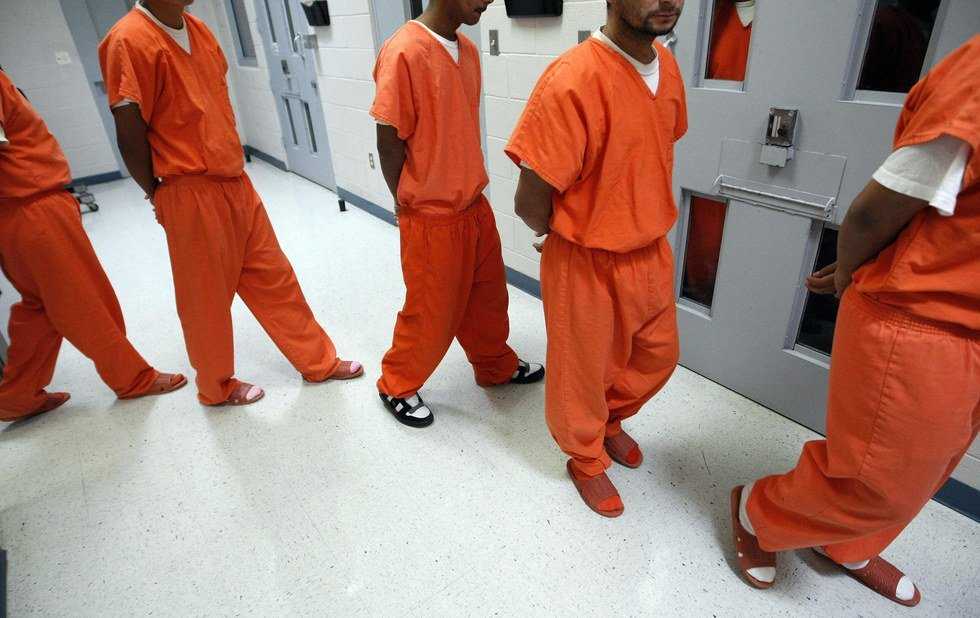
The U.S. Sentencing Commission released roughly 6,000 federal prison inmates serving severe sentences for low-level drug offenses.
The inmates were released between Oct. 30 and Nov. 2, 2015. The action is the result of the sentencing commission’s program “Drugs Minus Two”, which was passed in November 2014. The release is the largest in U.S. history and will free an estimated 8,550 more prisoners in the next year.
Why, you ask? It’s because our country’s federal prisons are seriously over-populated. A study by The Government Accountability Office showed that, collectively, our penitentiaries were 39 percent over capacity as of 2011. That number is expected to increase to 45 percent by 2018.
This swell in incarcerations not only draws on more taxpayer dollars, it also endangers inmates and prison staff. As jails are forced to squeeze more prisoners into confined spaces, the risk of violence among prisoners increases, as well as assaults on prison guards.
The early releases were also brought about by recent efforts by President Obama’s administration and the judiciary branch to reduce harsh minimum sentencing for non-violent drug offenders. The White House reflects a trend seen in the public majority today. In fact, 77 percent of the American public would prefer for judges to sentence nonviolent lawbreakers on a case-by-case basis.
That being said, many people are concerned about releasing so many criminals back into society. That’s a legitimate concern; the recidivism rate in the United States is at around 50 percent. That means half of the inmates released from federal prisons end up back in prison. This invalidates the sentencing commission’s initiative for some. Others blame high number on poor re-entry programs and a broken criminal justice system.
The fact is that 50 percent rate of return is true of all released prisoners, not just those serving for drug-related crimes.
Why not just build more jails? For one thing, they’re expensive. A better reason is this “solution” would remove pressure on Washington to eliminate mandatory minimum sentences, as well deal out more severe sentences to offenders who don’t necessarily deserve them.
Also, there are stories like these to consider:
In 1999, Sharanda Jones was sentenced to life in prison without parole for a first time drug offense. Her story is one of the examples of disproportioned punishment frequently mentioned by those in favor of justice reform, including the president. The Washington Post recently published a detailed story on Jones, as well as a video portraying her daughter’s struggle without her mother. You can find them here:
http://www.washingtonpost.com/sf/national/2015/07/15/from-a-first-arrest-to-a-life-sentence/
https://www.youtube.com/watch?v=178fbSPubFQ
I don't agree with everything in that coverage, but if releasing 6,000 nonviolent prisoners early prevents more broken homes, I’m down for it.
Cited:
Schmidt, Michael S. "U.S. to Release 6,000 Inmates From Prisons." The New York Times, Oct. 6, 2015. Web.
Horwitz, Sarah. "Justice Department set to free 6,000 prisoners, largest one-time release." The Washington Post, Oct. 6, 2015. Web.