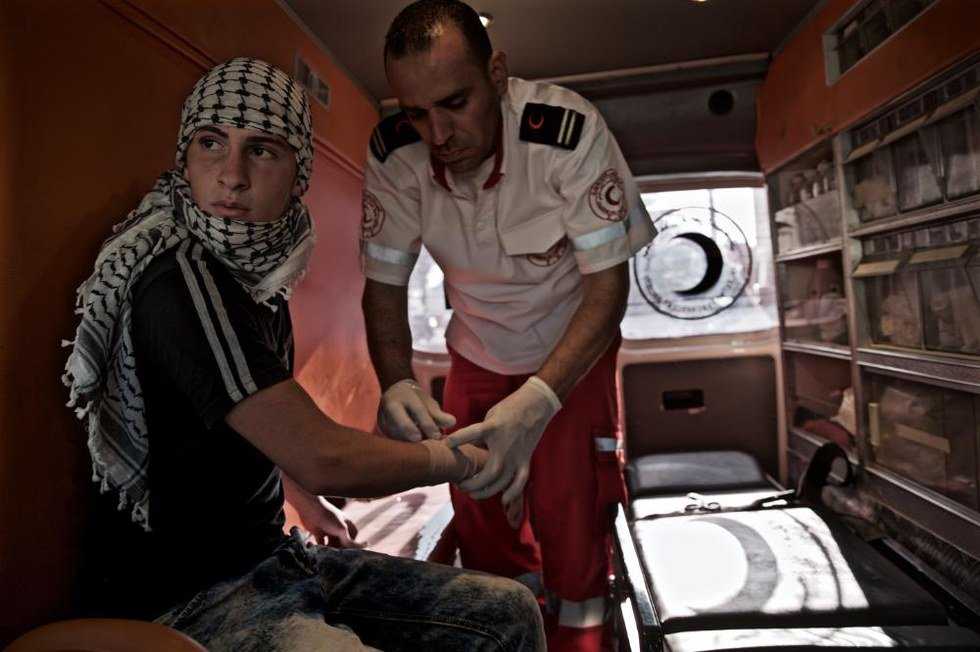
The Israeli-Palestinian conflict is one of the most troubling questions of the 20th century. Not only are the fates of two nations at stake, but the fates of two peoples as well, and the outcome has dramatic consequences for one of the most troubled regions in the world.
This past month tensions have flared in the West Bank, the largest Palestinian territory and the only one still under military occupation by Israel. Random stabbings of Israeli settlers by Palestinian youths have prompted a crackdown in the area by Israeli security forces, which in turn has sparked protests by Palestinians and further escalated confrontations. The unrest has reached enough of a boiling point that some analysts have begun considering the possibility of a third intifada, or armed uprising, beginning.
While unrest in the West Bank has simmered for decades, this past month has seen a dramatic uptick in violence and protests. Eight Israeli settlers have been killed, mostly in knife attacks by disgruntled Palestinian youths. At least 35 Palestinians, however, have been killed by Israeli security forces in the same period. This violence has created a cycle of violence, clampdowns, alienation, and more violence. An Israeli settler is murdered by a Palestinian, Israeli security forces kill the assailant and then enact stricter security measures, Palestinians protest the killing and security measures, protests get out of hand, Israeli forces kill protesters. As more Palestinians become disillusioned with Israel, they attack settlers or take to the streets, starting the cycle over again.
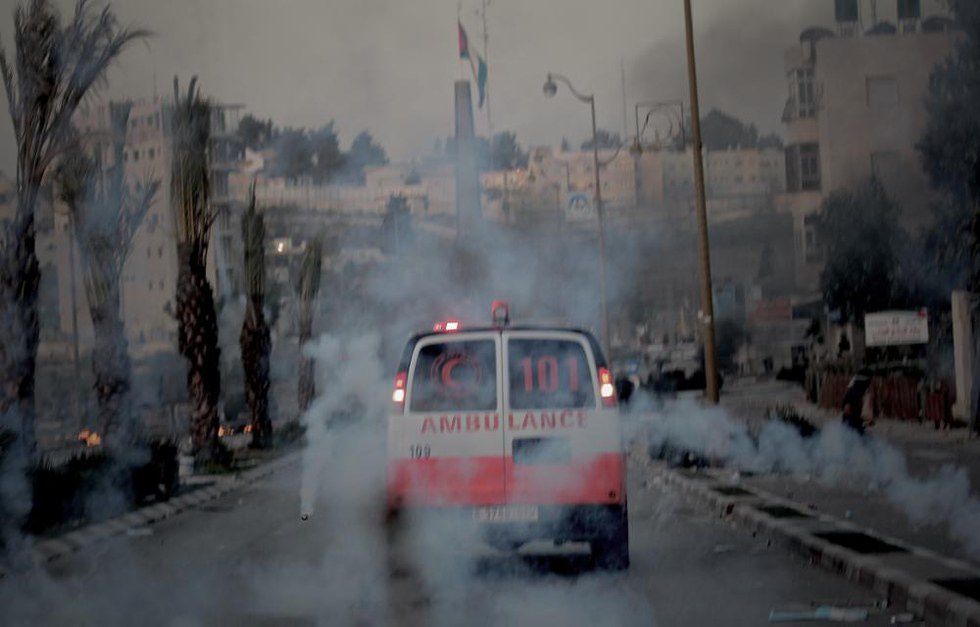
A Palestine Red Crescent ambulance races through tear gas fired by Israeli security forces to collect a wounded Palestinian protester
In an effort to prevent attacks, Israeli security forces have erected checkpoints around the West Bank, especially in the contested city of Jerusalem. Palestinian youths are detained and searched for knives and explosives by police before they can pass into different areas of the city. While these checkpoints may make Israeli settlers feel safer, they only further alienate Palestinians. As a Palestinian shopkeeper in Jerusalem put it, “When a decent guy is harassed by the Israeli police, of course it’s a normal reaction to express anger.” The systematic treatment of all Palestinian youths as potential terrorists does nothing to endear the state of Israel to a troubled generation of a troubled people, further pushing them to the fringes and driving them to act out against Israel.
The unrest reached a flashpoint on October 15, when Palestinian youths set fire to Joseph’’s tomb in the city of Nablus, a Jewish holy site, as part of a “day of rage” called by Hamas, a militant Palestinian faction. The resulting protests saw the death of six Palestinian protestors in clashes with Israeli security forces, who clamped down on the city. The flare in violence prompted criticism of Palestinian Authority President Mahmoud Abbas, who promised that he would do whatever he could to calm down the protests. This is easier said than done, since Hamas, the rival of Abbas’s Fatah party, has been actively stoking the fires of unrest in the West Bank.
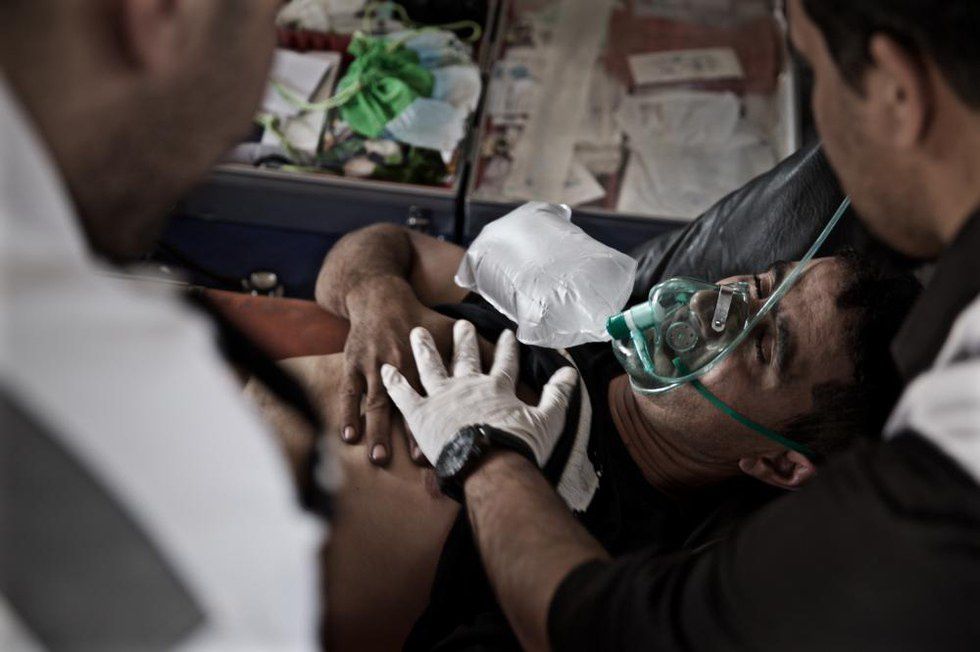
Medics treat a protester suffering complications from inhaling tear gas
So why all the protests? What has gotten these Palestinians all riled up this time? Well, a lot of things. The most important thing to note about the unrest is that it is completely youth-led. The major Palestinian political factions, Hamas and Fatah, are pretty much just cheerleading and doing damage control, respectively, from the sidelines while the youth take to the streets. This is because this generation of Palestinians have grown completely disillusioned with their politicians. On top of the usual complaints, like unemployment and lack of economic and political opportunities, these Palestinians have realized that the peace process with Israel has completely failed, a fact highlighted by Abbas’s declaration at the UN on September 30 that Palestine will no longer abide by the Oslo Accords of 1993, effectively ending the peace process and the search for a two state solution. These Palestinians are convinced that the Israelis will not honor their commitment to finding a way towards a Palestinian state and are instead actively trying to further curtail the rights of the Palestinian people and expand their influence into the occupied territories.
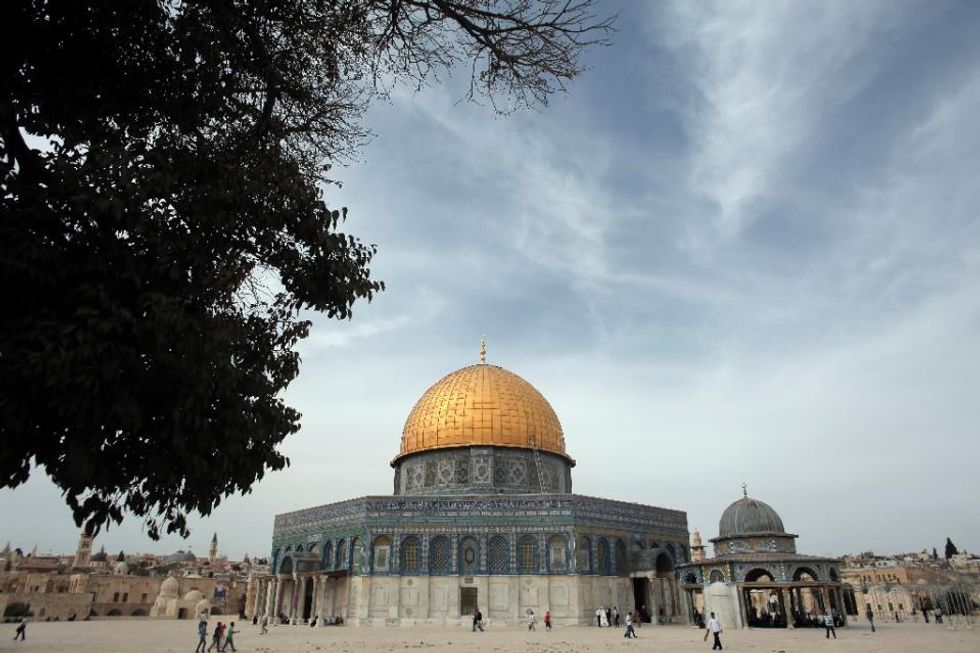
The Dome of the Rock in the Al-Aqsa Mosque compound, one of the holiest sites in Islam
Nowhere is this fear more focused than on the Al-Aqsa Mosque compound, which includes the Dome of the Rock, one of the holiest sites in Islam. Situated on top of Jerusalem’s Temple Mount, the holiest site in Judaism, the mosque has and will continue to be the center of religious clashes between Israelis and Palestinians. The Second Intifada was started over Jewish access to the compound, and many are worried that a third intifada would have similar beginnings. Many Palestinians fear that Israel wishes to at the very least restrict Muslims’ access to the site, if not destroy it entirely. Israel has denied that it has any intent of doing such things, but there is little trust between the two sides now.
The distrust runs deep in this region, and is rooted in nearly 70 years of Arab-Israeli conflict and nearly 50 years of Israeli occupation and illegal settlement of Palestinian territories. Since Israel occupied the West Bank in 1967, Israeli settlers have been expanding into lands populated by Palestinians, forcing them to move into tighter and tighter territories. Despite being declared illegal under international law by the UN in 1980, Israeli settlement of the West Bank has only increased. While the Oslo Accords reaffirmed the illegality of settlements and established the Palestinian Authority to govern Palestinian population centers, the population of Israeli settlers in occupied territories has doubled in the last two decades. While Israel withdrew its occupying forces from Gaza in 2005, the West Bank remains under military occupation and its citizens are denied many basic rights, including certain forms of free speech, like the display of the Palestinian flag at protests. The Palestinians who are taking to the streets do so to protest this occupation and theft of their land.

Map showing Palestinian territories (orange) compared to Israeli-occupied territories (light blue) in the West Bank today
Unfortunately, it is unlikely that the violence will ever stop until a full solution to the crisis is developed. While this spat of killings and protests may not evolve into a third intifada, it is definitely a symptom of the deep problems that exist in the region. Each side is merely retreating further into its own corner as the conflict escalates. Each Palestinian killed is hailed a martyr, a symbol of the occupier’s oppression of the Palestinian people, and every funeral serves as a political statement against Israel. Each Israeli settler or soldier killed is seen as a victim of terrorism and anti-semitism, further evidence that the West Bank must be completely controlled by the Israeli military. Israeli Prime Minister Benjamin Netanyahu, a vocal opponent of Palestinian statehood, even went so far as to blame Palestinians for the Holocaust during a speech he gave on October 20th, saying that it was a Palestinian, the Grand Mufti of Jerusalem, who gave Hitler the idea of exterminating the Jews, a blatant falsehood. Netanyahu has gone on to call the Palestinians involved in the unrest “terrorists,” who will “not enjoy rights.”
Yet, despite the heated rhetoric, one thing is clear: Israel is in control. Those Palestinians clashing with police pose no real threat to Israel. For every Israeli settler killed, four Palestinians die. In the words of one Palestinian protester, a 15 year old named Mahmoud, “they say we are terrorists, but look at them, they have guns and we have only rocks…They are the killers, the terrorists, not us.” With the Oslo Accords abandoned, it is up to Israel to bring order and peace to the West Bank, and to ensure that the Palestinian people’s rights are respected. If they refuse to do that, then it may take a third intifada to force a desperately needed change.