Donald Trump is now the leading contender on the Republican nomination for president, and the same question in my mind is getting more and more eager for an answer, as many of my classmates have asked before: Why is Donald Trump the way he is?
It’s crucial to look at someone’s family influences and youth when judging this person’s character, for those are evident imprints on his or her beliefs. Not permanent, but difficult to change.
Like father like son: Fred C. Trump
Donald Trump is known for denying facts, especially when confirmed evidence show that his father Fred C. Trump was arrested after a Klan riot in Queens back in his earlier years.
According to Washington Post, on Memorial Day 1927, 1,000 white-robed Klansmen marched through through the Jamaica neighborhood in Queens. The parade eventually exploded into an all-out brawl and seven men were arrested.
A report uncovered by the technology blog Boing Boing clearly stated that Fred Trump of 175-24 Devonshire Rd. in Jamaica was among the arrested Klansmen. It was not clear what role Fred played in the brawl, but based on the propaganda illustrated from fliers that were passed around in Jamaica beforehand, “Native-born Protestant Americans dare to organize to protect one flag, the American flag; one school, the public school; and one language, the English language.”
Comparing Donald Trump’s comments and campaign, it’s evident to say that similar belief has been passed down the Trump bloodline along with all the bank accounts.
In an interview with the Daily Mail, Trump denied his father’s arrest when the report came to light last year, “This never happened. Never took place. He was never arrested, never convicted, never even charged. It's a completely false, ridiculous story. He was never there! It never happened. Never took place.”
Also, when he was asked on CNN’s “State of the Union” whether he would condemn the praise of David Duke, the former Ku Klux Klan grand wizard, he claimed not knowing anything about white supremacy and declined to disavow Duke’s comments.
However, denial doesn’t mean it’s false information. It’s a tactic, but it won’t last long.
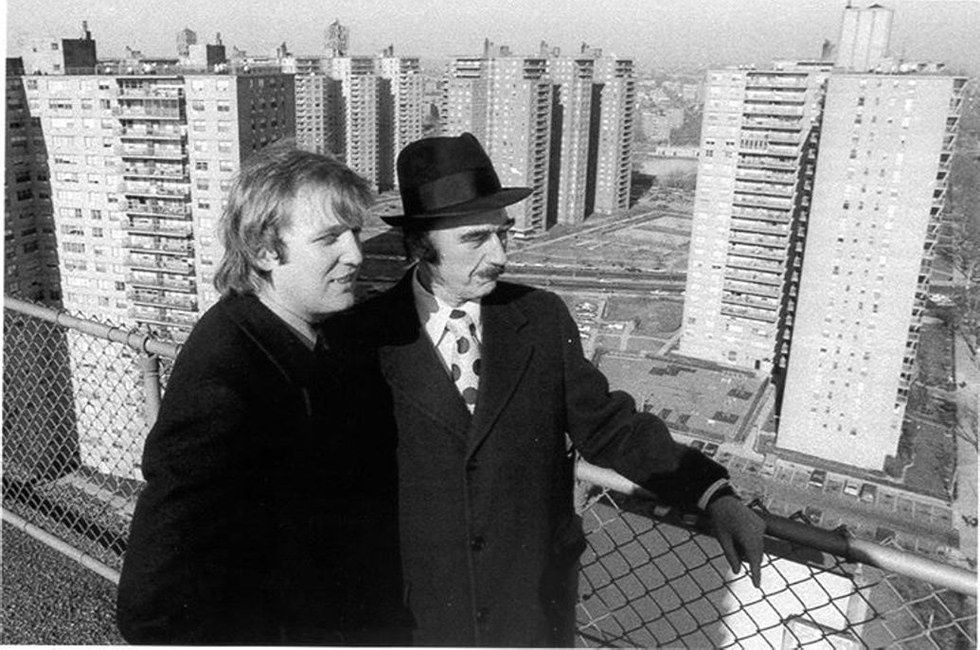
When Donald Trump began his career in real estate, according to CNN, Fred C. Trump, was one of the richest individuals in America, with a net worth of roughly $200 million. (The equivalent today of $1 billion) Fred built 15,000 apartments in Brooklyn and Queens, which generated a river of cash that he used to retire debt and invest in new projects.
Many were his tenants, including folk singer Woody Guthrie. However, Guthrie didn’t have much nice things to say about his landlord Fred C. Trump.
In a recent discovery on Guthrie’s writings by Will Kaufman, a professor of American literature and culture at the University of Central Lancashire in Britain, Guthrie suggested that black people were unwelcome as tenants in the Trump apartment complex, near Coney Island.
According to Kaufman, Guthrie signed a lease at the Beach Haven apartment complex in December 1950. Guthrie wrote about his new “lily-white neighborhood” like this:
I suppose
Old Man Trump knows
Just how much
Racial Hate
he stirred up
In the bloodpot of human hearts
When he drawed
That color line
Here at his
Eighteen hundred family project
The Justice Department sued the Trumps in the 1970s for discriminating against blacks. According to the New York Times, a settlement was eventually reached. But at the time, Trump Management noted the agreement did not constitute an admission of guilt.
Growing up in an environment as such, Donald Trump might as well inherited the concept of “us” and “them”- Native-born Protestant Americans and Aliens.
The young, and privileged Donald Trump: From Military Academy to Show Business to Real Estate
According to Washington Post, Donald Trump was sent to the New York Military Academy by his father in 1959 to be straightened out because of his history of trouble at school. “I liked to stir things up,” Trump wrote in his book “The Art of the Deal."
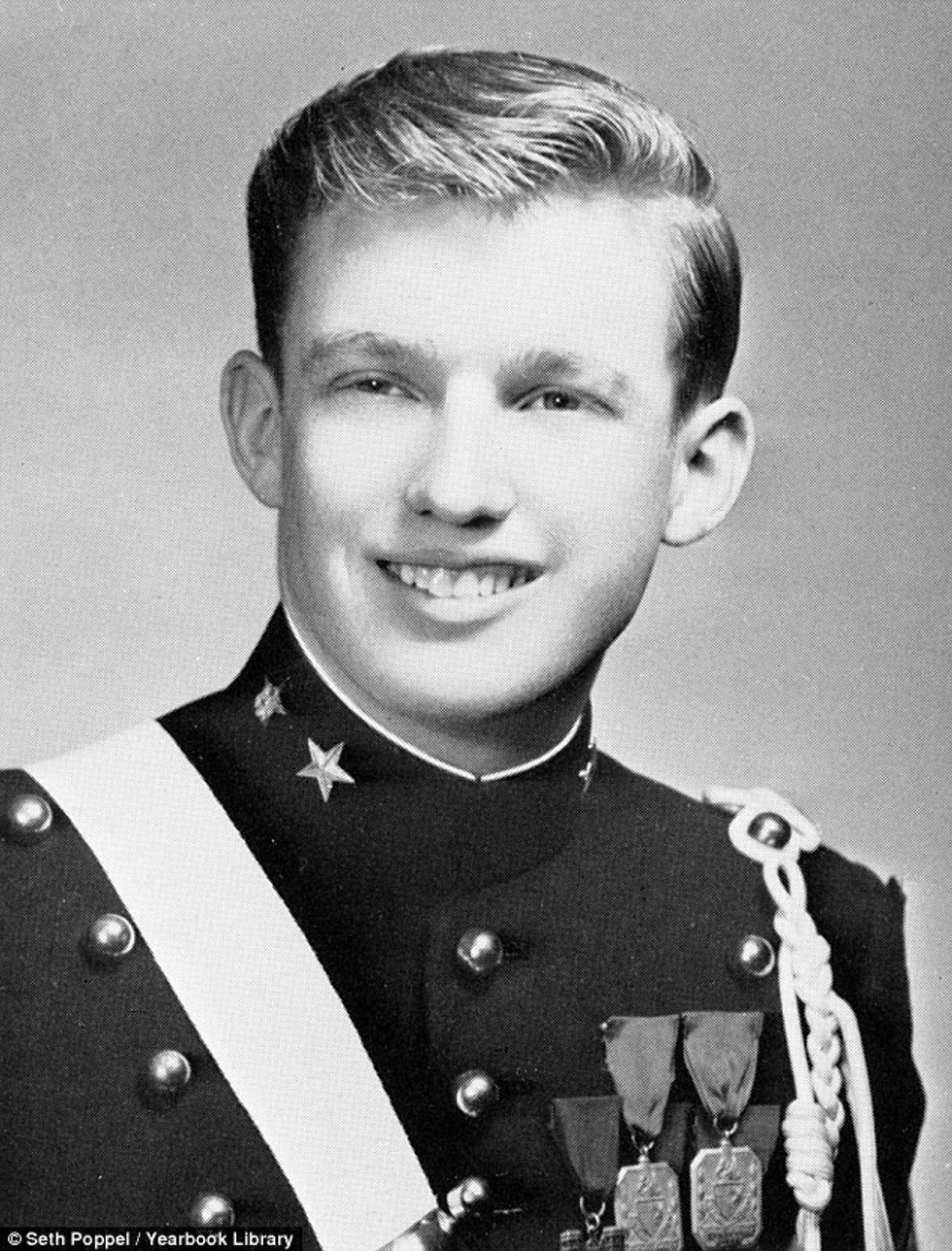
He didn’t do very well in the first few years and remained a supply sergeant when his classmates had already become lieutenants. However, when Trump reached his senior year, he was named a captain. He commended his officers to keep strict discipline. “I did very well under the military system,” Trump recalled, “I became one of the top guys at the whole school.”
But not long after, he was removed from the captain duty to a new job on the school staff. Another prestigious position but with no commanding power.
Trump said he was promoted to that position but his former cadets recalled it differently. They said the school administrators transferred him after a freshman named Lee Ains complained of being hazed by a sergeant under Trump’s command. The school officials were concerned that his style of delegating leadership responsibilities while spending a lot of time in his room, away from his team, allowed problem to fester.
But given his family background and status, Trump got to switch position with a cadet instead of being simply removed from duty, even though the cadet, Bill Specht, who had been at or near the top of his class since arriving at the academy, was not happy to. But order was order, he immediately cracked down on hazing in Trump’s old group, said Ains.
Trump always had a way to somehow claim success even if he did not achieve it at all. He had always been very confident and full of himself. Perhaps the somehow self-formed success played a big part in his self esteem assurance.