Donald Trump embodies the worst possible reaction to the issues plaguing the United States. He is the product of xenophobia, mountains of debt, and misplaced fear of government corruption. Trump constantly plays on these points, claiming his ability to eliminate America’s problems with haphazard policies and a vague promise to “make America great again.” Trump proves as dangerous as he is unqualified, yet he rose to the Republican nomination. He continues to do well in polls. Trump met so much success in this election, leaving millions behind him to wonder how this success could ever be possible.
The factors that paved the way for a Trump nomination are disturbing in their own right. Yet, a closer look uncovers a deeper problem with American democracy.
Dangerous and Unqualified
The Trump nomination sounds almost satirical, a twisted comedy show that couldn't possibly translate to real life. First off, a businessman with no experience in office could not be — and is not — qualified to run a country. Furthermore, Trump has repeatedly demonstrated that he runs his businesses incredibly poorly. If it were possible to run the United States like a business, Trump would likely demolish our economy just as he has bankrupted his own endeavors. Trump is not a politician — this is true — but that is not enough to say that he is not corrupt. In reality, Trump already has an impressive record of lawsuits filed against him to prove his corruptness without having served a single day in office.
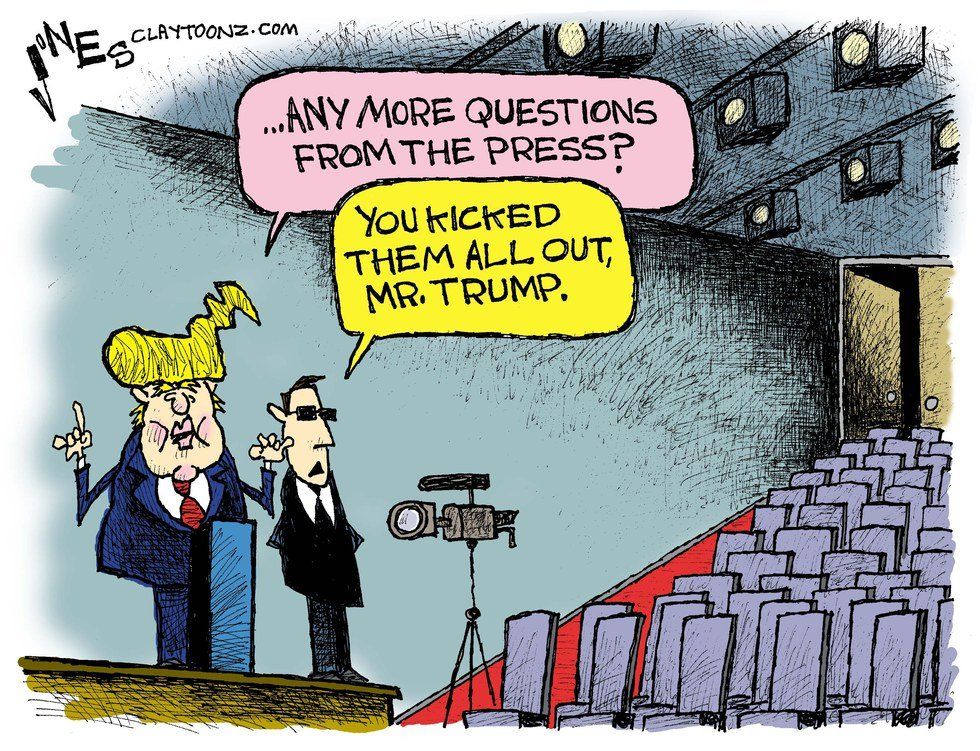
What is truly dangerous about Trump, however, isn’t his alarming incompetence or his sheer lack of morals. It isn’t the rape cases filed against him, or the suspicious tax returns he refuses to release. What is truly dangerous about Trump are his attitudes towards marginalized groups, towards non-Americans, and towards those who oppose him. Trump appeals to America’s latent xenophobia by pinning America’s problems on abstract, existential foreign threats. He blames “Mexicans” for unemployment, painting immigrants as “rapists and drug dealers” to justify building a wall along the border. He describes Muslims as “terrorists,” creating an unwarranted fear for national security to justify closing off U.S. borders to refugees. He attributes gun violence to “Islamic Terrorism,” further building on the us-versus-them mentality he uses to strengthen his alarmingly nationalist rhetoric. Trump plays on fear, dismisses his opponents as “weak,” then presents himself as the only force capable of protecting Americans. Trump ardently advocates for violence, pushing his audience to physically harm anyone speaking out against him at rallies, vowing to bring back waterboarding. He threatens to sue, slander, or harm those who publicly oppose him. Many Republicans express some degree of contempt for Trump, rightly arguing that Trump doesn’t adhere to Republican party values.
Undemocratic Democracy and the Resulting Trump
Trump may have won the Republican nomination by appealing to voters’ deeper fears and concerns, simultaneously taking advantage of a large pool of opponents he consistently dismissed as “weak.” Still, this doesn’t explain why Trump continues to do so well in national polls. After all, a significant portion of the Republican party isn’t exactly thrilled by his victory. There may well be a myriad of reasons contributing to Trump’s high numbers, but I would argue that two reasons contribute most: the split within the Democratic Party and the problem of bipartisan government.
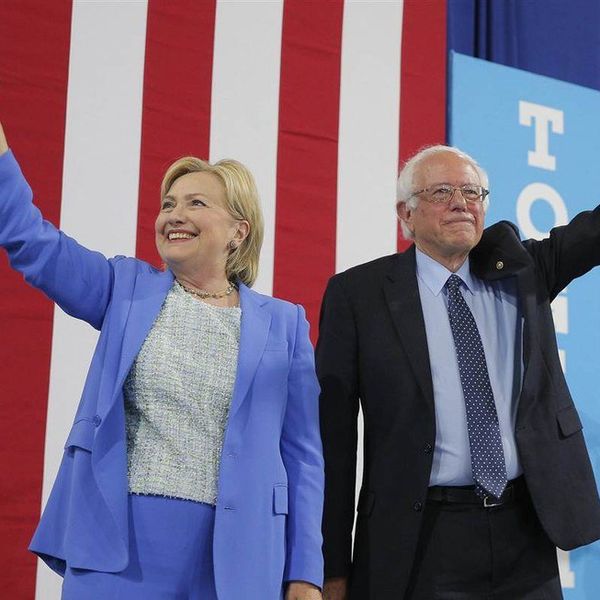
One part of Trump’s success may be attributed to the split in the Democratic Party. After Clinton’s win against Senator Sanders in the Democratic primary, many Sanders supporters called fraud, and maintained that they would not vote Clinton because she did not stand for the same values they admired in Sanders. A few maintained that they wouldn’t vote at all, while others began looking to third parties for a new candidate. Trump himself encouraged this split; he accused Sanders of not sticking to his values by endorsing Clinton and encouraged Sanders to run as an an Independent. Sanders dismissed Trump both times, again voicing his support for Clinton.
Another part of Trump’s success may be attributed to the bipartisan system of American government. In a two-party system, voters default to the candidate nominated by their preferred party. Trump’s platform still adheres to the standard notions Republicans support: smaller government, lower taxes, etc. The Republican and Democratic parties are at a point of divide where each party heavily disparages the other, with relatively fewer voters falling in the middle. Republican voters may still choose to vote for their party’s nominee, even if Trump is not their preferred candidate. Notably, many voters who do fall in the middle describe themselves as “fiscally conservative, but socially liberal.”
What Can We Do?
I voted for Sanders in the primary, and I’m forever grateful that I could cast my first ever vote for a candidate I wholeheartedly supported. I opposed Clinton. I deeply disagreed with her stance on foreign policy, so deeply that I didn’t think anything would get me to check her name in the voting booth. I opposed her for the money she got from Wall Street, for her voting fraud, and for her drastically changing political views over the course of her career. I wanted to vote for Johnson in November because of his stances on foreign policy and immigration. I thought Johnson would help grow the Libertarian party to ensure another Trump-like entity wouldn’t find his way up to the nomination.
It’s hard to see the opposite side from the left. Generally. This time, it’s easy. This time, the opposite side is bursting with police sirens, neon orange caution tape, and emergency smoke signals sent out so frantically that you feel ash in your throat as you try not to choke on the threat of Donald J. Trump. This time, you can see everything very, very clearly.
Your place on the left isn’t great. You don’t really want to be there. But in case you haven’t noticed the alarms and flashing lights, or you haven’t tasted the smoke in the air, let me be the one to tell you that you absolutely have no other choice. Gary Johnson doesn’t stand a chance. Jill Stein doesn’t come close to standing a faint shadow of a chance. Voting for a third party candidate at this stage of the general election is a mistake. Right now is not the time to start looking to third parties, but rather a time to access the factors that led to Trump’s nomination and to act accordingly. We should take note for the future, and elect Clinton in the present.






 man running in forestPhoto by