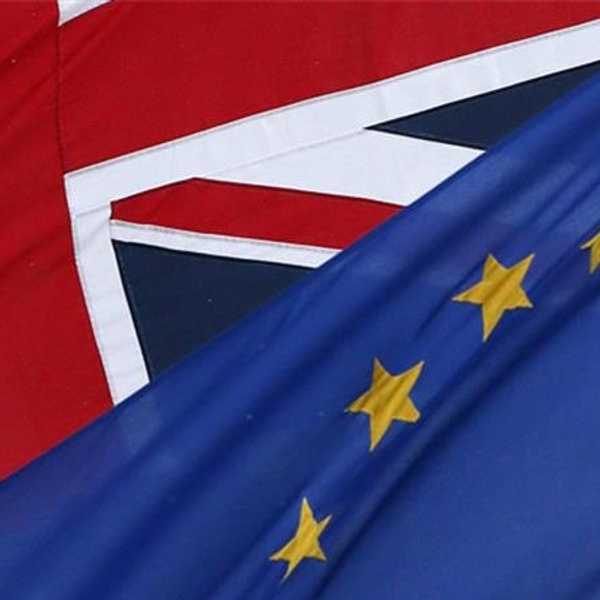

It’s been almost two weeks since 52% of the British population voted in a historic referendum to leave the European Union, so what has happened so far? Was Brexit the right choice, or will the British come to regret their decision to leave the EU?
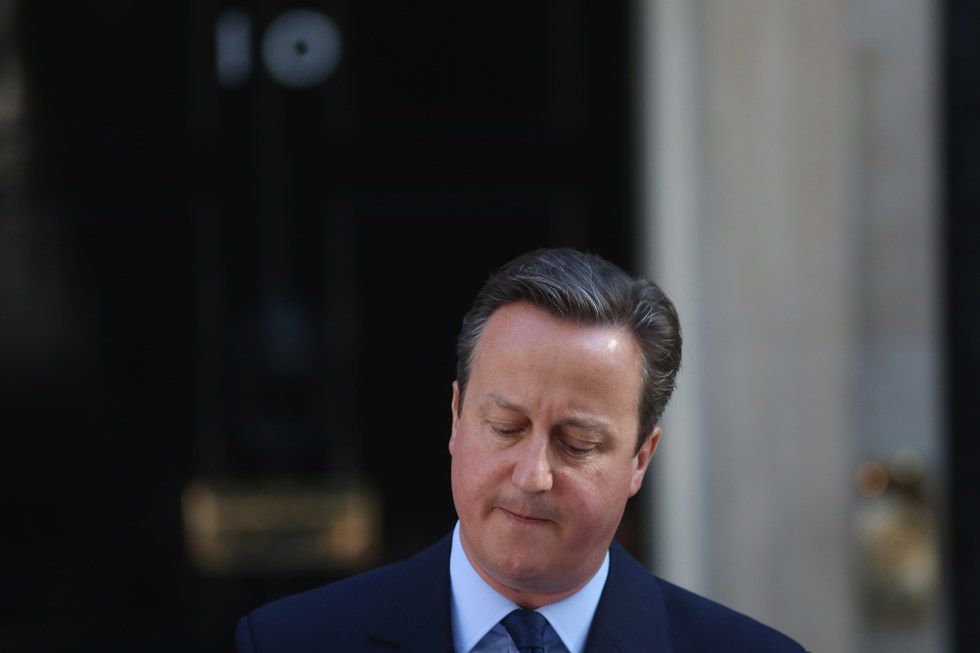
Prime Minister David Cameron announces his resignation following Remain's defeat in the EU Referendum on Thursday, June 23, 2016
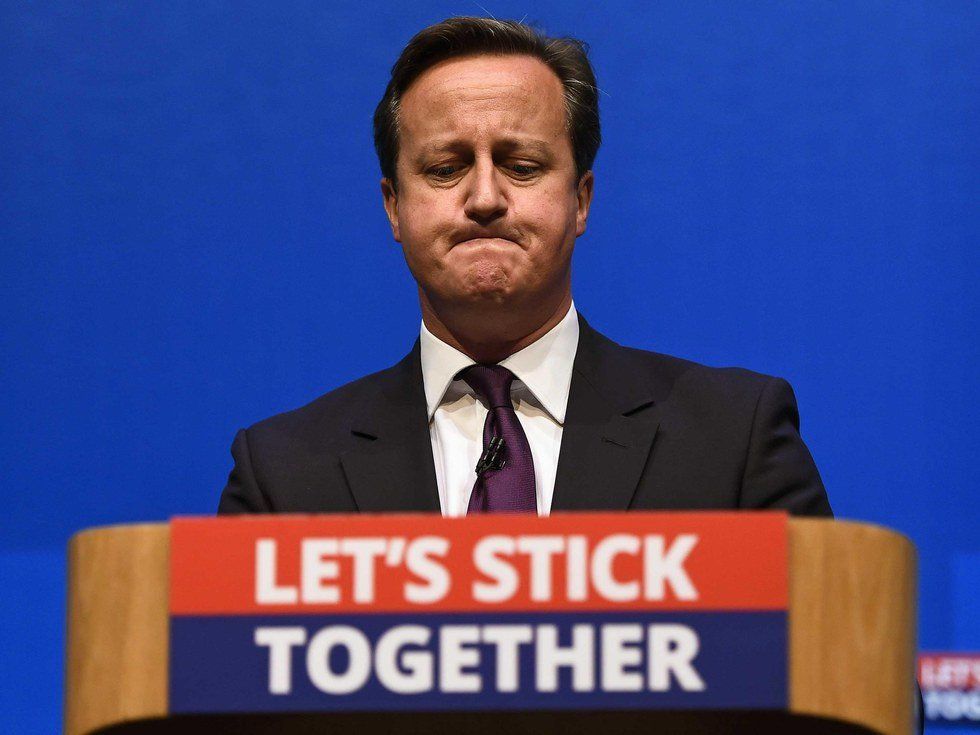
David Cameron, the UK’s prime minister since May 11, 2010, announced his resignation immediately following the Leave victory in the EU referendum, citing his own opposition to backing out of the EU. Just to be clear, a referendum is vote referred from the politicians to the entire electorate. Cameron will be replaced by the end of October by another Member of Parliament (MP) from the Conservative Party based on the UK’s parliamentary system of government. The Conservatives, or Tories, have held a majority of seats in Parliament’s House of Commons following the 2010 elections, and based on Britain’s system of government, the prime minister is selected by the majority party or a majority coalition of parties and is not directly elected to the position by the people. If this were the case in the United States as of 2016, the Republican Party in the House of Representatives would cast a leadership vote and a Representative would become the prime minister. In a parliamentary system, there is little separation between the executive (prime minister) and the legislature (parliament), as the executive is chosen from within the majority party of the legislature. Despite this, the executive’s term, and therefore power, is more vulnerable to disruption than in the United States. If the party is not satisfied with the prime minister's performance, the party leader, who is separate from the prime minister, may call for a leadership election. In a leadership election, the prime minister will face competition in a new vote from other MPs from his/her own party and may or may not survive in office. In Cameron’s case, his resignation highlights another hallmark of the British parliamentary system, the referendum. The EU Referendum was initiated by Cameron himself and by effectively losing the vote, he has lost the confidence of a majority of British citizens. Cameron’s reasoning for leaving office before the end of the year is that by campaigning to Remain in the EU, he is not the right person to spearhead negotiations to leave the EU in the coming months and years.
It should be understood that the UK is currently still in the EU. The first step for Britain to leave is to invoke Article 50 of the Lisbon Treaty, which will start formal negotiations between government leaders in the UK and the EU over the details of Britain’s exit from the organization. Only two countries have ever left the European Union before: Algeria and Greenland, although their situation was more complicated. Algeria was a French territory until 1962 and was included in the European Economic Community (EEC) up to independence from France. Once the Algerians achieved independence, maintaining a seat in the EEC as a North African country failed to hold water and Algeria left the EEC. In 1985, Greenland, an autonomous country within the Danish Realm, voted to leave the EEC after gaining home rule in 1979. A similar case to Algeria’s was finalized in 2012, when Saint Martin and Saint Barthelemy seceded from the French Overseas Region and Department of Guadeloupe, although both Caribbean islands remain as French Overseas Territories.
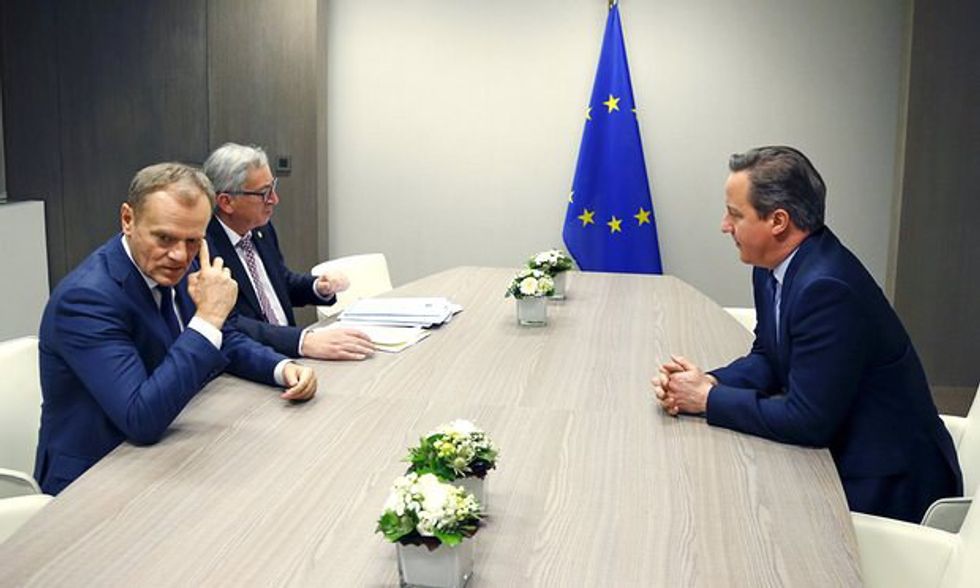
EU Council President Donald Tusk (far left) and Jean-Claude Juncker, the President of the European Parliament (left), meet with UK Prime Minister David Cameron during an EU summit
There are two ways the UK’s exit from the EU can go. Either Britain will be able to secure a favorable exit deal and economic relationship with the EU, or the EU can make the process a painful one to discourage other member states from following suit. Since the UK is one of the largest EU member states, a British exit from the organization could pose a threat to the political stability of the entire group. Euroskeptic groups have been active in several other major EU powers for quite some time and the far-right has been making gains in European parliaments recently, making the potential for similar referendums in other EU member states much higher. EU officials in Brussels, Belgium, have said that in order for the UK to keep access to the valuable single market, the British government must accept the freedom of movement in the EU after exiting. One of the major arguments of the Leave campaign was against immigration from the EU, including Poland, which saw large-scale migration of its population to the UK after gaining EU membership. Leave campaign leaders promised that Britain would be able to secure its borders and limit immigration, but European officials have made it clear that Britain cannot pick and choose the offerings of the EU. Once Britain invokes Article 50, the country has two years to negotiate a deal with European officials on the exit and negotiations around trade relations may take even more time.
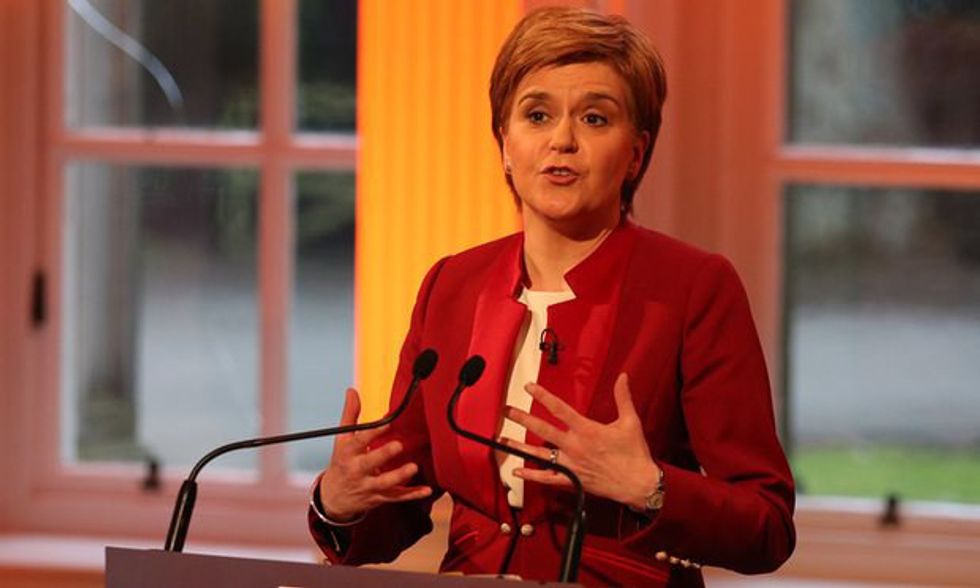
Nicola Sturgeon, the First Minister of Scotland, has made it clear that her government will back independence from the UK and push for Scottish membership in the EU
One possible outcome of the Brexit is a dissolution of the United Kingdom itself. In 2014, Scotland held a referendum on whether to leave the UK or not and those campaigning to remain in the UK won. Obviously, things have changed since then and the Leave victory in the EU Referendum has the high potential of triggering a second referendum on Scottish independence. The First Minister of Scotland, Nicola Sturgeon, has made clear that she will push for Scottish independence because of the Scottish people’s decision to remain in the EU. Look at any map of the referendum results and one thing is clear: Scotland and Northern Ireland voted overwhelmingly to remain in the EU. Ms. Sturgeon has said Scotland will work to leave the UK and begin negotiations to enter the EU as an independent country. A Scottish exit is a danger to the unity of the United Kingdom, as Northern Ireland and Wales may feel emboldened later on to move toward separation from England, which is often seen as the dominant country in the kingdom. Political leaders in Northern Ireland have also made some comments suggesting the country may attempt to leave the UK and join Ireland.
Up to the release of the referendum results, global stock markets were making transactions based on the prediction that Remain would win out over Leave the UK would stay in the EU. Immediately following the Leave victory, stock markets around the world fell. The results were released on Thursday, June 23, and on the following Friday, June 24, and Monday, June 27, around $3 trillion from the global stock market disappeared, blotting out the $1.9 trillion lost in September 2008 after the U.S. Congress voted against the bailout of Wall Street. Markets in London immediately fell, soon followed by the major markets in Germany and France, with the U.S. and Asian trading centers. As the initial shock from June 23 has worn off, the international markets have shown signs of rebounding and are ticking up again, but since all of 2016’s previous gains were completely wiped off the table, they have a lot of catching up to do.
The British currency, the pound, also took a heavy blow following the Leave vote. The pound has fallen to record lows against the U.S. dollar not seen for decades. Britain’s AAA credit rating was downgraded by multiple major international credit rating agencies following the economic instability displayed in the country’s markets. Moody’s, another rating agency, downgraded Britain’s rating to negative, saying that the Leave victory will result in “a prolonged period of uncertainty.” The pound’s downwards slide, while certainly negative for small business in the UK, as well as the British economy, car drivers who buy gas, banks, and housebuilders, does have some benefits for certain groups. For example, since the pound is cheaper now than it has been in more than 30 years, more people are likely to take advantage of the UK’s worsening economic situation and visit, a situation welcomed by the presumptive Republican presidential nominee, Donald Trump.Many major global investment banks backed the Remain campaign and following the triumph of the Leave vote, it is a strong possibility they may move their business and headquarters from London to the European continent to maintain access to the European common market.
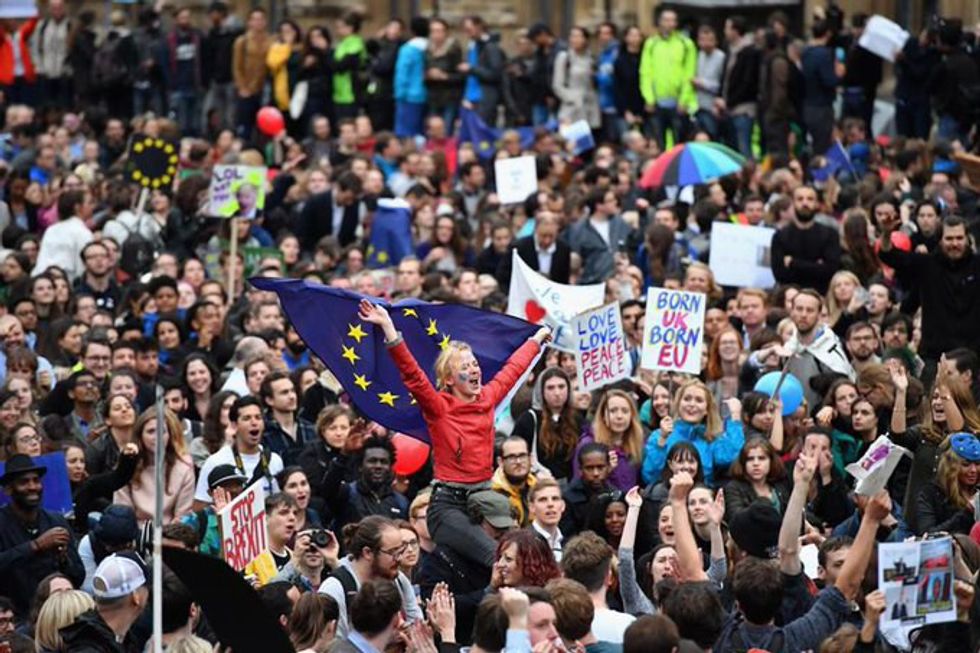
Many young Britons feel they have been robbed of their future in Europe by the aging generation which has left them with an increasingly-large debt burden
The biggest downside to the Brexit vote is the fact that the younger generation of Britons were robbed of the freedom of movement by the older generation. Of the voting age group of 18 to 24 year-olds, more than 75% voted for Remain, but a significant proportion of younger Britons failed to turn out to vote, helping the older generation and Leave campaigners succeed in gaining the two-point lead. Many thousands of millennials have joined the millions of British people who are calling for a second referendum on leaving the EU, although this is almost certain to fail, given that the first referendum was not just a trial vote.
Brexit is happening because a majority voiced their support for the UK to leave the EU. It is unfortunate and a terrible situation for the rising generation around the world. The vote presents a dangerous precedent for the triumph of an extremist, anti-immigrant, nativist sentiment that has been gaining popularity across the world. In the United States, this is represented by the unlikely rise of Donald J. Trump to be the presumptive nominee of the Republican Party for the presidency. In the Philippines, the far right has managed to secure the presidency already, with many observers calling President Rodrigo Duterte the Filipino version of Trump because of his extreme controversial views. Extreme far right movements have flared in Europe and the rest of the world. I want to be clear here: the far left is just as bad as the far right, but for the moment, the far right poses a greater threat to the world. What needs to be understood by the global community is that we are in need of greater connection between countries and peoples. The more connected we are, the more tolerant we will eventually become, allowing for a more understanding and just world to develop, making us stronger in the face of adversity, be it from terrorism, economic hardship, war, or natural disasters. Leaving the EU was the wrong decision for the UK and hundreds millions, if not billions, of people will pay the consequences of the vote for years to come.