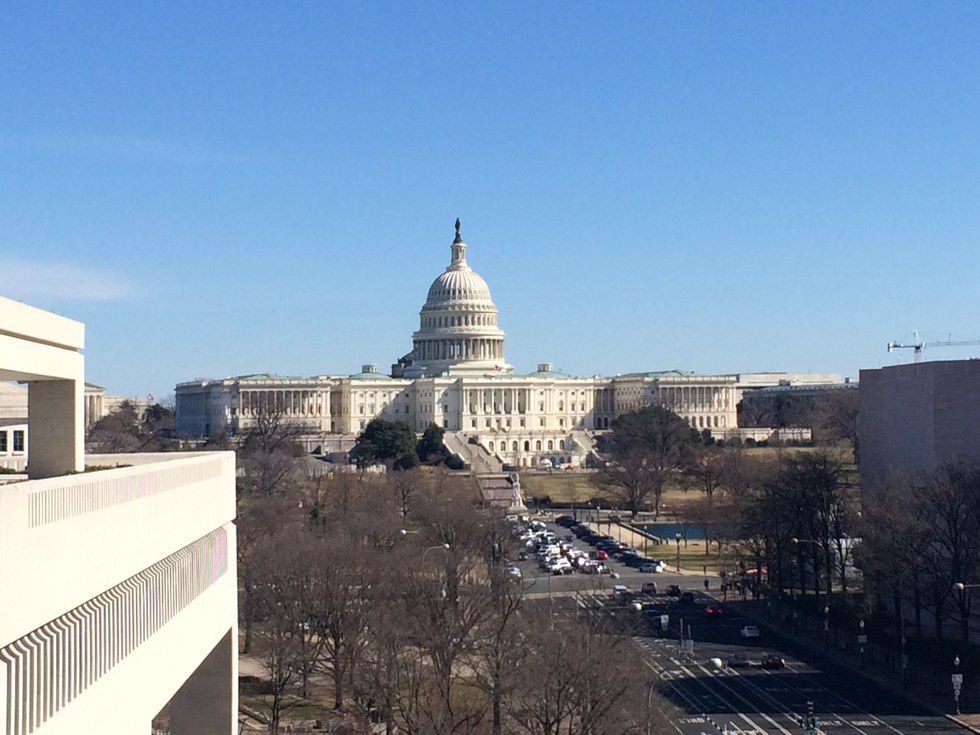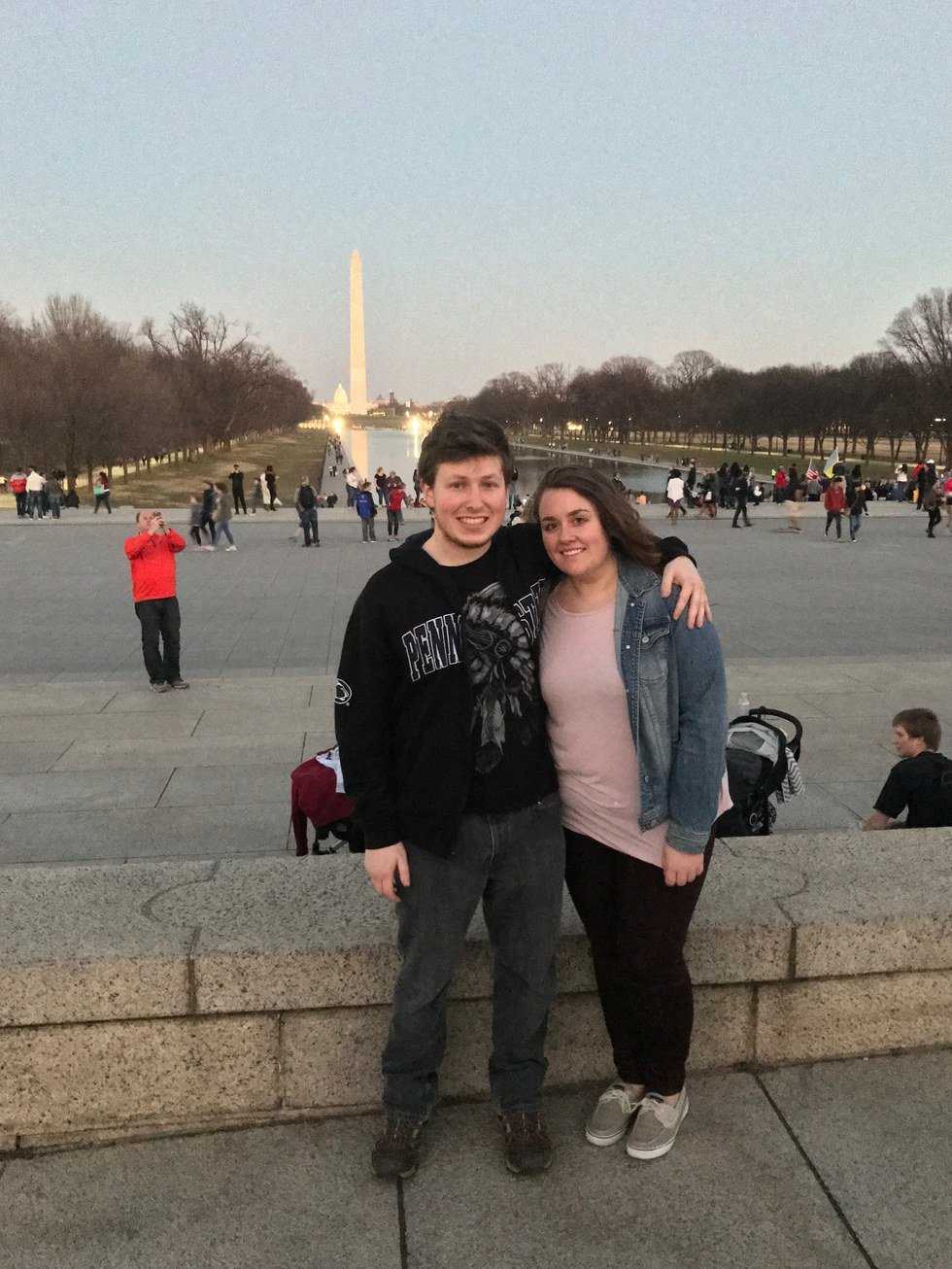
During President’s Day weekend my girlfriend and I took a trip to Washington D.C.
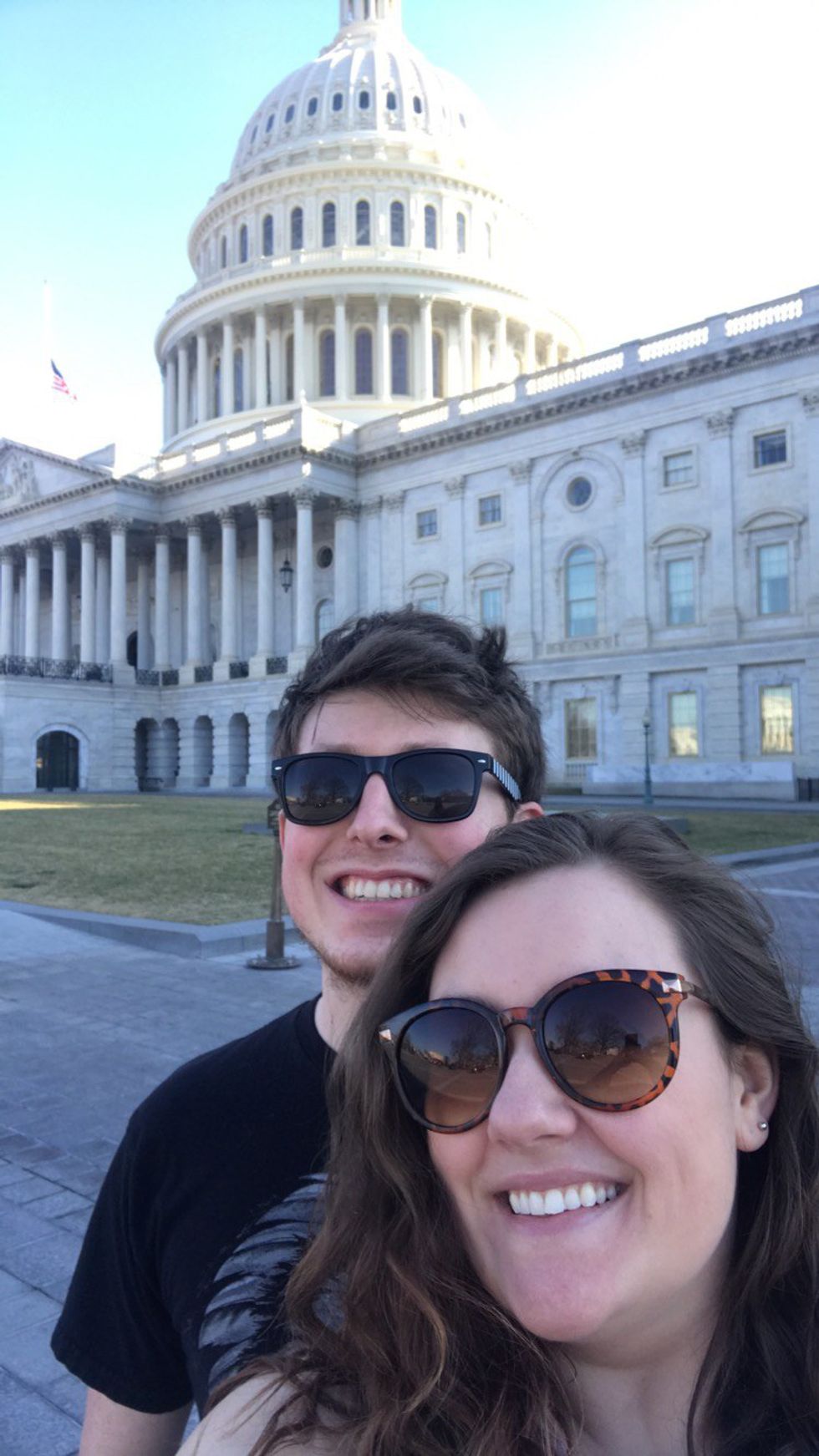
Christie and I's selfies with the Death Star
It was not to protest the current state of politics but simply a short getaway since it was the first time in a while we both had three days off in row.
Now it seems ironic that we would go to Washington D.C. of all places to “get away” from not only our busy work schedules but also the most turbulent state of American politics in our lifetimes, yet the vacation was still a great joy.
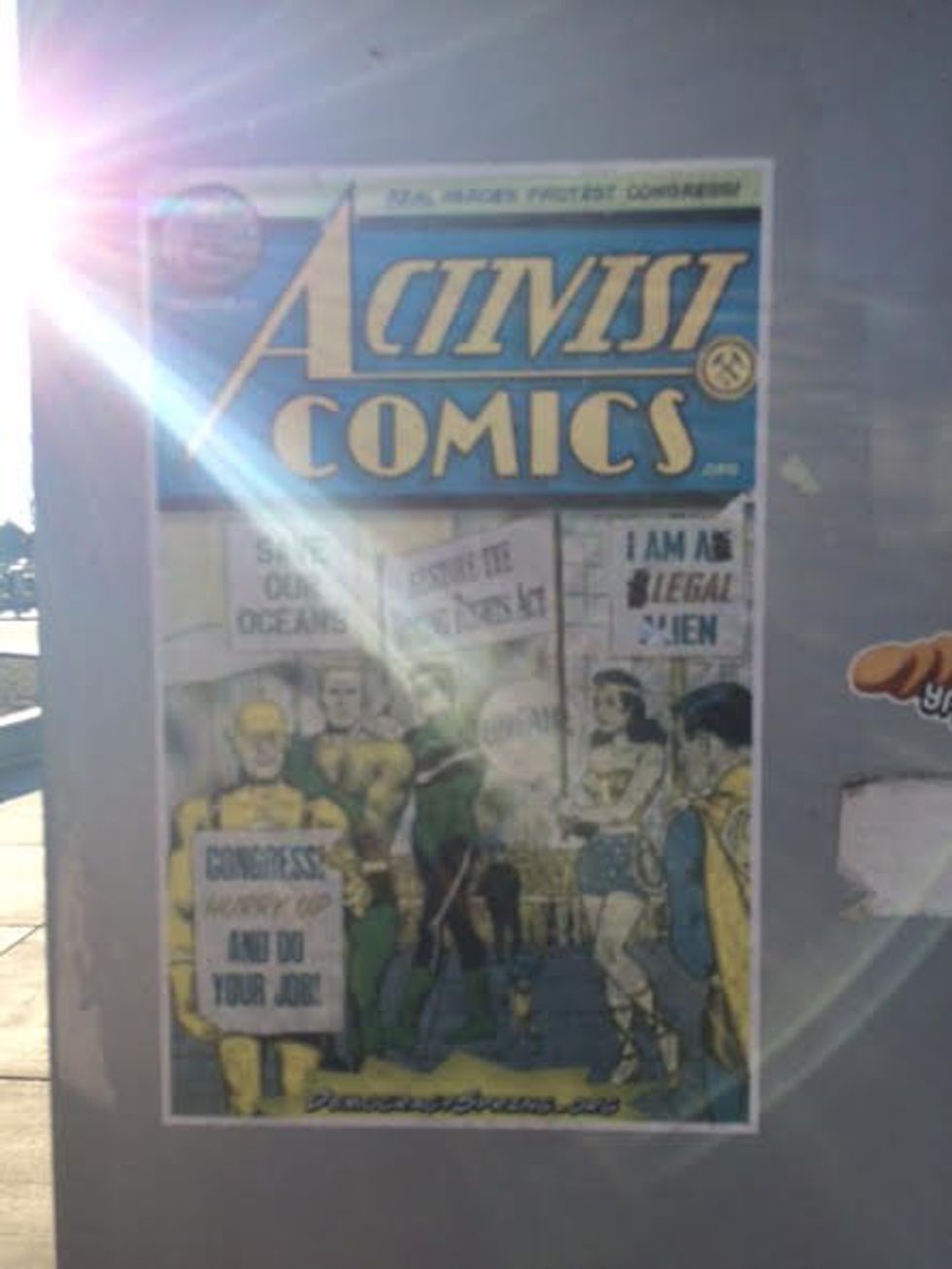
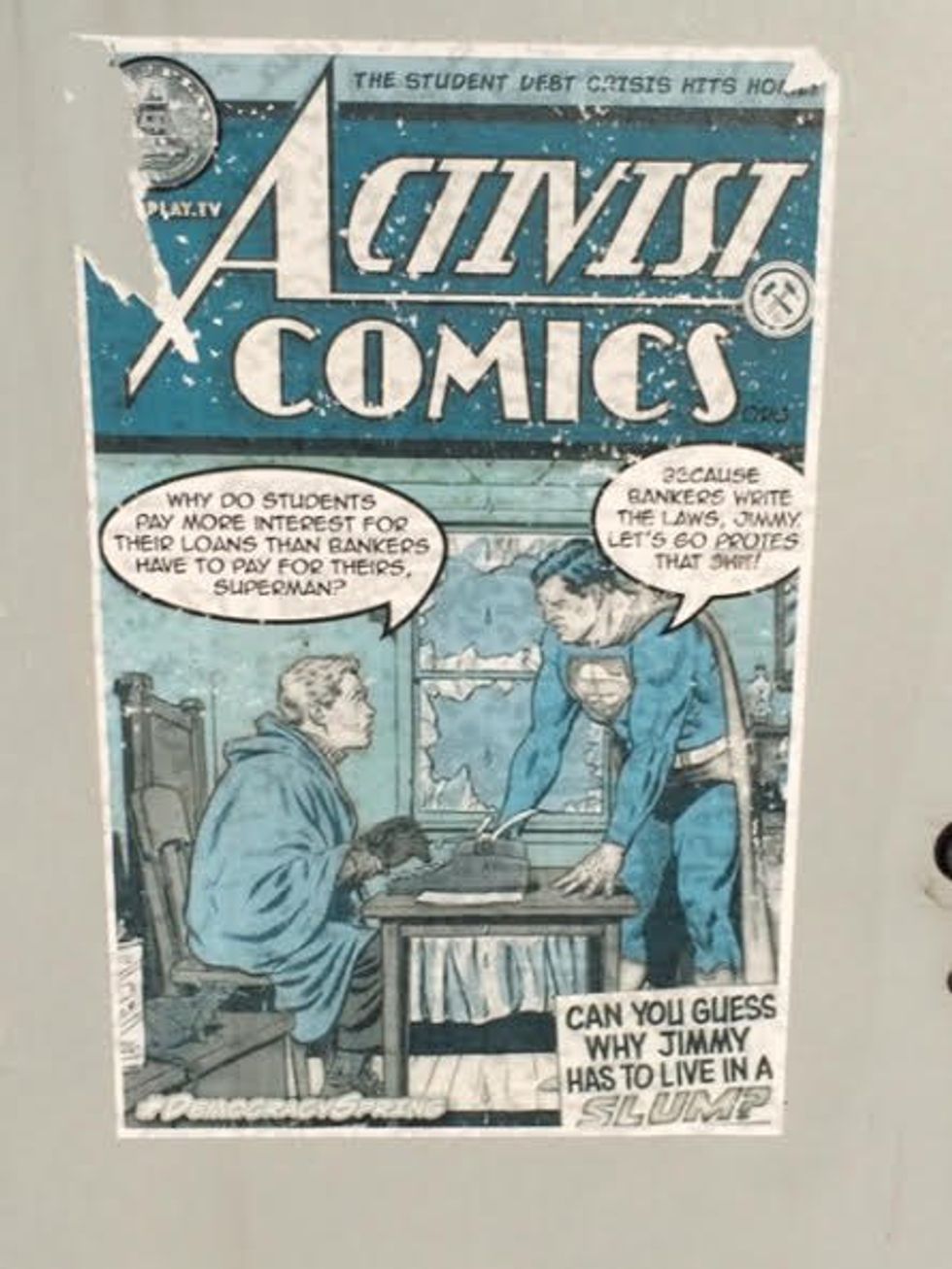
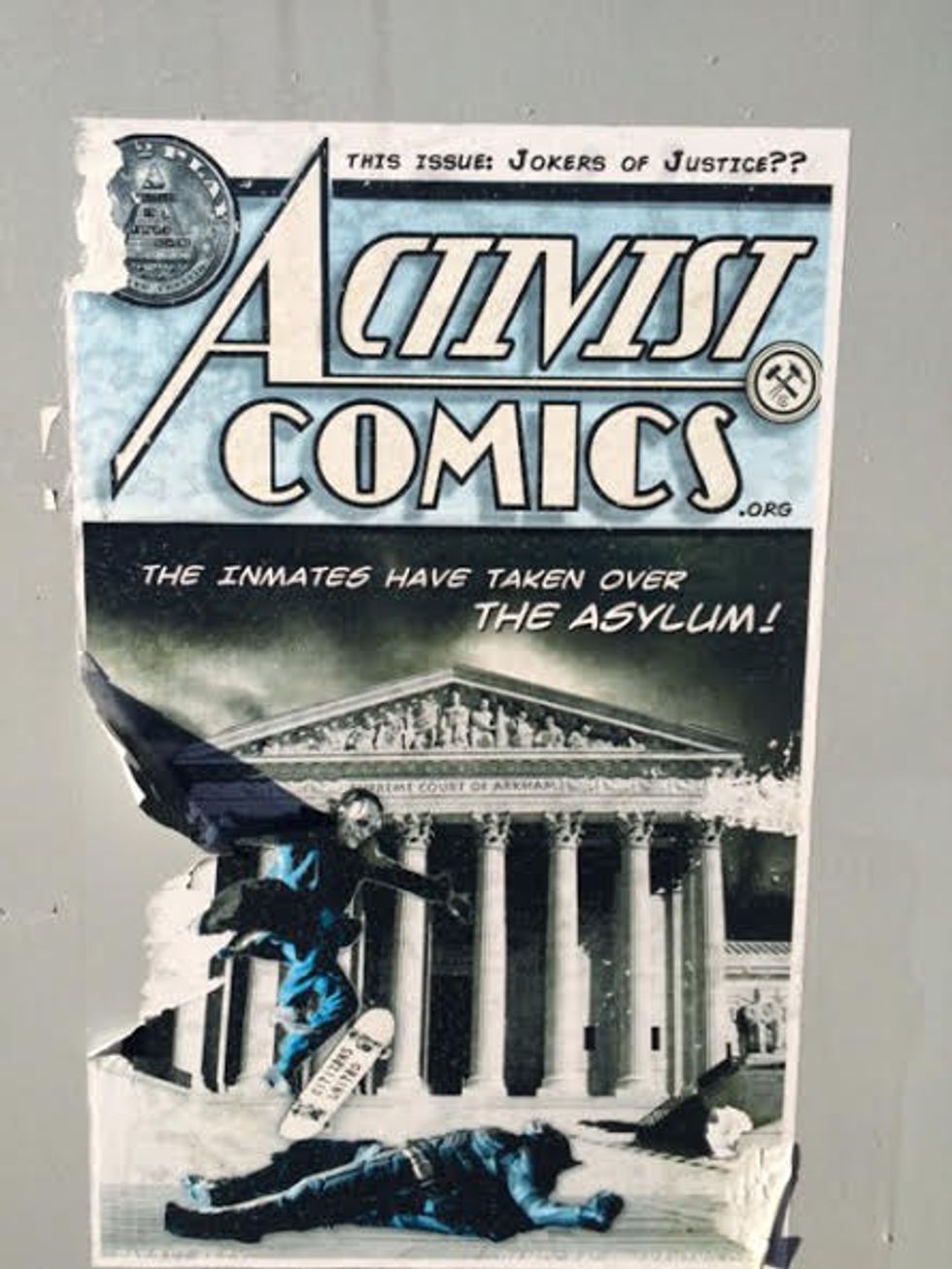
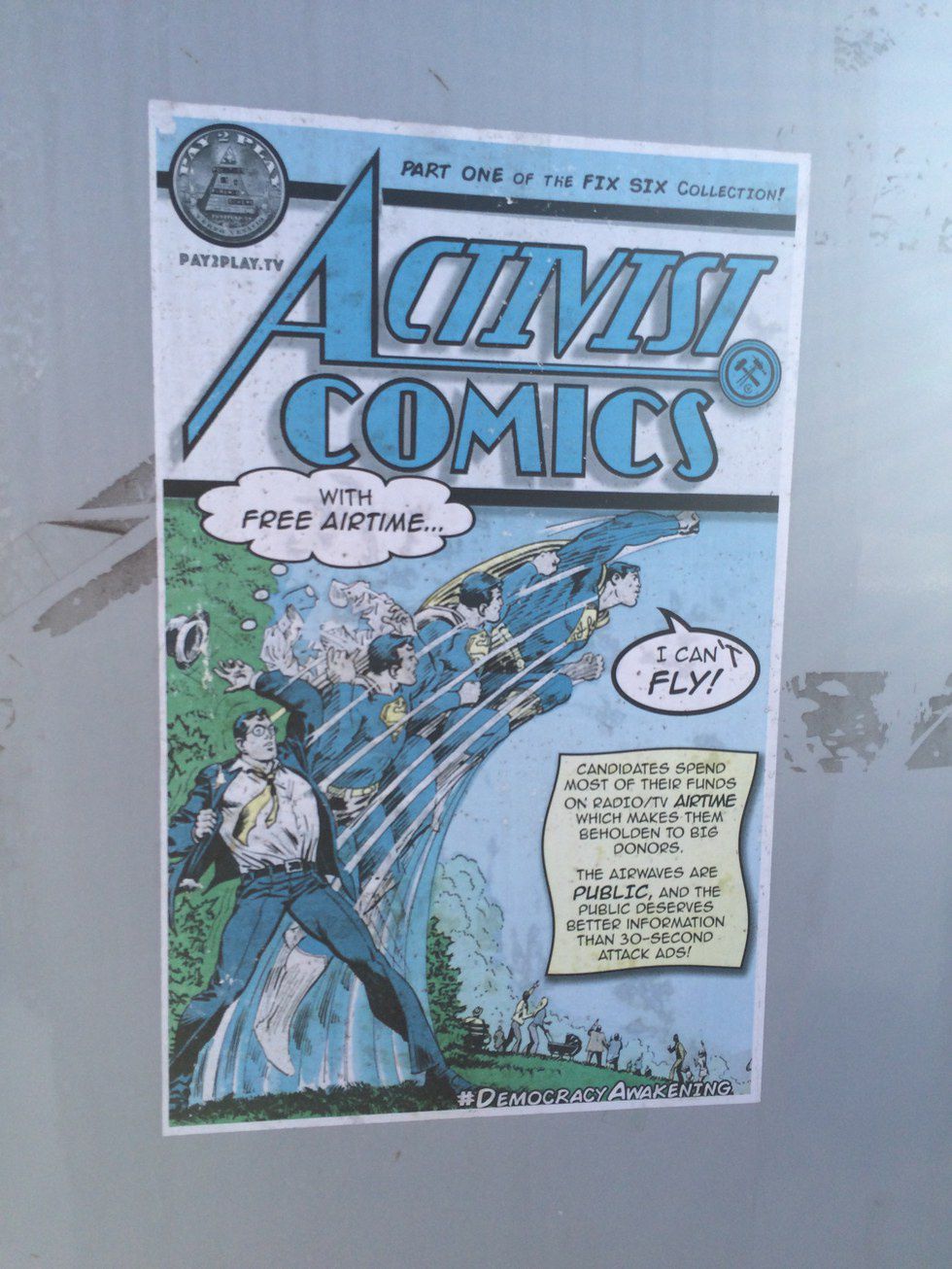
The best protest signs we saw in the whole trip
It was not the first time either of us had visited Washington D.C. as she had gone there on a school field trip and I had as a kid with the Boy Scouts. In our recent trip we inevitably saw an odd looking man donning the infamous red cap with the four-word catchphrase that gives many people mild PTSD. Yet that was far from the most offensive thing I had ever seen in D.C.
When I was on my Boy Scout trip as a kid, there had been a small march of Neo-Nazi White Supremacists. Among the crowd who stared back at the small parade disgusted, I didn’t know at the time the disturbing content of their agenda. That was when I learned the ugly side of the otherwise sacred First Amendment: even people like them have the right to free speech and assembly.
Now as a young adult who’s seen the best and worst of people in this country, I returned to the capital with an entirely new perspective than before.
This time around, I couldn’t help but recognize the messages engraved all over the Capital, as if they were the letters written by the dead parents of an orphaned country. The Founders, the big names who are recognized instantly when referred to only by last name, have their images and quotes displayed all over the Capital.
So yes, while morale and confidence in the nation’s capital is at an all-time low, it is still not like the remains of Washington as portrayed in Fallout 3, as the figures and stories of the great advocates of freedom and democracy still stand and educate the future.
Here are a few places we visited in D.C. that were the most inspiring attractions.
The Newsuem
The irony of the current presidential administration is that a few miles from the White House is a museum that is a complete contradiction to their agenda. You-know-who had tweeted about a week earlier how some major news networks were “an enemy to the American people.”
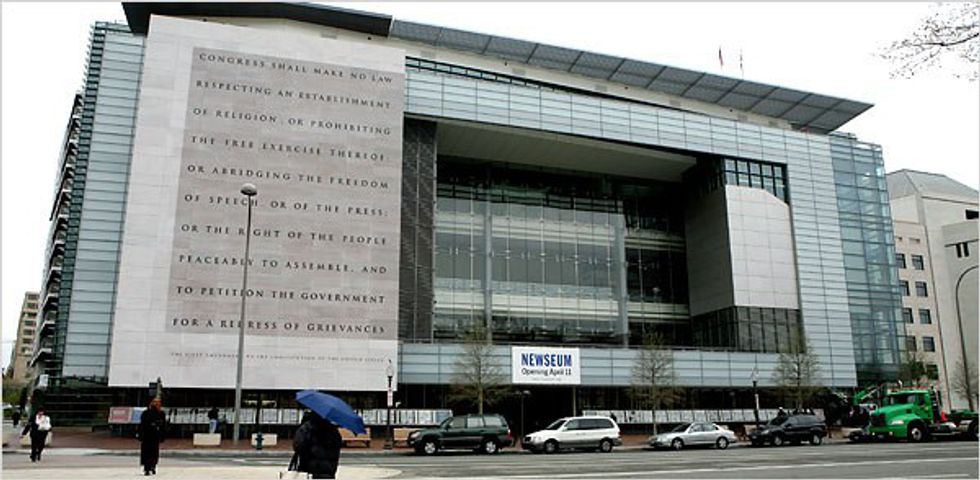

The First Amendment on the wall of the Newsuem, not far from the White House
The Newsuem is not just a museum about the history of news, but a tribute to the long and colorful history of the First Amendment. The concepts of the First Amendment can apply to everything from the printing press of the Revolutionary War to the clothing and instruments used by activist musicians. My favorite item of the museum was Jimi Hendrix’s guitar from Woodstock where he performed my favorite interpretation of the National Anthem ever.

Another major attraction of The Newsuemn was a small section of The Berlin Wall. For those who don’t know about the Berlin Wall, it was a wall that separated the Soviet-controlled East Germany and the United Nations-controlled West Germany which they had taken after World War II. The wall was erected in 1961 and stood for 28 years before East Germany resistance overwhelmed the Soviet Union and tore down the wall in 1989. While in college my girlfriend visited Berlin, Germany where she got to see more of the Berlin Wall and it’s lasting impression and swears it’s the most haunting city she’s been to.


It also reminded me that that was the last time a giant border wall was built.
It lasted less than three decades.
It now resides in a museum on the other side of the world.
I think you get my point.
Also on the Berlin Wall were graffiti art with a face on it screaming what will probably become the United States adopted slogan: ACT UP!

Also right near the Berlin Wall? The remains of a toppled statue of the Soviet Union founder Vladimir Lenin. While Lincoln, Ghandi, Mandela, Churchill and Dr. King’s statues still stand around the world, Lenin’s did not survive and is now in a museum.

If you ever visit Washington D.C., The Newsuem is a place that should have an entire day dedicated to it because there are so many artifacts and interactive devices which teach us about both American history and the First Amendment.

The Lincoln Memorial
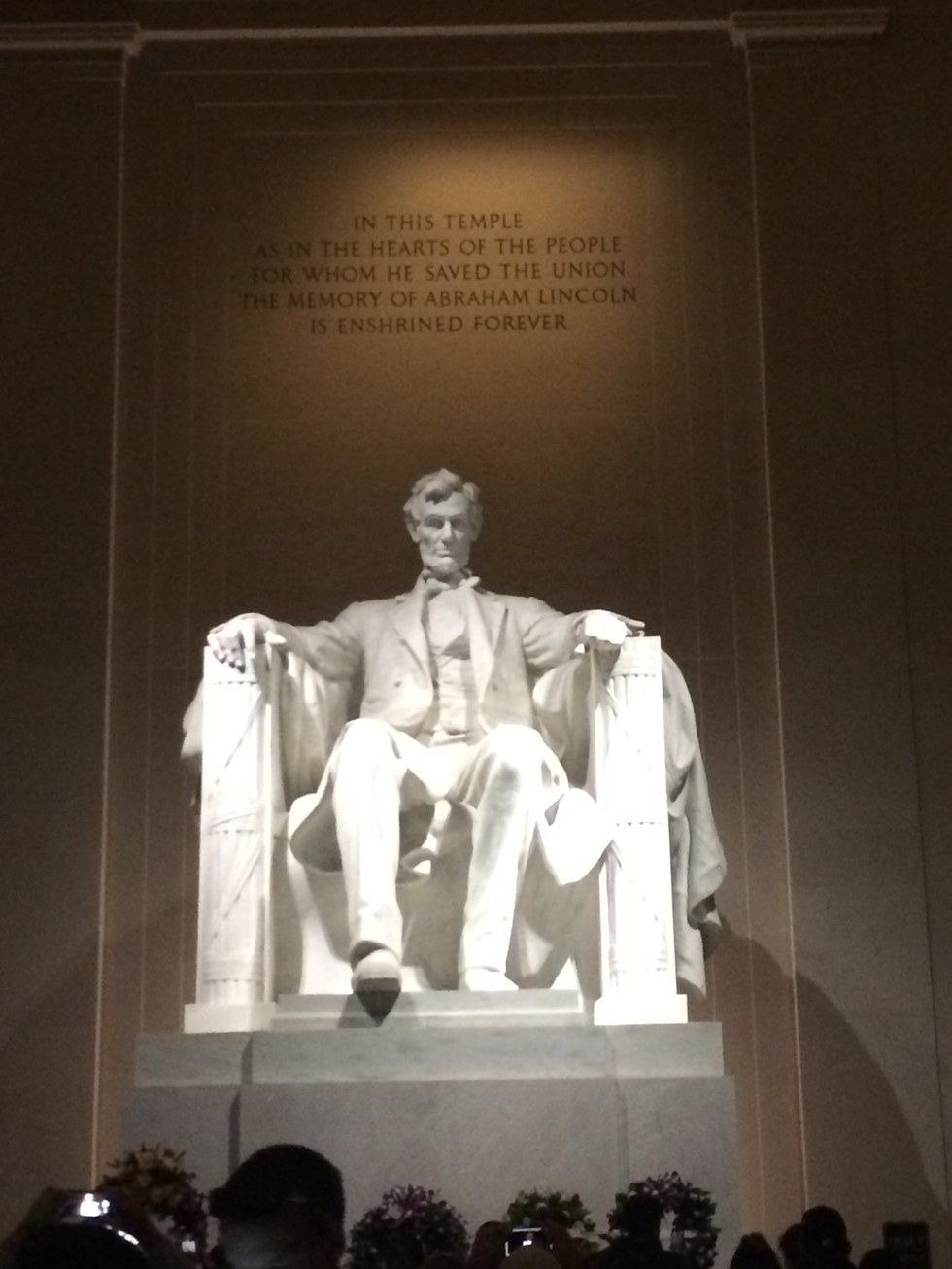
Abraham Lincoln was assassinated in 1865 shortly after the Civil War’s end and has been dead for over a century-and-a-half, but when walking inside the Lincoln Memorial it felt as if he died not long ago.
There were wreaths and flowers placed in front of the iconic statue that was erected in 1922 and being there to witness it as the sun was setting felt incredibly powerful.
Walking up the steps we could see the reflecting pool and the Washington Monument from afar, and engraved on the center stepping stone was the spot where Martin Luther King Jr. gave the most iconic speech of the twentieth century: "I Have a Dream."
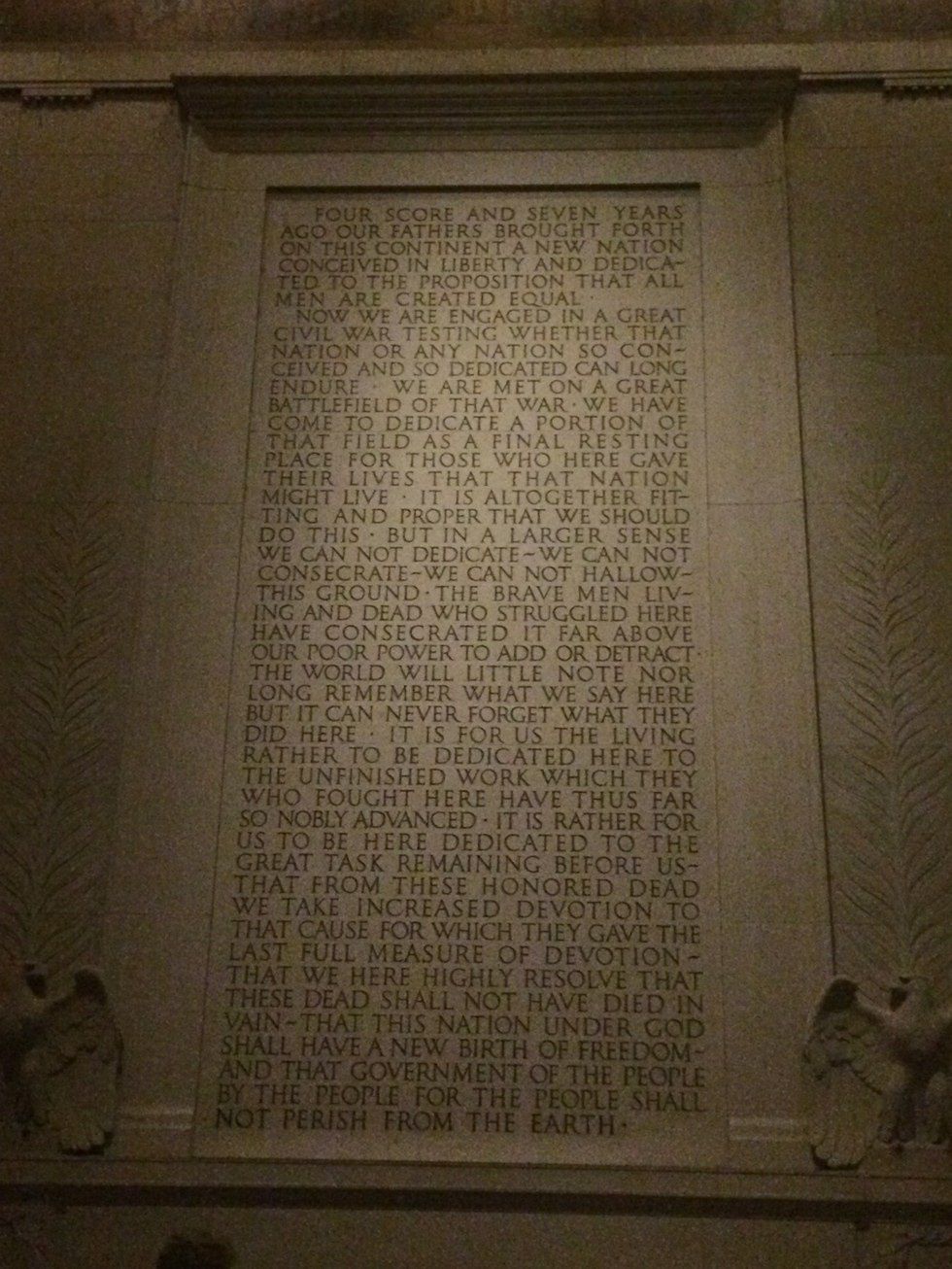
And then when walking into the memorial itself, engraved on the left wall was the most iconic speech of the nineteenth century: "The Gettysburg Address." A speech only 269 words long and could be spoken in just over two minutes, is as stirring and awe-inspiring as it was spoken by Lincoln 154 years ago. Amongst a crowd of murmurs and echoes inside the temple there lied the famous speech as if Lincoln had come to stoically speak those words again.
The Martin Luther King Jr. Memorial
The most recent of the memorials which was opened in 2011 is dedicated to not a famous politician, but to the most famous activist in American history, Martin Luther King Jr.
Walking to the entrance of the memorial itself is a chilling experience. Upon entering, you walk in between two tall stone walls made to appear like a mountain and straight ahead is the signature boulder with Dr. King’s likeness.
Even though we’ve seen the pictures of the memorial on the internet and television, approaching the monument from behind felt as if you were seeing it for the first time. The closer you got the more you could see the features of King’s face with a statement on the side below: “Out of a Mountain of Despair, a Stone of Hope.”
When you finally see the complete image of Dr. King engraved in that symbolic boulder, a chill goes up your spine seeing the person who best represented peace and equality in the United States now residing with the American Gods who came before him. Even though his influence on the country was nearly two centuries after its founding, Dr. King should be considered as one of the founding fathers for pushing freedom and democracy further towards that concept as the leader of the Civil Rights movement.

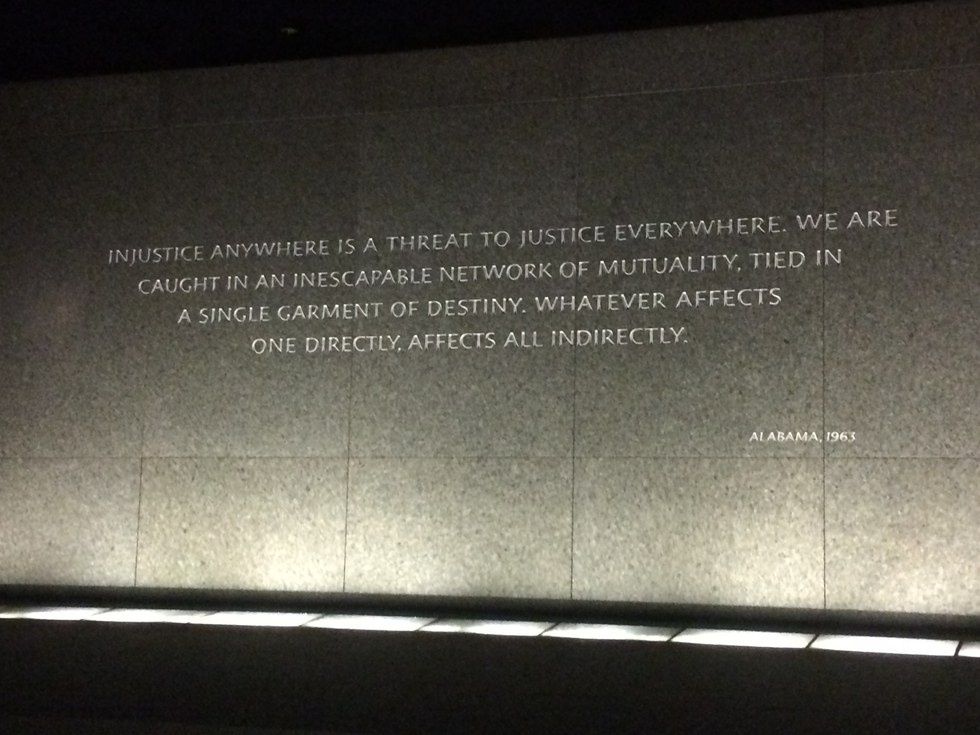
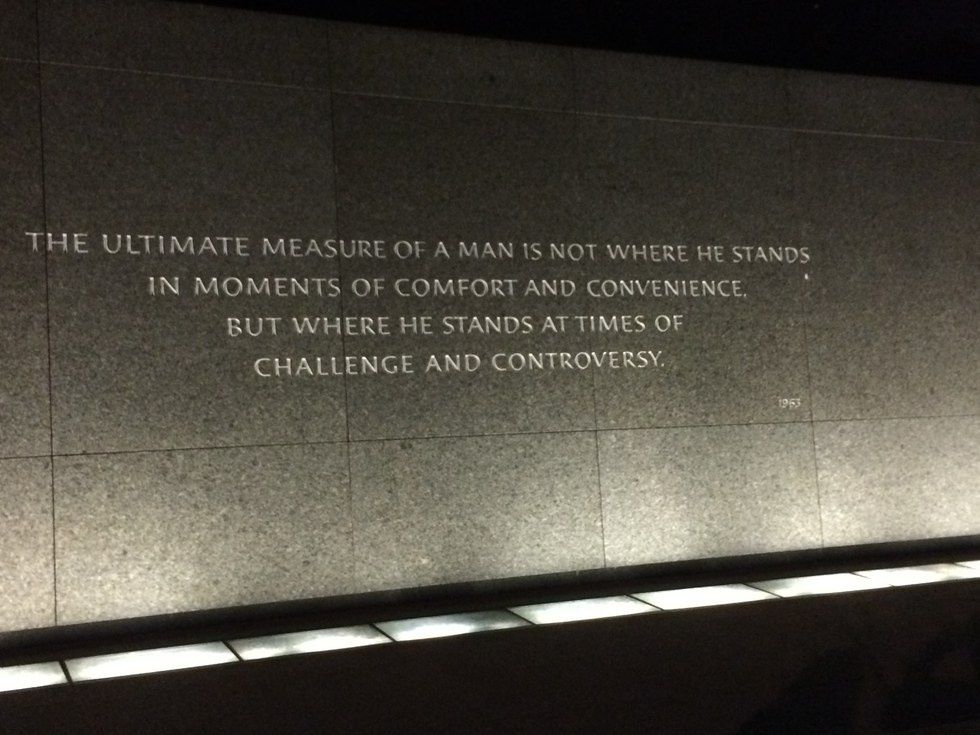
On each side of the incredible statue is a wall of his most powerful quotes, the type of quotes that aren’t just a message for the 1960s during the Civil Rights Movements, but for today and for all-time.
The Franklin Delano Roosevelt Memorial

FDR & Me
The memorial to Franklin Delano Roosevelt is the least talked about memorial to a major American icon but it is still one of the best sites in all of Washington D.C.
For those who don’t know, Franklin D. Roosevelt he was the 32nd President of the United States from 1933 to 1945. The only President in history to serve more than two terms which led to the passing of the 22nd Amendment shortly after his death where the maximum length of a Presidency became two terms (THANK GOD). Roosevelt won four elections, but as President he had to lead the country against two of the most turbulent eras in American history: The Great Depression and World War II.
The memorial to the great president begins with a simple life-size statue of him sitting in his wheelchair wearing a glasses and a hat, showing how a hugely important American figure was just a typical old man you could see at a retirement home. You could stand right next to it and be taller the statue, a sharp contradiction to the Lincoln memorial’s majestic statue.
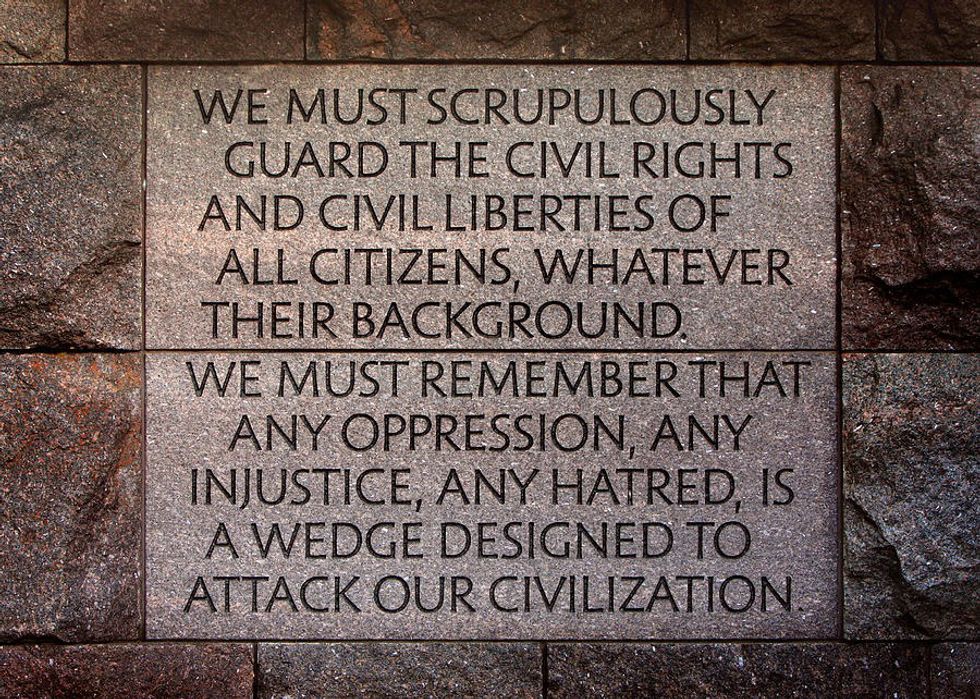
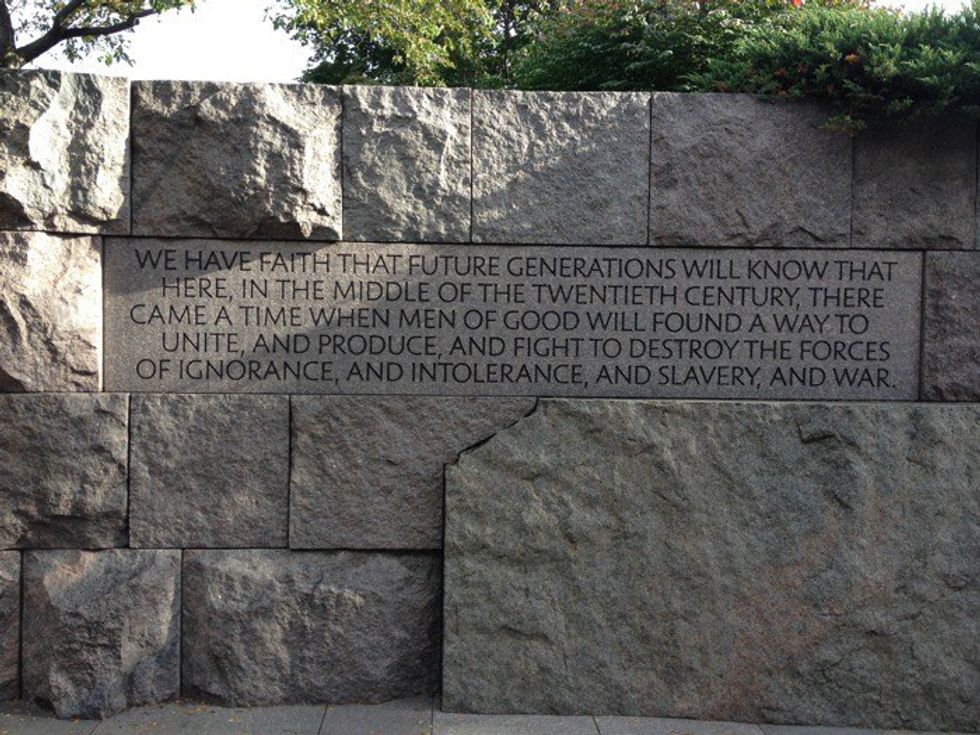
Walking through the stone walls with his famous words engraved all over gives a sense at what it was like to go through the struggles of the Great Depression as cold and hungry citizens wait in line for food and at night listen closely to the President on radio in his fireside chats.
Then the further we travel the closer we get to Roosevelt’s struggle with trying to implement isolationism amidst the Second World War occurring in Europe. That was until the attack on Pearl Harbor and he rallied the country to fight against the most famous form of oppression of the twentieth century in the Axis. His work in winning the war had to be finished by his Vice President Harry Truman however, as Roosevelt died of intracerebral hemorrhage only weeks before Germany surrendered and months before Japan did as well.

Before November of 2016 you could look at those images around the capital as sentimental or promotional tools for American history and democracy. Today however, they mean much more because millions of concerned citizens feel everything those legends fought and sacrificed for over the past two centuries could be endangered. It’s a reminder that these people were up against far worse opposition and the fruits of their labor paid off with monuments and memorials dedicated to their memory in the Nation’s Capital.
What being at Washington D.C. taught me was that the ones who are memorialized and celebrated are the ones that chose to go “forward.” They chose to go forward despite great protest and opposition from those who were comfortable with the way things were. Those special individuals recognized the flaws in the country and chose to change that, and their image is ingrained all over the capital forever.