

For the last couple of years I have seen an increasing number of articles claiming that today's college students, and that the millennial generation as a whole, are coddled, spoiled, and overly emotional, along with a whole slew of descriptors which are less polite. These claims stem from the notion that students expect high grades for no work, demand that their feelings be taken into account in all situations, and are "overly PC." I've seen articles bemoaning calls for trigger warnings, arguing that the voting age ought to be raised because students are too immature, and trivializing students calls for social change and justice in everyday life by combating microagressions and every day marginalization.
I must say, this "epidemic" of P.C. culture is nowhere near as large as recent blogs and articles bemoaning them seem to think. In my time as a college student, I have only twice been met with anything resembling a trigger warning, once, when my class was preparing to discuss severely racist and sexist imagery in historical propaganda, my professor sent out an email informing us that the content we would be viewing was inherently offensive and othering in nature, he wrote "I think it's important that we confront these images head on because they are part of our collective history. Just wanted to let people know what to expect." My only other experience with a school related trigger warning was when a class was preparing to discuss rape and domestic violence, my professor informed the class that if at any point we felt too uncomfortable to participate in the discussion, we could leave the classroom. That is all. Both of my professors handled teaching about emotionally charged subject matter in a way that was both sensitive and challenging to students.
As Aaron Hanlon writes in his article on The Trigger Warning Myth, he includes trigger warnings as needed in the classroom not to discourage students from participating because the topic is scary, but to provide context for the content, and prepare students who might suffer from easily triggered PTSD so that they can take the necessary precautions. Trigger Warnings are not censorship, they are simply an a warning that the material is potentially triggering, but is going to be taught anyway.
Something that I for one don't understand, though, is why people are so upset about trigger warnings in the first place. The purpose of a trigger warning, as I said before, is to inform a person of potentially triggering content. Think of it as a NSFW tag, or movie ratings. Would you want to be going along your merry way on the internet and then suddenly, POW, full frontal nudity on your computer screen, or watching a movie you thought was going to be a feel good film that suddenly devolves into explosions and gore? Movie ratings, Not Safe For Work tags, and Trigger warnings, all serve to inform people of the content of material in the same way, and are useful to all of us to decide what we want to watch, read, or listen to.
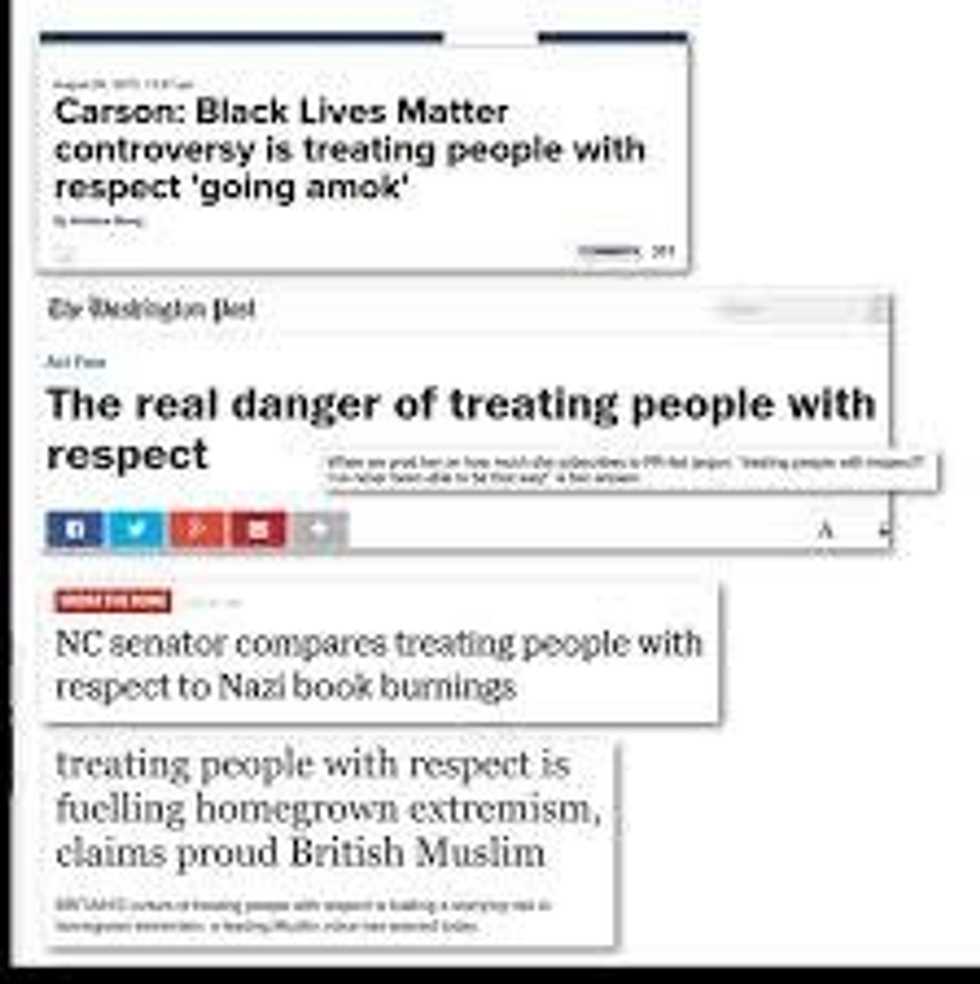
One oft-used argument against trigger warnings are that students are too sensitive, too interested in valuing political correctness over "humor", and that people shouldn't feel victimized because "everyone's been bullied." Not only does this last sentiment trivialize individuals with traumatic pasts who have real emotional triggers, and enforce the idea that it should be more important for the privileged to laugh at the oppressed than to have to listen to what the oppressed are trying to say. The "everyone's been hurt" argument really gets at the heart of the issue for me. As Alok Vaid-Menon, of Darkmatter, tells their audiences, "Hurt people hurt people." The idea that, because everyone gets hurt, we shouldn't try to prevent further trauma stems from a misguided idea of justice. Rather than try to tell others to harden up because life hurts and that's what you have to do to survive in it, why not work together to make the world a less violent place? After all, we're not just trying to get people to be "politically correct" we're fighting for a world where all people are treated with respect.
















