
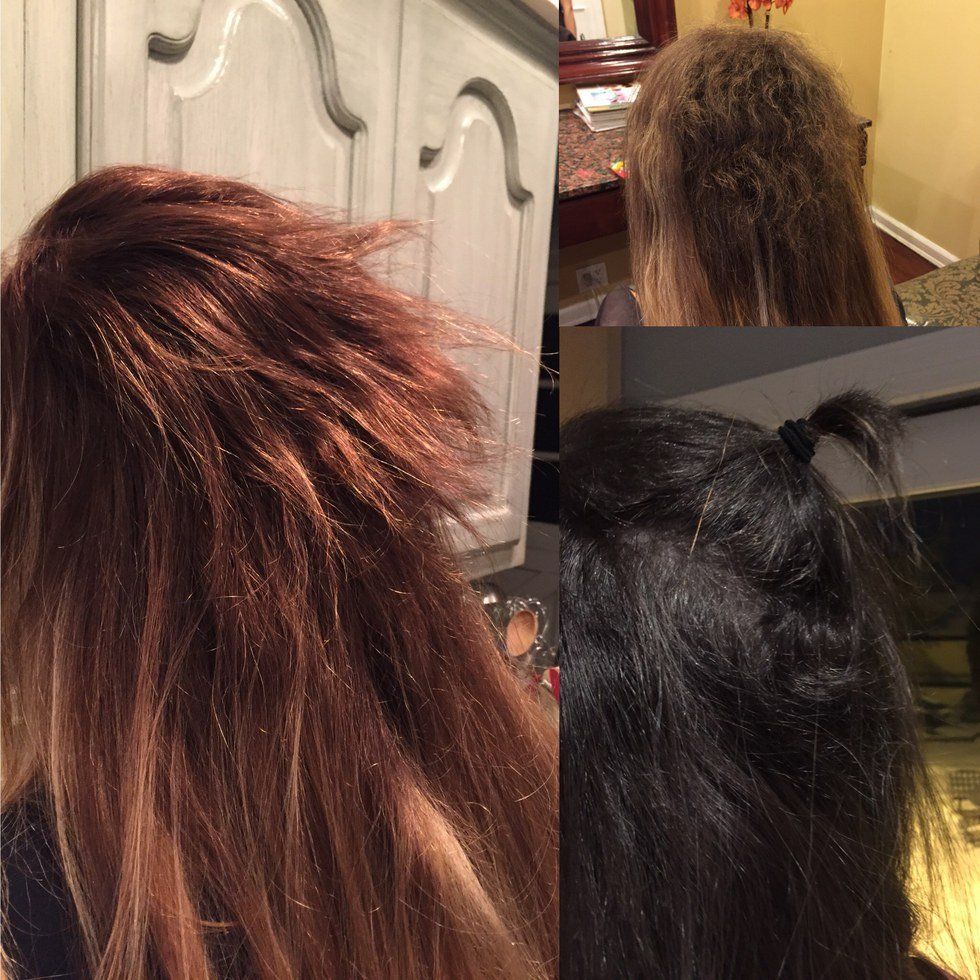
Trichotillomania, the hair-pulling disorder, was once thought to be a rare disorder that affected only .5 percent of the population. But a recent study found that it isn't as rare as first thought. Trichotillomania, often shortened to trich, actually affects closer to 2-3 percent of the population, possibly even more since so many people hide it. Those who suffer from trich often call themselves "trichsters." Trich is classified as an obsessive compulsive disorder (OCD), impulse control disorder (ICD), and body-focused repetitive behavior (BFRB). Trich is usually a side effect of a larger issue like depression and anxiety.
Trich isn’t just a psycholgical disorder, since it can affect your physical health as well. Trich can cause scalp dandruff, irritation, sores, and scabs. From the pulling your hands can become sore, blisters and calluses can form, and carpal tunnel has also been reported. Not everyone who has trich picks at their scalp, anywhere hair grows is a candidate for picking, including legs and arms where it can cause open wounds, scabbing, and permanent scarring. If you pull from one spot too much, pulling can cause permanent hair loss.
My twin sister has been pulling her hair since we were 10-years-old. One day, when playing with her ponytail, she began to play with, and pull, the hairs that were "out of place." The lack of uniformity gave her anxiety which was released with pulling. When we started freshman year of high school, the depression she had been feeling for two years spiked, causing her to pull directly from her scalp instead of the ends of her pony tail. In 10th grade, she had her first bald spots. They were too small for her or anyone else to notice at that time. That is, until the “big one” came. In 11th grade, high-level anxiety and depression caused much more pulling than ever before resulting in a large bald spot at the back of her head.
She finally told our mom after a particularly bad panic attack. After a trip to to the psychologist and psychiatrist, she set on the path towards getting her symptoms under control and learning how to control her pulling. While trich can’t be cured, it can be tamed. Small bald spots pop-up occasionally when her anxiety levels are higher than normal, but she’s improving Through the help of tangle toys and spin rings and the family constantly slapping her hands, she’s learned to control the pulling. It isn’t easy to do, but her hair has finally grown back. I’m proud of my “Baby Bird” and how far she’s come, and we’ve all learned that trich isn’t the end of the world.
For the friends and family of a sufferer, we feel pain. It’s hard to watch someone you love literally pull out their hair from anxiety. It changes the meaning of the phrase “I’m so aggravated that I’m pulling out my hair.” You want to help so badly but there’s nothing you can do because this isn’t a habit like cracking your knuckles. It’s a disorder that needs attention because it relates to a bigger issue. For anyone who has trich, I am so sorry and I hope that you can find help, from a friend or a professional and that you get better. Having Trich can be rough, but you will be able to find hope! With love and support, my sister got better. You can too.