

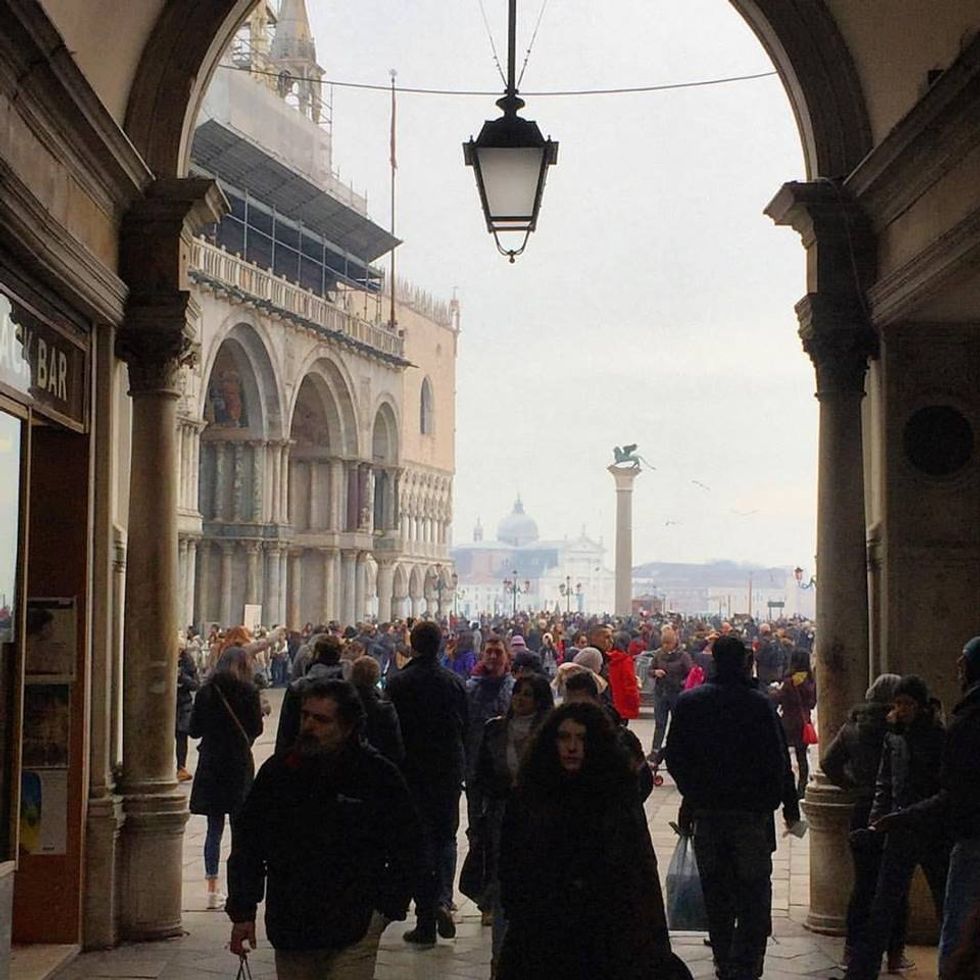
In reading Shakespeare’s "Merchant of Venice," readers encounter fascinatingly dense characters, plots, and settings, which all come together for the telling of an enthralling story of deceit, love, defeat, and victory. Readers of the play are made to travel to the ancient city of Venice, where money rules the land and riches are passed between the hands of all present — all while segregation and discrimination jerk the Jewish moneylenders between subordination and power, depending on the needs of the townsmen.
There is a great deal to be said about the characters and their interactions with each other from all angles of the play. However, the interwoven stories between characters from the two major featured cities along with the contrasting density of each setting work to make "Merchant of Venice" a sincerely captivating tale.
Beginning with Venice, a place some come to see as vindictive in the shadows of the day, yet alluring during the deeper darkness of night, we are made to imagine the normalcy of great deals of wealth from the beginning of the story as we read of Bassanio whimpering his woes to the ears of weary listeners. His immediate attitude aside, we hear of these great ships, presented to us like ancient Grecian ships of great valor. This alone was a very subtle, yet powerful way of developing the imagery of the decadent city.
In reading the play, however, something threw a wrench in my original understanding of the text — the application of knowledge that Shakespeare’s works were often inspired by other texts such as the King James Bible.
Keeping that in mind, I began to look at Belmont as a heavenly space in contrast to the more worldly city of Venice.
Portia is introduced to readers as a real princess — one whose riches know no boundary and whose beauty is known to, and admired, by all. In respect to her beauty, she is presented as angelic. Her angel-like beauty calls the attention of suitors from all over, all whom she cleverly turns away in order that she may have Bassanio as her own. As for her boundless riches, they resemble that of the Kingdom of Heaven as told in the Bible, where streets are paved with gold and there is all that anyone could possibly ask for.
The part of the play that solidified the idea of Belmont being of heavenly nature to me was when Portia intentionally calls Jessica by her name instead of referring to her as a Jew. In Venice, Shylock, Jessica’s father, is beat, kicked, spit on, and mocked by Christian men who only preach forgiveness and mercy when they are on the receiving end of punishment — a two-sidedness that is not shown in the heavenly Belmont. However, in an unfortunate twist for Shylock, he becomes the villain in his failing to show mercy to his wrongdoers, and is punished after Portia’s cleverness stuns the people of the court.
Shakespeare’s play was not only a great story, but works the mind, as does any good reading, to draw connections in order to make it all the more enjoyable.