When I tell people I study feminist philosophy they ask me if I hate men, and why I date men. When my female friends and I go out on the weekends our bodies get touched without permission. When I’m in a conversation with a group of people I am often interrupted by men who seem to have the answer for everything. When I walk alone at night I grip my keys between my fingers, constantly thinking about how to position my body as to best defend myself from a possible attack. My life is interrupted, all the time, by the common narrative that tells me my friends were only raped because they were drunk, that I only get A’s because I have breasts, that catcalling and sexist jokes are ok, because after all, boys will be boys. That’s why I’m a feminist. That’s why I need feminism.
There is a lot of confusion surrounding feminism, often in regards to what it means, who it helps, and how it functions. Feminism today means something different than it did in the past, of course it does because it’s about the lives of people, and the lives of people are in constant flux. Culture changes, norms change, and feminism changes. So how should we think about feminism today? In the mass confusion over what feminism is and whether or not it’s appropriate, who has the authority to define it, and who, if anyone, needs it?
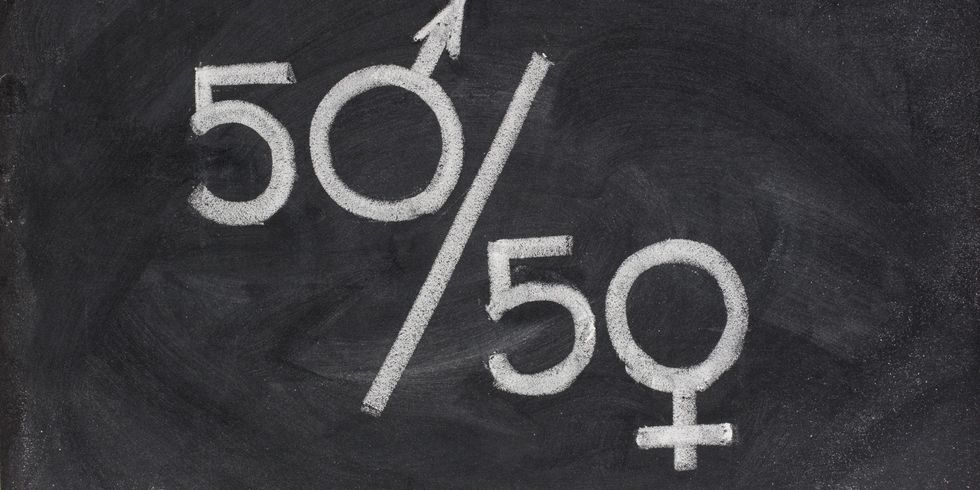
The common definition of feminism is a belief in the social, political, and economic equality of the sexes. It would be easy if one definition of a word meant one understanding of a word, however, what a word “technically” means, how it is used, and how it functions are separate things. If everyone agreed that feminism meant social, political, and economic equality for the sexes and that feminism also functioned as a means to reach that goal, then there would be no controversy over what feminism is, although there may possibly still be debate on whether or not feminism is necessary.
If being a feminist is to be someone who believes in social, political, and economic equality for women, then an anti-feminist is technically someone who does not believe in these things. An anti-feminist is by definition someone who does not believe in equal rights for women. As feminism has evolved with the times, the feminist cause has also evolved. For example, many years ago feminists argued that women deserved the right to vote, and now that is not only the case but is also widely accepted by even those who claim to disagree with feminism. Many people today who “disagree with feminism” also agree with things like equal pay and women’s rights to receive an education.
So, if those who consider themselves opposers of feminism hold feminist beliefs, what does feminism even mean? Is the conflict merely that critics view feminism as only the belief in women’s rights to vote, go to school, and get paid the same wage for the same job, and think that feminism has won and should abort the mission? In times of disagreement, it is important to look to those at whom the words are directed, those who are most affected by the word, in order to understand how it functions. Feminism for some critics means an outdated cause, a superficial reason for people to protest, but those who do not understand feminism do not get to define feminism. Feminism doesn’t end when the protest signs get thrown away.
Many people call feminists radical, and even when it is acknowledged that not all feminists are the same, it is brushed off by saying something like, “not all but many...” People choose to see one negative sign in a sea of positive ones at protests. People choose to let one experience of a “feminist” represent what they believe to be the entire cause. Why? It’s easier to find something that reinforces your discomfort with an issue as a means to brush it off. There are radical feminists just like there are radical Christians, and radical anti-feminists, but we must not make a hasty generalization and assume that a small sample represents an entire group if we want our arguments to be taken seriously.
It is important in defining feminism to look at what feminism has meant for women. Feminism for many women has meant a point of resistance, a common ground to fight alongside other women for other women. Feminist protests have given women the right to vote for their political leaders and the right to attend university, but it has also meant marriages based on equal devotion rather than force, it means that problems that were once forced under the rug have been given attention because feminist voices have gained the discourse to speak and act out. Feminism, for many women of color means a school of thought that represents their unique experiences through words, rallies, and hope. It has meant a place for queer, trans, and lesbian women to feel safe in their own bodies. Feminism functions as a safe space to talk about postpartum depression without fear of being called a bad mother. Feminism means support groups for rape victims. Feminism is a multiplicity of ideas, it is a political act, it is a tool, is is a shelter, it is a life.