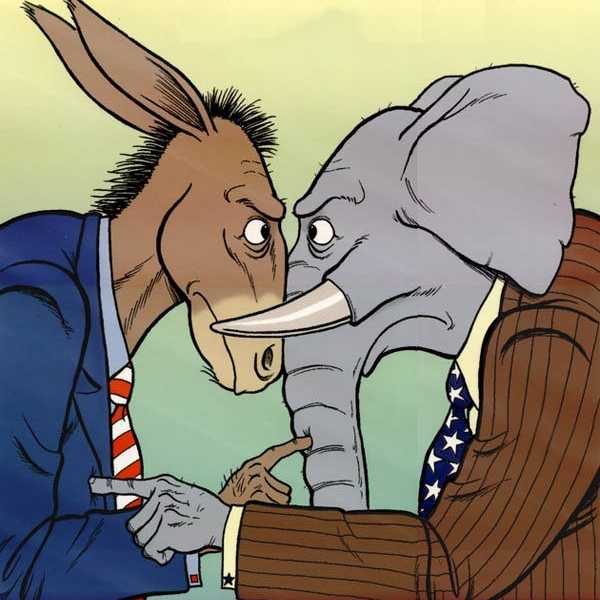
The 2016 presidential election has easily been one of the most tempestuous in American history. With both the Republican and Democratic candidates being widely disliked, leading campaigns based on fear and mudslinging, many Americans consider themselves to be in the uncomfortable position of choosing the lesser of two evils.
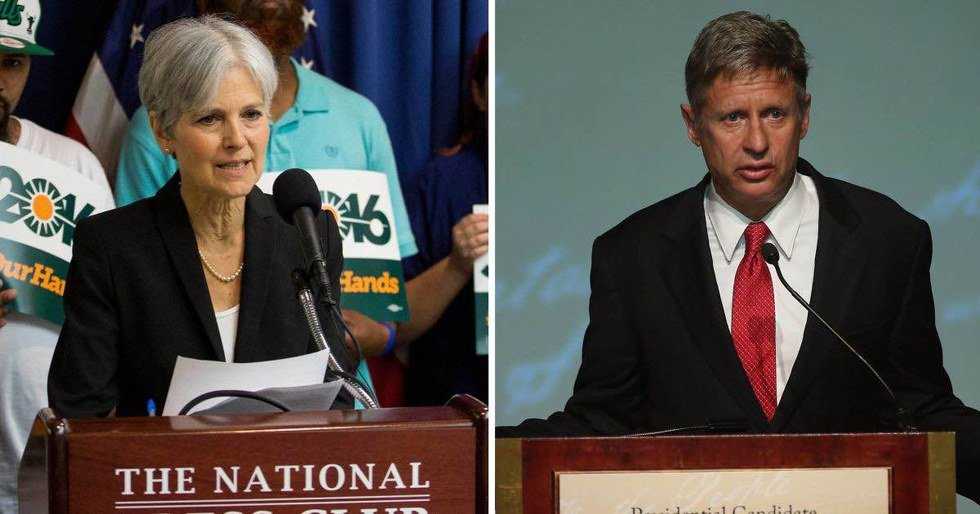
But there’s something many have forgotten, and that’s that there are more than two candidates-—namely, the Green Party’s Jill Stein and the Libertarian Party’s Gary Johnson.
Third party candidates in the United States tend to get a bad rap. Their name recognition tends to be low, as a producer for Fox Business’s Libertarian Town Hall proved when she went around Times Square showing photographs of Johnson and his running mate, Bill Weld.
This is in part due to the fact that they are rarely able to participate in presidential debates—the Commission on Presidential Debates (CPD) requires candidates to poll at 15 percent in five national surveys in order to participate. Such guidelines provide an interesting conundrum, as the debates tend to be how candidates spread their message and get their name out there in the first place.
In other words, it’s how they get the votes.
Even those who do know the third party candidates tend to be dismissive. After Green Party candidate, Ralph Nader’s 2000 campaign arguably led to Democratic candidate, Al Gore losing to Republican candidate, George W. Bush, third party candidates tend to be regarded as a vote for the other side. In the 2000 election, Democrats considered Nader to be partially to blame for Gore’s loss because he was viewed as attracting voters away from Gore, leading inadvertently to Bush’s victory.
That same fear of voting third party leading to either a Republican or Democratic victory still exists today, on both sides. It’s actually quite funny to be told by both democrats and republicans, when I tell them I’m voting libertarian, that I’m the reason Clinton or Trump will win. If Gary Johnson is taking votes from both Clinton and Trump, how exactly will that cause the other candidate to win? The world may never know.
And even those who don’t consider voting third party to be a vote for the opposing side take a cynical view, dismissing voting for third party candidates as "wasting a vote."
Since the Republicans and Democrats have had a long held monopoly on the White House, third party candidates are dismissed as having no chance. And what’s the point of voting for a candidate who’s perceived as having as much of a chance as a snowman on a hot day? Never mind that in every election there’s bound to be a loser.
It's no secret Americans are disenchanted with the two party system—a quick Google search will show you that. So why is the arguable solution, voting for candidates outside of the mold, viewed with such contempt?
People tend to fear risk. When we risk, we open ourselves up to injury and failure. It is far easier to compromise one’s beliefs than risk letting the opposite party get the presidency. And with the bipartisan, divided nature of American politics, both liberals and conservatives have reason to fear a candidate from the opposing side being in charge.
But the only way to actually change things is to take action. If we keep voting for corruption, we’ll keep getting corruption. As the adage goes, the definition of insanity is doing the same thing over and over and expecting different results.
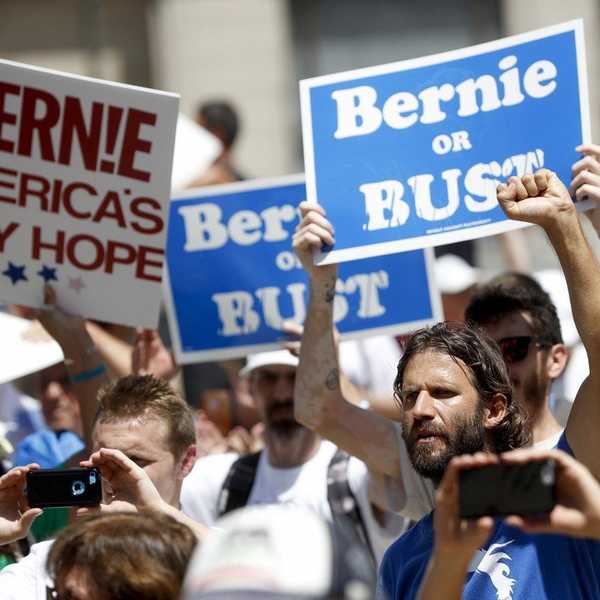
It’s bigger than that, though. A vote for Stein or Johnson proves that the voter is unwilling to compromise their principles. It proves that they’re unwilling to choose between two candidates that they dislike and distrust. It shows a commitment to their personal belief system—whether that be the progressive movement Bernie Sanders originally ignited, or the libertarian platform of personal freedom and economic responsibility.
And after all, to quote lyricist Lin Manuel Miranda, “If you stand for nothing, what will you fall for?”