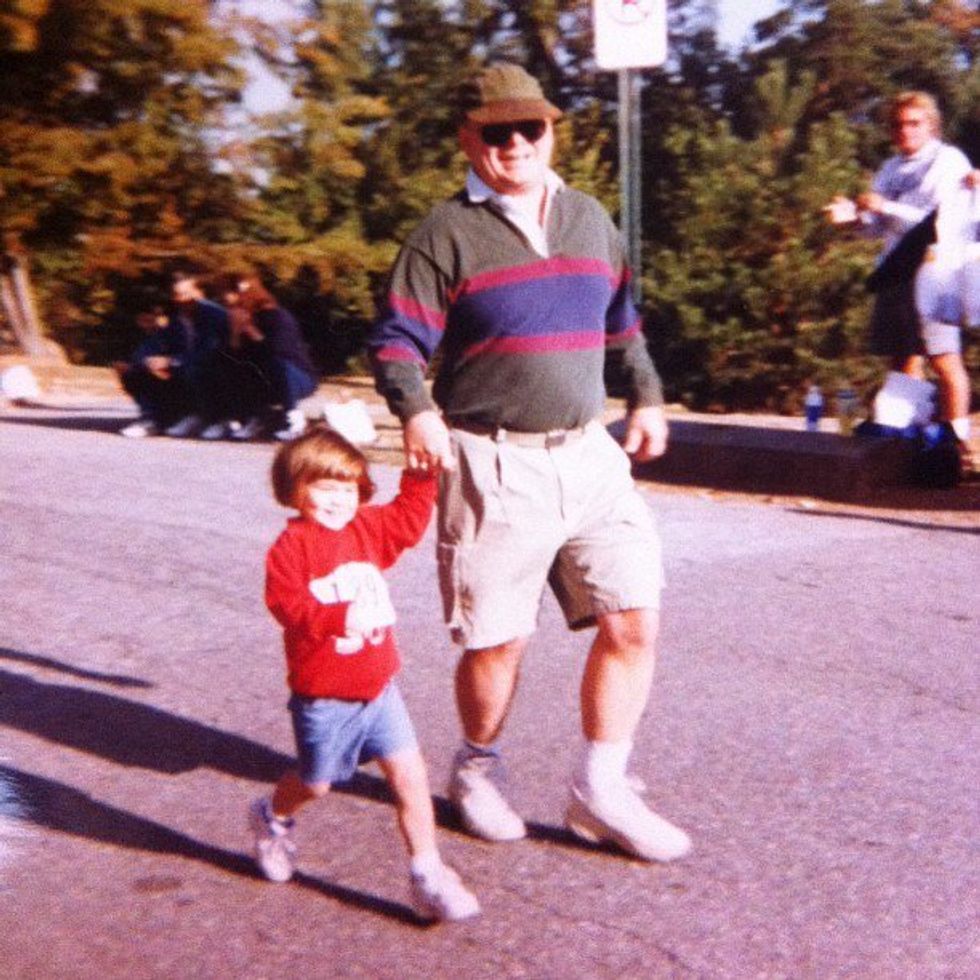
It's an unfortunate truth that losing a loved one is an inevitable part of life. By the time we reach our college years, everyone has most likely experienced death in some aspect -- maybe a friend, a relative, or even a family pet. While finding people who have experienced some sort of loss at this point in life is almost expected, I have found that it is not nearly as common to find someone who has lost a parent, and no one really knows how to deal with it when you have.
My dad passed away when I was a junior in high school. Coming from a small town, it was common knowledge and was not something I had to inform people of. There was no avoiding the uncomfortable encounters I had with people following his death who had absolutely no idea what to say or how to handle it. When I came to college and made new friends, I quickly discovered once again that with their realization that I had lost a parent came the tip-toeing, sympathetic stares, and loss of words at what to say or how to respond. Throughout these encounters, I have formed a list of things I wish people knew about losing a parent.
1. It's the card that was dealt to us.
I think the most common thing I hear from people when they find out is, "I can't even imagine -- you're so strong." While this is meant to be comforting and supportive, it can also be frustrating. If you had asked me five years ago if I expected my dad to live long enough to see me graduate high school I would have answered yes without thinking twice. Life is a crazy thing and you can't always foresee, much less choose, the path that yours is going to take. Unfortunately, losing my dad was one of those terrible things that happened to get thrown at me and my only choice was to deal with it. I could never have imagined losing a parent so young either until it happened. The truth of the matter is that although my world had seemed to stop and would never be the same, the rest of the world would continue on -- and my only choice was to continue with it.
2. Bad days happen.
No matter how much time has passed, there will be bad days. Although many people expect these hard days to be his birthday or the day he died, I have found that the hardest days are the ones I am not prepared for. It could be a dream, a smell, a memory, or simply wanting him here to talk to share an experience with, and suddenly the sadness creeps in and takes over. As someone who hates being upset, I find these days are extremely hard to get through, but at the end of the day, I remember grieving is a process that you just have to let happen. Bad days don't last forever.
3. Good days happen more.
In the first few months after losing my dad, I was filled with a lot of anger and felt what I had experienced was extremely unfair. I would constantly question why this had to happen to my family and why I had not gotten more time with him. After feeling this way for a while, I came to realize that the only thing I was getting from these feelings and this attitude was more anger and I was choosing to focus all my attention into the years I had not gotten instead of the ones I did. Many people grow up never having a father figure at all, and I had 16 years with an amazing one. I grew up feeling constantly loved, supported, and taken care of by a dad who loved being a dad more than anything and I have memories I will cherish all my life, which is a lot more than many people can say. Don't get me wrong, there are still days when all I can think about is how unfair it is, but I am eternally grateful for the time I was given.
4. You don't have to tip-toe around the subject, but it is okay to be mindful.
The thing I have noticed changes the most after losing a parent is how people react when any subject involving dads comes up. There have been numerous instances such as watching a movie where there is a dad-daughter moment or having a conversation where people are discussing their dads when people freeze and look at me to gauge my reaction, only to quickly turn the conversation in a different direction. While I do appreciate people worrying about upsetting me, having people constantly worry they are going to say something wrong is way worse and it also makes everyone involved extremely uncomfortable. On the other end of things, it can be extremely upsetting to hear people discuss how much they hate their parents, or how annoyed they are that their dad keeps texting them to check on things. Before jumping at the opportunity to be frustrated by your parents, be mindful that some people aren't lucky enough to have a mom to call them every day for an update, or a dad to check up on them constantly. It is easy to take things for granted when you do not know what it is like to be without them, but we all should be grateful for every second we have with our loved ones, because time is not promised.
5. I want to talk about him.
A common misconception I have found is the assumption that because I have suffered a tremendous loss, not talking about it is less painful. At first, I believed this as well and would avoid circumstances where I would have to listen to people talk about him and how much they missed him, but I soon realized how wrong I was. My dad was an amazing man who impacted many lives. Even though he is no longer living, his memory can stay alive in the stories told by those who loved him. By talking about him and sharing memories, I can remember all of the amazing times I had with him and hear about the times others shared with him.
Although losing my father has been a personal battle, everyone we meet in life is facing battles of their own. No one has it easy, and this experience has taught me that instead of avoiding talking about things because we don't know what to say, we should instead be open to supporting each other through our own personal struggles.