
As my grandmother likes to say, my father is “a criminal… defense attorney." This year, I worked with my father as a legal translator for one of his cases. From December to May, I traveled with him to visit his client in a jail three hours from my hometown. Over multiple visits, I got to know my father's client and came to care greatly for him as a person and a friend. Despite having a strong case, the present system of three strikes minimums -- combined with sentencing enhancements -- that is embedded in U.S. federal code means that in going to trial he would face a mandatory life sentence if convicted. Bearing this risk in mind, my father's client pled guilty. Yesterday was his final court sentencing. After the judge handed him a sentence of sixteen years in prison, we met with him back at the jail. I said goodbye to him, perhaps for the last time.
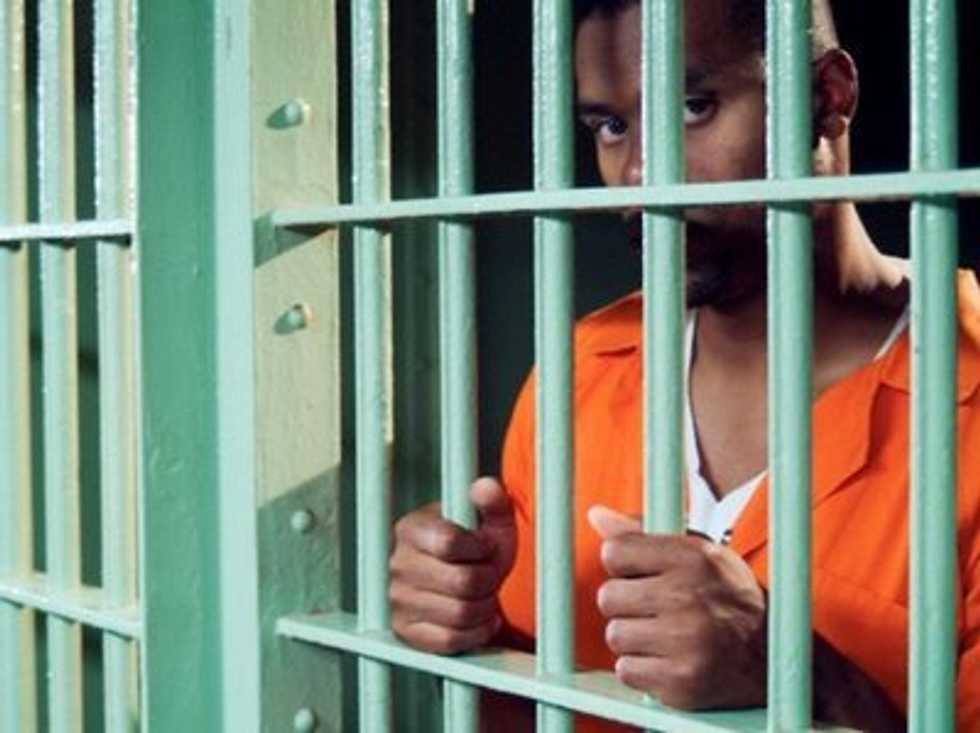
This afternoon was the first time I had seen my father's client cry. Before yesterday, every time we visited him he sat in his slightly soiled orange attire, peering at us with youthful, earnest eyes from behind a grate, a thick piece of glass, or metal bars. The dulling impact of the monotonous pewter walls, ceiling, and floor of our visiting rooms was always lessened by the man's contagious happiness. He would smile, kid around, ask me how the days or weeks since I had last seen him had been. He wanted to know us as people, not just as part of the legal system he was, by this time, fairly well acquainted with.
And it was not only us, his defense team, whom he cared for. The prosecution, too, was apparently more than a distant oppositional force. My father's client labored in his jail cell, stripping threads from his bed sheets and weaving the entire legal team intricate bracelets and crosses. Talk about making the best out of a bad situation. His art was impressive, touching, and a clear indication of his patient, hard-working nature.
During visits, when conversation stalled as my father shuffled through evidence or paperwork, he would inquire about our lives. He was "sencillo"-- a Spanish word that roughly translates to some combination of affable, easy, unassuming, modest, and straightforward.
He was a constant reminder that not only should we not judge a book by its cover, but also that we should not judge a book until we have read it from front to back. That is to say, reading someone's resume, biography -- or criminal history, for that matter -- cannot be considered enough to know whom that person is. To know an individual is to believe in their best after knowing their worst.
I know myself to be someone who cares easily for others. It is not difficult for me to be persuaded by another's story. The past five months have tested my rational respect for law against my instinctual inclination towards emotion and attachment.
My experience coming to know, care for, and respect a man behind bars over the past five months has made me acutely aware of my own freedom. It has encouraged me to examine the responsibility that defines this freedom. There is a quotation by Nelson Mandela that illuminates what my father's client has taught me about what freedom means: “To be free is not merely to cast off one's chains, but to live in a way that respects and enhances the freedom of others."
My father's client was a compassionate, joyful, caring man who, at times, failed to exercise good judgment in his past. His sincerity and resilience serve as a lasting reminder to me to live deeply -- to remain open to loving, discovering, and truly knowing those around me and to approach each day with intention, wonder, and optimism with room for vulnerability and sadness.
In this way, my father's client has increased my ability to profit from the freedoms I am afforded in daily life, thus fulfilling Mandela's definition of being free as living “in a way that respects and enhances the freedom of others." So, while he may not yet be able to cast off his chains, my father's client embodies, in many ways, a more commendable picture of freedom than the rest of us.
Perhaps to be free is not to walk without handcuffs, but to make the lives of others better -- not with headline-grabbing feats of heroism, but by cherishing the daily interactions that define what it means to be human.