


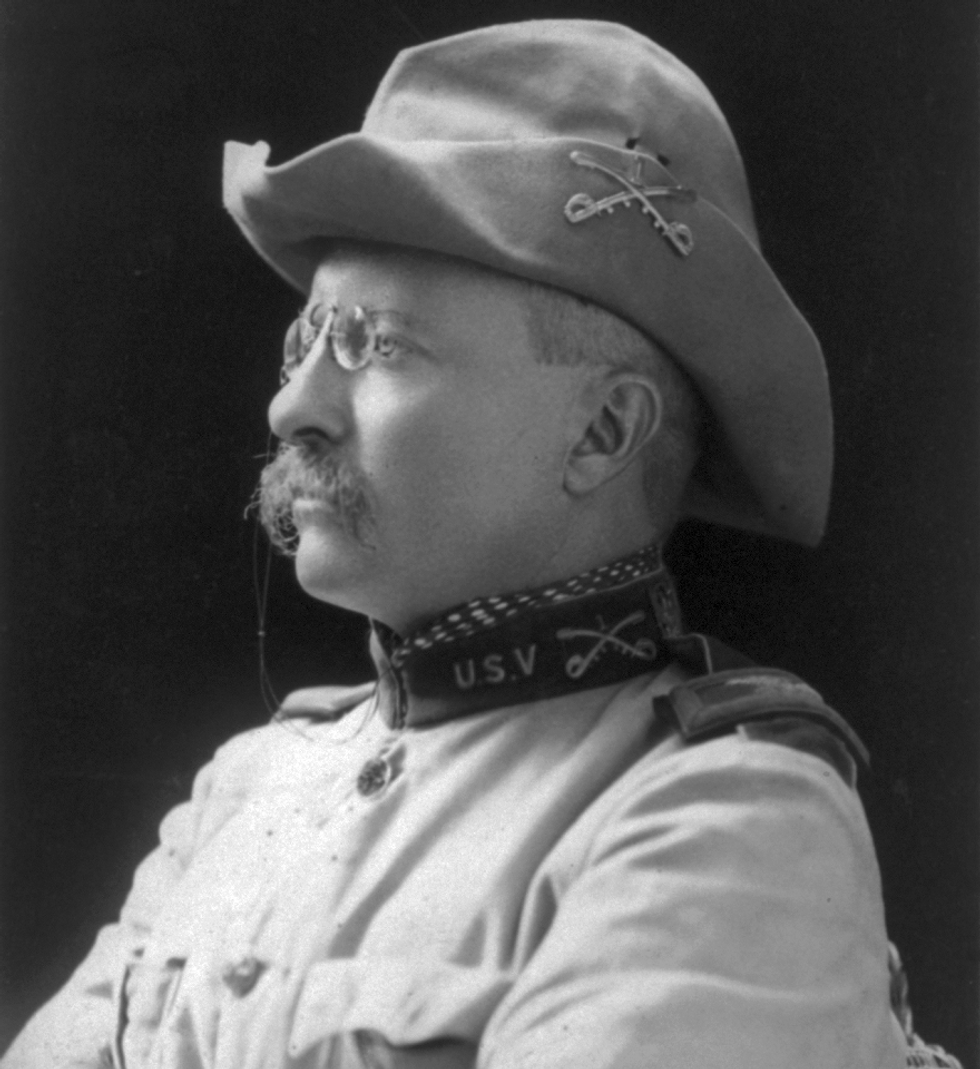
America has had many really cool presidents over the years, war heroes and actors alike. The coolest president so far, however, has to Theodore Roosevelt. Born October 27, 1858, he has overcome many adversities, was a cowboy at heart, refused to lose anything, and even saved football when it was deemed too rough. He was truly a force to be reckoned with.
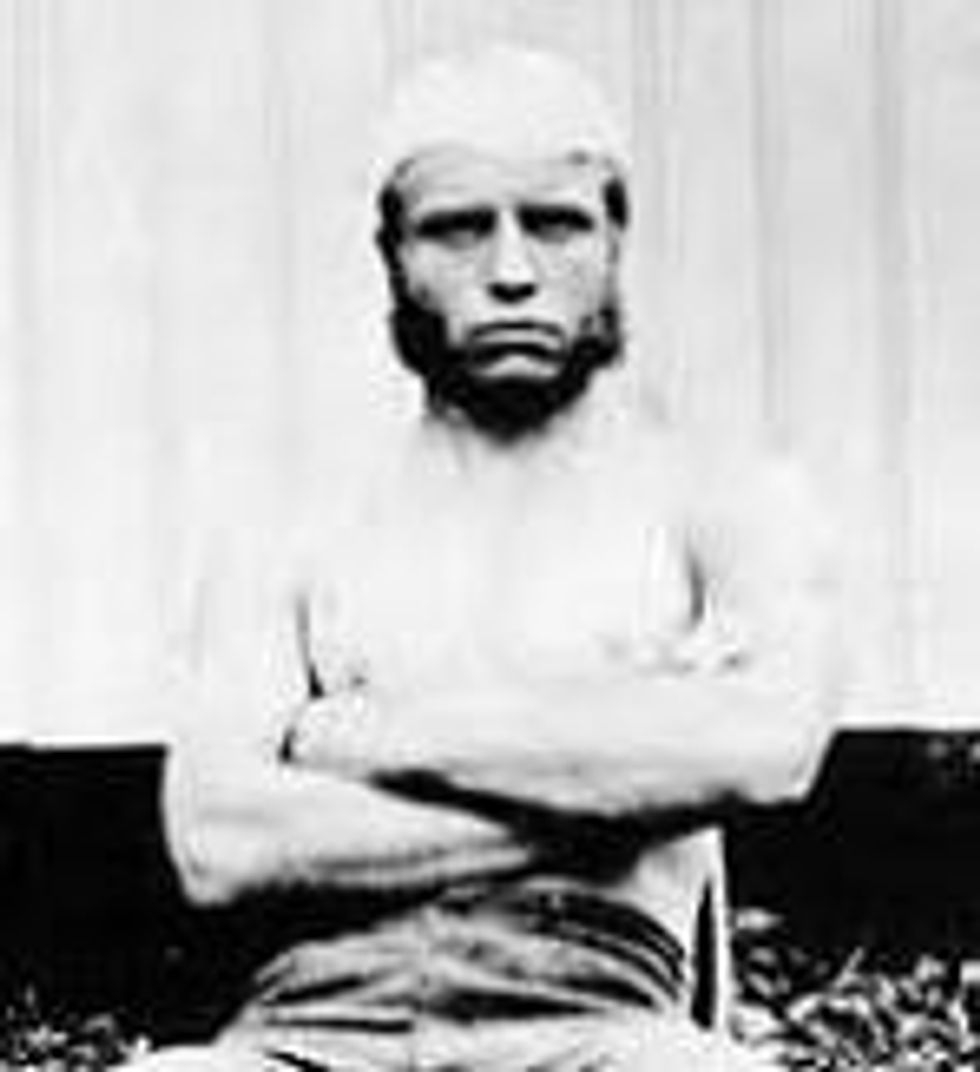
Teddy was a sickly baby. Born with asthma and other illnesses, he was not expected to live into his teenage years. His father would not allow him to give up so easily, however, and started training Teddy to box. The boxing paid off, Teddy became a very strong young man and often took on competitors under bridges.
He graduated from Harvard in 1876, then went to Columbia Law School for a year. He was impatient, however, and dropped out to pursue is political career.
In 1880 he married his first wife, Alice Hathaway Lee, on October 27th. They had a daughter, February 12, 1884 and named her Alice. His wife died at the young age of 22, on the same day Teddy’s mother died: February 14, 1884. Teddy had become youngest member of the New York Assembly, he was at work when he got the call. It hit him kind of hard . . . he informed everyone to not speak his wife’s name around him, left his daughter with his sister, and moved to the Dakota Territories to live out his dream of being a cattle herder (he really liked the idea of being a cowboy). Tragedy struck him again in 1885 when a blizzard killed his cattle. So he returned to his home; resuming his Fatherly and less important political duties in 1886. Alice quickly became a celebrity in her own right within the political community (which is not really important, I just like her because she was sassy). On December 22, 1886, he married Edith Kermit Carow, a woman who grew up next door to Teddy. Together they had four sons and a daughter.

In 1889 he became the U.S. Civil Service Commissioner until 1895, when he became President of the New York Police Board. In 1897 he was offered the job of U.S. Assistant Secretary of the Navy. He could not keep still for too long though; he took the job for only a year, retiring in May 1898 to become the join the Rough Riders–quickly becoming a Colonel. On 1 July 1889, he and the Rough Riders had a major victory at San Juan, by charging up Kettle Hill. They had been taking heavy fire, their enemy was on top of Kettle Hill, using the height difference between the two grounds of battle as a major advantage. Teddy’s second in command urged Teddy to retreat. Teddy, however is a sore loser, and had different plans. He led a charge up Kettle Hill, his courage to charge any enemy with such a great advantage lead to the victory of his men. Having fulfilled his dreams of being a cowboy and war hero, Theodore retired from the Rough Riders in September 1889 to become involved in politics again.
He was elected governor of New York that same year until March 1901, when he became Vice President until 14 September that same year. September 6,1901, President McKinley was assassinated, leaving Roosevelt to become the youngest president in American history.
In 1904 when he ran for presidency again, at the young age of 45, Roosevelt easily won with 336 out of 476 electoral votes. He and his opponent, Democrat Alton B. Parker, agreed on political issues, making the presidential race about personality, not views. Who would not want a boxing war hero as a president?
Theodore was actually the first American to ever receive a brown belt in Judo. He line the White House basement with training mats and sparred with anyone that was willing - including his wife, boxing champion John Sullivan and a Swiss minister.
Teddy, who played football in college, also saved the sport. When officials deemed the sport too dangerous to play due to the numerous injuries being accumulated. Teddy stood behind the sport, demanding it not be terminated. He later founded the annual Navy vs. Army football game.
During the beginning of the 1900’s, in exchange for $10 million plus annual payments, Panama finally agreed to allow Roosevelt to build a canal that would speed up trade.
Not soon after he would include the Monroe Doctrine, known as the “Big Stick Policy,” into his foreign policy. It is known as such because Roosevelt stated that we should “speak softly, and carry a big stick.” He made this policy after refusing to back down to Latin America after they stated that the western hemisphere was off limits to foreign encroachment. He insisted that it was practically a responsibility of America to react with force to such statements. Proving once again that he cared about zero percent about the higher ground his enemy had and charged them head on, mainly because he was a really sore loser.
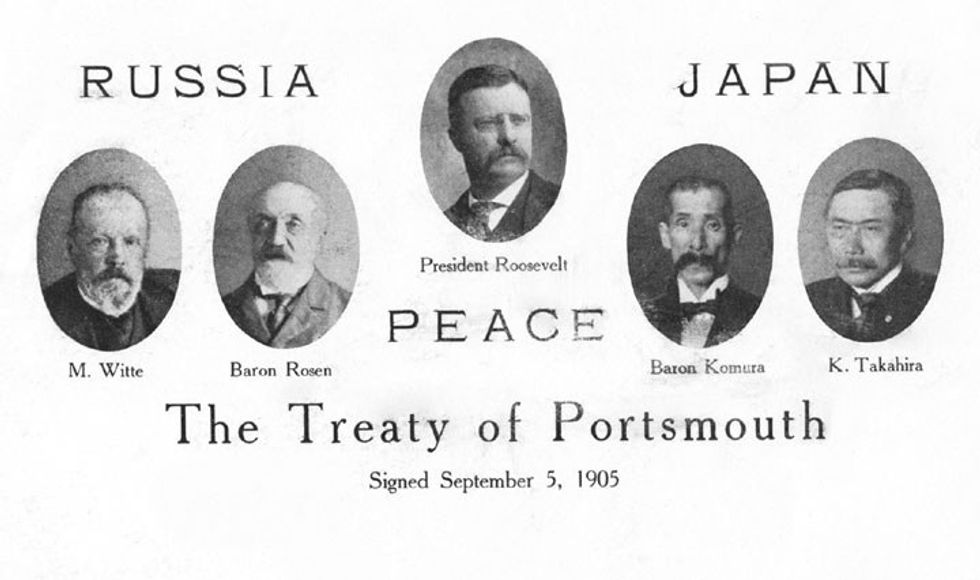
He won the 1906 Nobel Peace Prize for negotiating peace during the Russo-Japanese war in 1904-1905, successfully ending the war without further bloodshed. Proving that he was not just a military dog, but a true leader. I am not entirely sure if he did this because he did not want more men to lose their lives or if he just wanted to (in a way) win someone else’s war . . .
One of the main things Roosevelt is known for his is conservation efforts. Preserving over 125 million acres of land in America. Turning the land into national forests under the protection of the government. During this time he also created the first wildlife reservation in America, ensuring a safe environment for the animals to repopulate without the threat of being hunted.
In 1906, Upton Sinclair wrote his novel The Jungle exposing the disgusting and unsanitary practices of the meat packing industry in as well as the dangers of working in such places (you should definitely read it, it is very well written and rather informative as well as entertaining). While in office, Roosevelt was known for his progressive policies. One of his many nicknames being “Trust Buster,” because his administration used existing antitrust laws to fight against corruptions in the industries such as: railroad, oil, as well as others. His policies concerning trusts and labor reform were part of the "Square Deal." After reading The Jungle, Roosevelt demanded meat inspections and the Pure Food and Drug Acts which were carried out later in 1906. These laws required the government to inspect meat and protect consumers from food and drugs that might be dangerous, as well as creating laws to protect the workers.
In 1907, Roosevelt made a Gentleman’s Agreement with Japan (who kind of owed him one for ending their war in 1905 peacefully), agreeing that Japan would slow the immigration of laborers into America. Roosevelt nudged them into the deal by ensuring them that if they agreed he would not pass a law similar to the Chinese Exclusion Act (threatening to cut someone off usually helps negotiations).
Unfortunately, Roosevelt did not run again in 1908. He went on a safari to Africa, instead, where he collected specimens for the Smithsonian Institute. Even though he promised not to run again, he sought the Republican nomination in 1912. When he lost, he formed the Bull Moose Party so he could stay in the race (because he really was a sore loser). By running, he caused the vote to be split, allowing Woodrow Wilson to win.
Roosevelt was shot in 1912 by a would-be assassin 90 minutes prior to a campaign speech. It would take a little more that to take him down however, he was not seriously injured and gave his speech anyway.
He died in his sleep on 6 January 1919 of a coronary embolism. After he died, Thomas R. Marshall (the sitting Vice President), said "Death had to take Roosevelt sleeping, for if he had been awake, there would have been a fight."
This wacky president with a knack for not backing down is definitely our coolest president. I understand that he never did a mic-drop like Obama, but that was not exactly a “thing” back then. He was a boxing president that always held on to his childhood dreams of being a cowboy, and literally dropped everything twice to become one. He was a war hero, a Nobel Peace Prize Winner, and a fighter to anyone who opposed him. The man literally created his own party after being refused a running position in the Republican Party, who does that? Although he will always pop into our heads when we think of teddy bears, the man was anything but. You have to hand it to him, he was pretty cool.
Tschüss!















