

It is well known that the world of academia is as much privy to trends as fashion, entertainment, or politics. Every facet of culture is under the sway of a slow group mind, whether that be the political pendulum swinging first left then right, or the invisible hand of the market, or a cultural shift with a less ubiquitous metaphor. Educations for example oscillates between an emphasis on STEM-based career preparation and a revival of art and music and literature. This back and forth responds to trends in politics, economics, and social change, though all too rarely is educational policy decided solely by educators. Each of these trends follow their own patterns which are connected to all the others, forming a web complicated enough that anyone claiming to understand it is a charlatan. But in looking at a single community (academics) and a single field (literature) patterns can be see
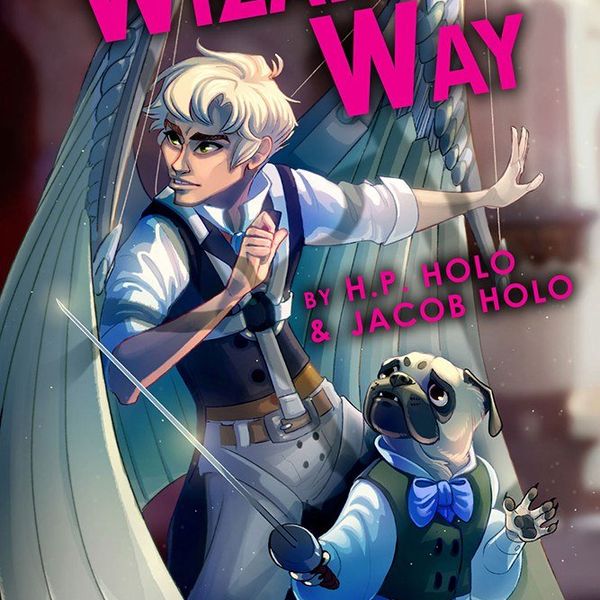
Depending on the era studied, there are always some writings that gain traction, and some that are forgotten. Literature is divided into periods based on common traits of the most influential works. However, there are entire genres of writing that have not been found worthy of serious investigation. There are genres and mediums that are often considered intrinsically less relevant that the classics, when considered at all. Any first-year English student can identify the ‘lesser’ genres I speak of. Genres such as Science Fiction and Fantasy, and media like Graphic Novels are not treated in the same way that other types of writing are. I know, this is changing.
I see graphic novels on the shelves of school libraries. A greater willingness to study works of popular fiction is growing in lower education and beginning to creep into higher education. I bring it up because we are just experiencing the very beginning of the shift in trend; science fiction and comic books have long been felt unworthy of serious thought and this opinion still holds at least partial sway. To help demonstrate the place these genres hold in academia, I will take one sample, Science Fiction, and recall all the times SF has come up in four years of pursuing an undergrad in English. It isn’t hard to remember.
In all of the literature courses I have taken, SF has come up twice. Note that there is no SF course offered at my university, or at least not to me during my time there. I am referring to times that it was discussed in a class in more than a passing manner. I am also restricting this to an actual literature class (I took a young adult lit class that discussed the genre, but only in the frame of education). Both classes that took time to discuss SF did so accidentally; in looking at historical scientific discoveries and how such discoveries influenced literature of the time.
My first instance of Science Fiction intruding on the serious discussion of serious literature was during a course on the Romantic Period. A period of literature I am quite fond of for many reasons, the Romantic Period brought the world one of the first, or at least purest, examples of modern Science Fiction Horror: Frankenstein. In the early 1800’s when new scientific discoveries were changing the world, Frankenstein has become the greatest icon of SF Horror. The fear of science outpacing morality is not the only theme of science fiction, but is certainly the most prevalent current running through the genre. The fear of a mad scientist who has created something blasphemous and dangerous and wrong is a favorite thematic element of books, movies, and shows. Of course Mary Shelley’s work explores much more than just this concept. She questions the role of family dynamics in a mirror of her own life, as well as delving into much more than can be expressed in a single article. But that element of her Modern Prometheus is something the shaped Modern Science Fiction. Though certainly arguable I discussed with a professor the influence of Frankenstein as the most powerful early work of SF. This was one discussion, in one class, for one day. The second time SF came up in my academic career the connection was far more tenuous.
Another day, another course. This time I was studying the restoration and neoclassicism (the order I have discussed these connections is not chronological in terms of history, just chronological through my experience). This time my class was reading works of the venerable satirist, Jonathan Swift. One of the fantastical islands traveled to by Swift’s great fictional explorer, Gulliver, peaked my interest. An island of incredible science far beyond what England had at the time of Swift’s writing, this portion of his novel can be defined as Science Fiction. I only hesitate to truly define it as such because this work is, just like much of Swift’s work, satire. The island of Laputa fits the definition of SF, however the thematic purpose is counter to true works of SF. Swift used scenes of science to mock scientists. The citizens of Swift’s fictional island have amazing science that is unusable in any practical way, rendering all discoveries ridiculous. Swift included this section because he had a very real dislike of the The Royal Society and their recent discoveries which he wanted to paint as pointless, counter to common sense, and ridiculous. Whereas Mary Shelley used the unrest borne from recent discovery to tap into a fear which has become more relevant with passing centuries, Swift tapped the same unrest in a more deliberate attempt to halt progress. For these reasons, I connect Swift’s work to science fiction by use of the same elements, but not necessarily in spirit. I said as much in my class, however this was just one small portion of a large work that satirizes many things.
Science fiction is more than just a genre, it is a facet of literature that explores modern insecurities more directly than any other form. By the broadest definition science fiction has always existed, for even the oldest written accounts dream about the future. But the fear of new technology began with the scientific and industrial revolution. We began to question more than ever our own humanity. What is blasphemy when man can create what was thought to belong to God? What is man when definitions of humanity are in flux? How can we connect in a world with more capacity for communication, yet ever receding empathy? Science fiction is a modern art form that helps focus modern questions and fears. Yet it has been relegated by many academics to lower class status. Such has been the fate of anything popular. As Oscar Wilde said, “[A]rt should never try to be popular. The public should try to make itself artistic” (The Soul of Man Under Socialism). Popular works are acceptable for the masses, but some idealized concept of art must exist, and must exist separate from the whims of popularity. But Mark Twain said, “′Classic′ - a book which people praise and don't read”. Most modern academics will admit that art cannot or should not be cleaved entirely from popularity, art is meant at least in part to entertain. But genres of literature that still maintain a stigma of being entertaining and shallow still carry this shade of judgement in higher education. One that I hope to see fade entirely in coming generations, a fog burned off by the heat of the flame that Prometheus gave to man.
~~~~~
Ban Poem of the Week:
Viking Funeral or Nothing.
If I die, it was fear that killed me
Remember that when you put me in the boat,
Light the fire and push it out to sea.
I’ve lived a life in the shade of the tree,
Never spoken up from this parched throat
If I die, it was fear that killed me.
There’s still time for passion, still time to be.
The story may be closing, but the last line has not been wrote.
Light the fire and push it out to sea
I never thought, or at least considered, to live roughly,
my life story was never an epic, I fear it was just a quote.
If I die, it was fear that killed me.
It’s time for the fire, let the warmth burn your grief into glee
Let the ocean be my rest, the waves my coat,
Light the fire and push it out to sea
Then meet me in Valhalla, where I’ll hold the key
We’ll live in adventure, a ringing note,
If I die, it was fear that killed me,
Light the fire and push it out to sea.
-by Matthew J Rees
-for me















