


Erwin Smith is deceased, and my life is over.
Well, perhaps that is a tad dramatic, but the impact that I felt upon learning of his death absolutely ruined my evening. I've been following Attack on Titan for nearly three years now, and as the leader of the Survey Corps--and survivor of seemingly endless near-death experiences--I thought he was impervious to demise. I honestly didn't know how to cope with the loss of one of my favorite characters.
Yes, you read that correctly; I said character, as in, completely and totally fictional. And despite Erwin's technical non-existence, I still managed to shed tears for about twenty minutes after reading this most recent chapter. With this development, not just in Titan, but in my general attachment to that of the fictional, the contemplation on connections to that of fictitious beings has become more intricate than I had initially imagined, especially when considering the concept of death. It's a universal absolute that everyone on this planet will, sooner or later, meet their bitter end, and while it has become readily apparent through the abundance of literary courses in which we are enrolled since middle school that utilize fiction as a means of coping, the idea of taking a few moments to genuinely mourn those that have passed away on (or off) the page is not openly discussed as often.
I'm not an authority on grief, but I can deliver the generic, recycled statement: "Everyone handles grief differently." Sounds like a broken record, but it wouldn't be repeated so vehemently if it didn't hold some merit, right? The same can be applied to that of the death of a favorite character from a novel, manga, film, or video game franchise. Some internalize that agony and retreat into themselves, while others project onto fellow members of a fandom in bouts of anger directed towards those that have survived, not unlike how some of us cope with death in reality. Naturally, this can tell us a great deal about ourselves, but the connections we feel towards these men and women on the page or screen can prove to be even more enlightening.
I'll continue using Erwin as an example, since this wound is still fresh. Last month, I had the "Wings of Freedom" permanently emblazoned on my left shoulder.

(Photo Credit: Morgan Byrne)
It's a pretty immense leap to have a symbol of a fictional military placed on--or in, rather--my skin, but with Erwin leading the Survey Corps and existing as a sort of beacon of hope and inspiration for me, it seemed like a valid choice. There have been countless instances throughout the past few years wherein I have felt overwhelmed by college and work, but after taking a few deep breaths, I've been able to find solace in answering the question, "What would Erwin do?" And now, he's been officially declared deceased, and while I know I haven't lost anyone flesh and blood, it feels just as real, like some aspect of me has become more phantom than genuine human being.
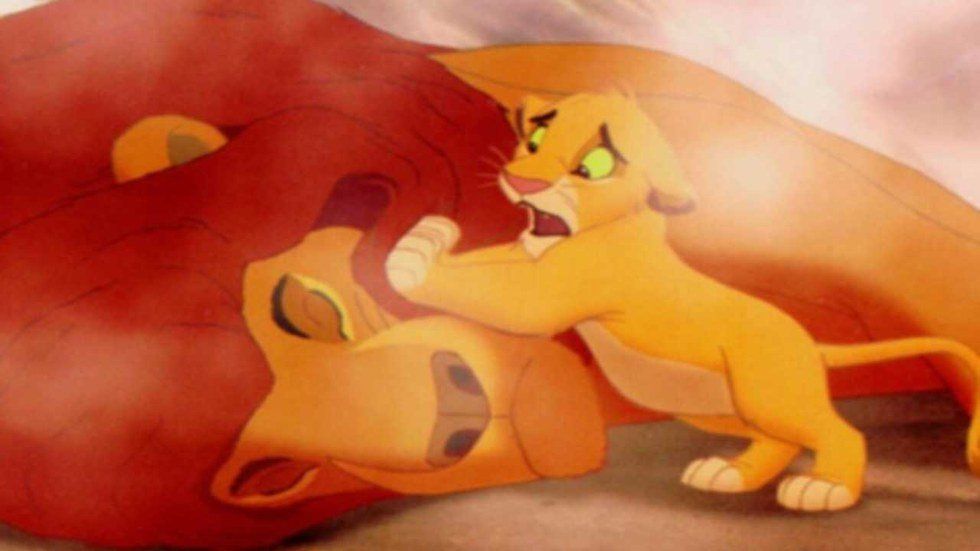
Fiction can exist as a type of escapism, but with the inclusion of the brutal reality of death, life can begin crumbling down upon the reader, removing a beloved pillar from their life that had been a corner stone of their personal development. That world--at least, for that moment--is no longer safe from the stifling confines of reality, and the reader becomes aware of the fact that even the most passionate, noble people must meet their end. However, it is this very potential for death that makes many readers and viewers hold these characters so dear, simply because they are like us in that they, too, are not infinite.
They grow and change as we do, and when they feel pain, we do, too. When I saw the final panel of Erwin's death, it didn't feel like something was passively occurring in order for the plot to progress; it felt as if a partner in crime had been ripped away from me, like a means of moving forward had taken twenty steps backwards.
As aforementioned, the stages of coping with extreme sadness vary for each and every individual, and in the case of fictitious men and women, that is not an exception. And while I cannot recommend taking the week off from work to gorge on Cheetos in your bed--please, drink some water and go outside, friends--I absolutelty believe that mourning the loss of fictional characters is completely valid. You didn't just witness something as a bystander; you felt something, and you're in pain. The realm of loss should never be seen as some sort of competition, and if you need to take a few hours to cry into your favorite pillow, by all means, do that very thing.
Additionally, do not let anyone belittle you for feeling this way, especially when becoming upset over a fictional scenario in a novel or film is very similar to that of a crowd growing angry due to an upset at a sporting event. In neither case does the audience have any control over the outcome, and yet we seem to think that one form of frustration or agony is more valid than the other. Your pain is real, and it should be treated as such.
Just as pieces of fiction are extensions of the authors, the connections we forge with the characters are extensions of our beings. We are attracted to those that exemplify what we admire or feel we need, and when those outlets for inspiration are forcibly removed, we must find some way to move on while maintaining everything they have taught us, and the first step is to acknowledge the pain we are feeling.
This will let us know that the lessons these characters have taught us have not been in vain.
















