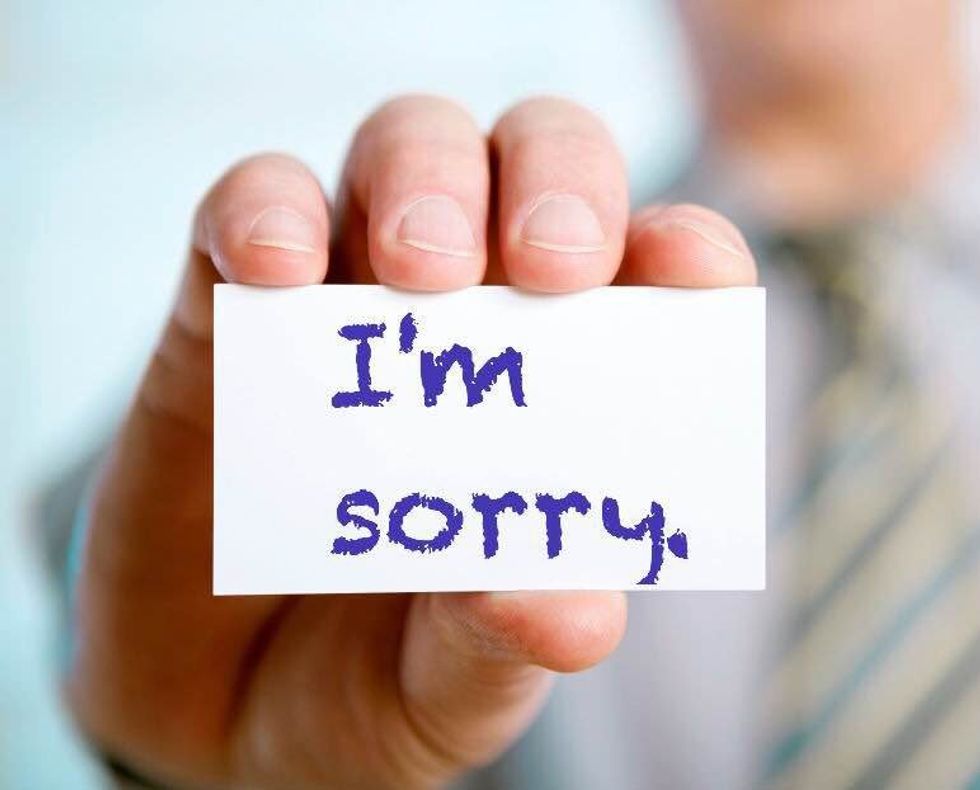
At this point in most of our lives, we’ve all got ourselves into situations where we’ve felt the need to apologize, or maybe even been forced to apologize, but either way, apologies are something we’ve all likely had some experience with. Whether you said something you didn’t mean when you were drunk, lost your temper, flaked on a friend, became self-absorbed in your own problems, or backed into someone’s car when you were attempting to parallel park, we’ve all been in a position where apologies were desired.
So why are we still so bad at it? Why does getting someone to utter those two words often feel like pulling teeth? We seem to hear the same thing from many of our friends when they have had a recent disagreement with another friend or significant other, “I just wish they were sorry. I just want a sincere apology.” I think it’s fair to say that the majority of us are reasonable enough at this point in our lives to accept that time machines won’t be a thing for a few more years, so we can accept that humans who hurt us can’t go back and change their behavior. So, reasonably, we have learned to accept apologies, and often even expect them. But why then, since so many of us feel this way, is it so hard for us to genuinely apologize when the tables are turned?
“I’m sorry but if you wouldn’t have done x then I wouldn’t have done z. I’m sorry but remember that time three months ago when you did that thing, that still upsets me. I’m sorry but you’re upset but you’re overreacting. I’m sorry but I didn’t mean it….” The list goes on. Apologies that are really just excuses in disguise. We’re all humans who have egos, and often times our pride disables us from being able to express humility when we’re responsible for hurting others. As I talked about in another article, when our words hurt others, our intentions do matter in validating that hurt. Just because we didn’t intend for something to come off as racist, insensitive, or hurtful, does not mean that the person who was affected by our behavior is not allowed to feel hurt. And most importantly, any actions that are harmful to others, whether intended or not, warrant a genuine apology.
So what am I proposing? Recently I have been a couple situations that got me thinking about how I can improve the ways in which I apologize when I am responsible for hurting others. And what my experiences have taught me is that apologies require first and foremost admitting fault and accepting responsibility. If you are unable to admit that you are at fault for anything, do not apologize. Secondly, apologies require humility. They are not to be used to make excuses or to point the blame on the other person, they are to humbly ask for forgiveness. Thirdly, they require a change in behavior, and an honest attempt to rebuild any trust that was broken. If these two things are not a part of your plan, don’t apologize.
Despite the fact that many of us find us difficult to apologize in the first place, I think another problem is empty apologies being offered like germs for the common cold. When we say things like “I’m sorry but..” or when we say I’m sorry with no acceptance of fault, and no plans to change our behavior in the future, it lessens the value of apologies. But because of the whole lack of time machine thing (come on science, it’s 2016) apologies are all we have. So yes, not saying we’re sorry is a problem, but saying we’re sorry when we don’t mean it is another. It’s time we take back the apology, and take back the power to resolve conflicts and in turn coexist in a more friendly and productive environment. In the world we’re currently living in, we can use as many uniting forces as we can get, and if we have such a powerful tool, the tool of a genuine apology, why wouldn’t we use it?