


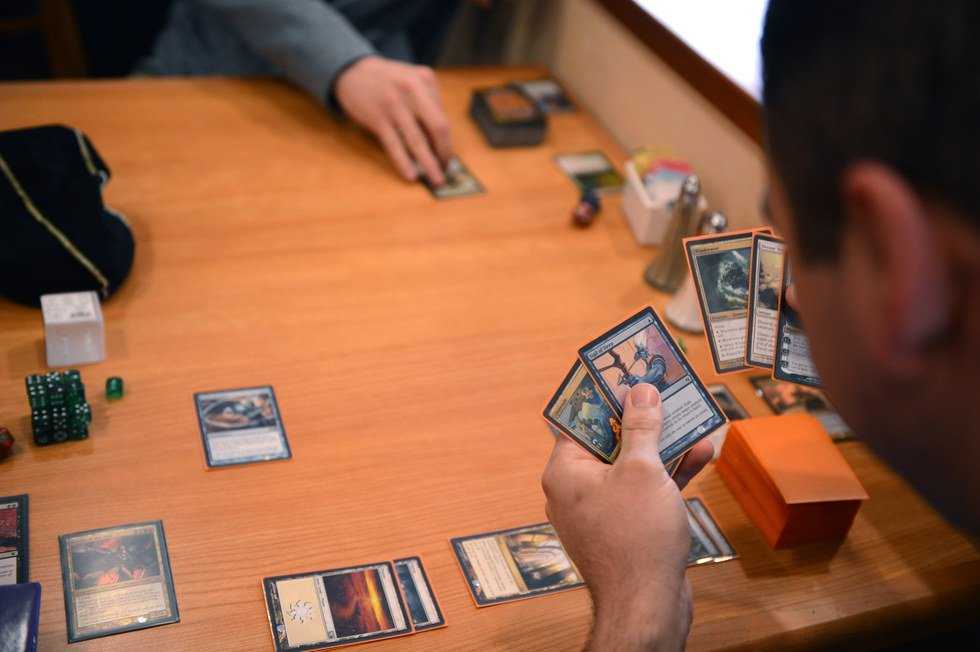
“I win." The words shattered my brooding silence and I shifted my gaze above the battlefield. Across the table sat my girlfriend -- all smiles. She’d bested me at Magic: The Gathering (MTG), a card game I taught her myself. At first I was benumbed -- awestruck. After several moments feelings rose up in me like thunder and lightning; feelings of happiness and pride.
For those of you who don’t really know what the balls Magic is, allow me to explain. MTG is a trading card game (like Pokemon or Yugioh) designed by the company Wizards of the Coast. In its simplest sense you collect cards, you trade cards, and you destroy one another in brutal fights to the death. It’s wildly addictive and incredibly fun; like cardboard crack. But underneath this surface layer of fun lies a deeply educating and enlightening experience.
These are the three life lessons that MTG taught me:
1. Lose with dignity and win with humility.
No one likes a sore loser, and everyone hates a gloating winner. When I lose I accept it as it is. I make no excuses and detract nothing from my opponent’s victory. I don’t complain, I don’t whine, and I never feel cheated -- because every loss is a chance to gain knowledge that I didn’t have before (and that’s a lesson on its own). When I lost against my girlfriend I reacted with happiness and pride for having been overtaken by my young padawan. I treated the loss as a victory of its own, and that sort of philosophy has saved my ego innumerable times.
When I win I respect my opponent. I shake hands and offer advice if advice is sought. If my opponent wants nothing to do with me after a match I oblige and seek other seating (but this an incredibly rare occurrence). Above all else I refrain from bragging, as it takes away from the other player’s experience and makes you look like a butthead.
2. Patience is a virtue.
Many times in Magic, an opponent will take an exceedingly long amount of time to do something. This is what I call “going into the tank.” They sit and think about their next move, twisting and turning it over in their head -- trying to work out the best possible course of action. Some players get angry at the guy in the tank, but I don’t. Staying patient and keeping calm, saying things like “you’re good man, take your time” will usually relax the person into making a quicker play. This sort of skill translates well into the real world, as it is easy to get frustrated when someone takes a long time to do anything at all.
3. Community is key.
There is nothing like a tightly knit community of MTG nerds. When I enter a game store I immediately know I’ll be meeting people who share the same interests. More importantly, I’ll be making new friends. I have yet to meet a person I genuinely couldn’t stand (though I usually try to find the good in everyone) which makes me proud to be part of the Magic community. My only experiences with MTG players have been positive ones. Even when watching the pros play you rarely ever see an unfriendly event (yes there are professional Magic players -- they can win up to $40,000 in the pro tour). This sense of community can be carried over into the world outside the game stores. Having this communal foundation makes for easier integration into other groups.
We’re all addicted to this cardboard crack, I’m as guilty as they come. But what’s become a near obsession has also lead me to valuable lessons that I’ll carry with me forever.
















