


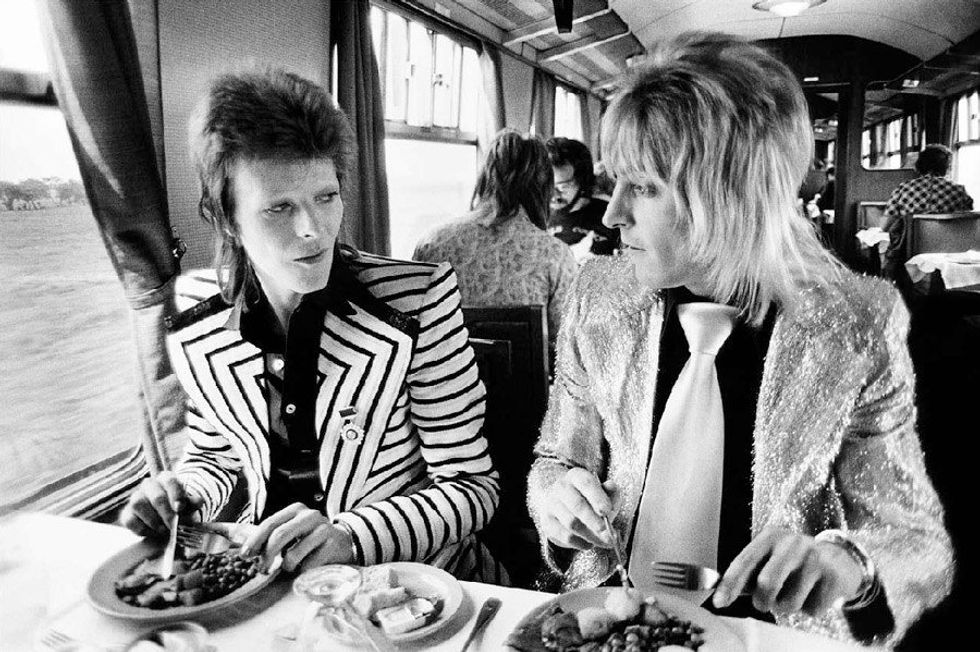
Famed musician and cultural icon David Bowie died earlier this week during the night on Sunday, January 10th. I woke up around 9:30 the following Monday morning, and was told by a friend on the phone of Bowie's 18-month bout with cancer before his eventual death at the age of 69.
I was kind of upset about it, but admittedly it wasn't something that hit me so hard; I hadn't really seen David Bowie as a person as much as a figurehead of punk music, an artist profile I'd known for years, and a creator of music that I enjoyed. David Bowie and his multiple personas throughout the decades evoked visions of open landscapes, fields of bright colors; inspired ideas of depth and variation. The world of social media flooded with fond remembrances of the ground breaking leader in the art and music world for decades. I wouldn't be telling the truth if I said I didn't understand the widespread celebration of the life and legacy of David Bowie. I got it. I did listen to Bowie's new album. I liked it. I like his older albums, too. I like punk rock, I like psychedelia, I enjoy so much of the music that came out of the pulsing cities like Los Angeles and New York City in the late 1960's and the 1970's. I also saw several reactionary posts and articles celebrating Bowie's death. These made a lot of sense to me too.
David Bowie was accused of rape by Wanda Nichols in 1987 but was never indicted due to a lack of evidence. Lori Mattix, a groupie from the seventies, wrote in her memoirs that she had lost her virginity to Bowie at the age of fifteen. Mattix never referred to the interaction as rape herself, but California law sets the age of consent at 18. Bowie may have never been indicted for claims made by Wanda Nichols, but the fact remains that this incident with Mattix alone makes Bowie a statutory rapist.
I had an inkling of an understanding of the unjust, manipulative transactions between "baby groupies" and musicians during this time period. It wasn't something I wanted to think about, although I never doubted the allegations to be true. It wasn't uncommon for girls and boys as young as thirteen to accompany musicians during their tours, doing drugs with them and sleeping with them during this era. The list of musicians who welcomed these sort of groupies is long and familiar: Iggy Pop, Jimmy Page of Led Zeppelin, Ron Asheton of the Stooges, Johnny Thunders of the New York Dolls, and yes, David Bowie. Countless other men in the music industry were known to have had kept young girls as their sexual playthings, but people seldom discuss this phenomenon today.
Bowie, although not excused from his actions, was a pawn in a larger game. The late musician keeps with an all too familiar tradition of men who are involved in the arts preying on starstruck underaged girls and boys. Famed philosophers like Michel Foucault and Jean-Paul Sartre contributed to a petition in 1977 to lower the age of consent to fifteen in France. Such examples of the "Lolita syndrome" sprout up everywhere. They unfortunately haven't really stopped coming up, either.
David Bowie was a cultural icon and inspires many with his music. His legacy and influence will no doubt continue long after his death. Bowie might not have been the "only one", and it may have been a "different time", but as we remember Bowie, remember that musicians are not absolved of sin simply by being well liked. Remember too that his actions were not singular, nor were they uncommon. As musicians today continue to take inspiration from stars like David Bowie and so many others, it should be remembered that being a musician is about making music and never about using your power to hurt or manipulate others.
David Bowie is still David Bowie, but rape is still rape. As artists live on, remember them as the whole person: for both the positive and negative influences they contribute to musical tradition.

















