
I've been in a media job for the entirety of my professional career. From part-time social media internships to full-time editorial work, I've continued to learn how to tell stories, write catchy headlines, and keep people interested. I believe working in media is a big responsibility, as well as a valuable way to advance our world.
I also believe that media, specifically social media, can create negativity, divisiveness, and hurt.
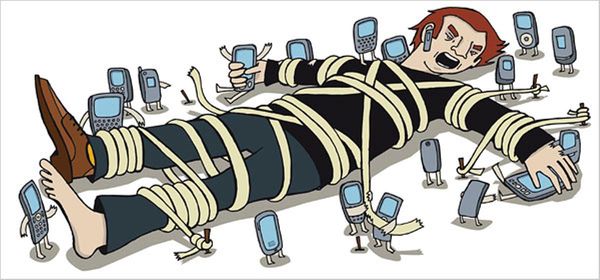
This side of social media — the negative side, not the side that helps you keep up with your Great Aunt Ruth — is on full display in Netflix's "The Social Dilemma." People who can easily be considered tech geniuses, previously working in key roles at places like Google, Facebook, Instagram, and Pinterest, sit down for interviews relating to manipulative algorithms, addictive notification settings, and irrefutable harm caused by the devices we keep in our pockets. They not only discuss why the technological advances we see on our phones, tablets, and computers were built in certain ways, but they convey worry for where continued advances in Artificial Intelligence (AI) may take us as a society.
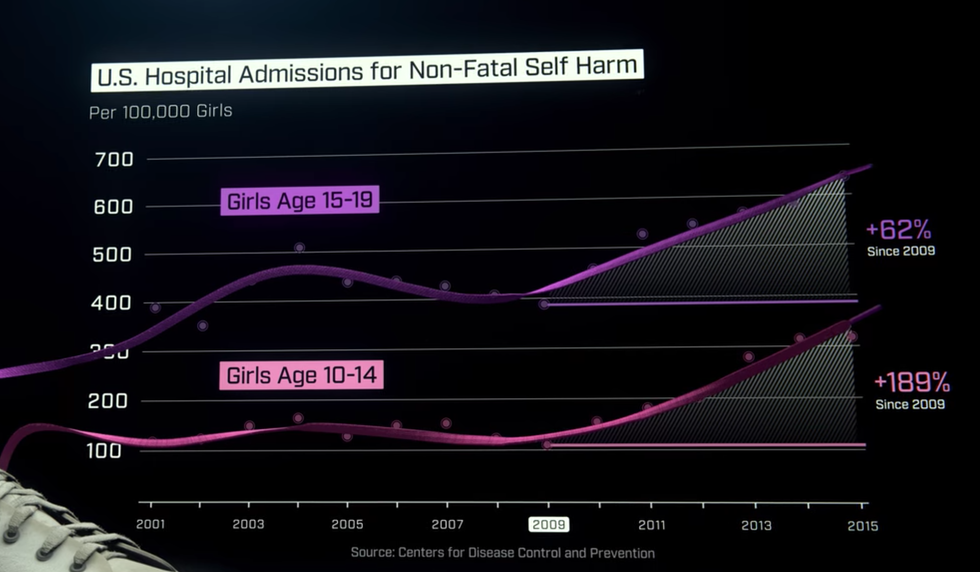
This documentary contains a lot of stories and data, but the section I found most alarming was when Jonathan Haidt, Ph.D. from the NYU Stern School of Business spoke about self-harm rising amongst teen girls. He tells viewers that the number of pre-teen and teen girls admitted to a hospital for self-harm was relatively stable until 2009 when a noticeable spike began.
 The Social Dilemma / Netflix
He continues to share how the same spike could be seen with suicide. Girls between the ages of 15–19 saw an increase of 70% in suicide, and girls between the ages of 10–14 saw a 151% increase. He points this pattern to social media — Gen Z is the first generation in history to get on social media as early as middle school, often carrying access to those social media in their backpacks. This generation is more anxious, more depressed, and less comfortable with milestones that other generations have considered normal (like getting a driver's license).
Middle school is hard enough. You're going through puberty, trying to figure out who you are, making friends, having crushes — and now kids are faced with a screen that tells them what to do, what to think, and how to be "cool." Instead of moms telling their girls to not compare themselves to the swimsuit model they see on a magazine in the store, these swimsuit models are displayed at all hours of the day, with each second spent on a photo telling devices to continue sharing these images. The pressure and comparison that can too easily come from social media, especially for still-developing minds, is horrifying. And it's already having a life-threatening impact.
It terrifies me to consider future generations, who even if their parents (like many of the tech giants featured in this documentary) don't give them screens at young ages, will still be hyperaware of the world of social media and the control it has on their life. It's so easy to be cruel, exclusive, and distracted from real connection when fun, addictive screens are at your disposal. As we can see with grown adults who are battling it out in the Facebook comments every day, social media can turn previously pleasant, civil human beings into divisive products that advertisers are trying to reach.
Other generations did not grow up with a constant stream of curated content placed before them during their developing years, and we all can attest to how hateful they can be toward one another. Now think about a generation who doesn't even remember life before an Instagram like could tell them how good they looked that day. They clearly don't have many examples of how you should act on social media, and clearly displayed metrics show how "good" or "bad," "liked" or "disliked" they are.
While the rest of us — the generations who had to fire up the old home computer to log into our Facebook account for the first few years — cannot erase these pressures younger generations feel, we are not helpless in this unhealthy pattern. We are first and foremost able to set examples of appropriate conduct online. We can turn off notifications. We can have at least one day a week where we go 24 hours without our phone. We can fact check information before we click "share." We can understand that each click we provide is a vote for the information we want to see. We can resist the world-wide web's innate need to make us pawns in an AI universe.
We can look at increased self-harm and suicide rates as a call to action that we actively participate in, instead of turning a blind eye and continuing to scroll.