

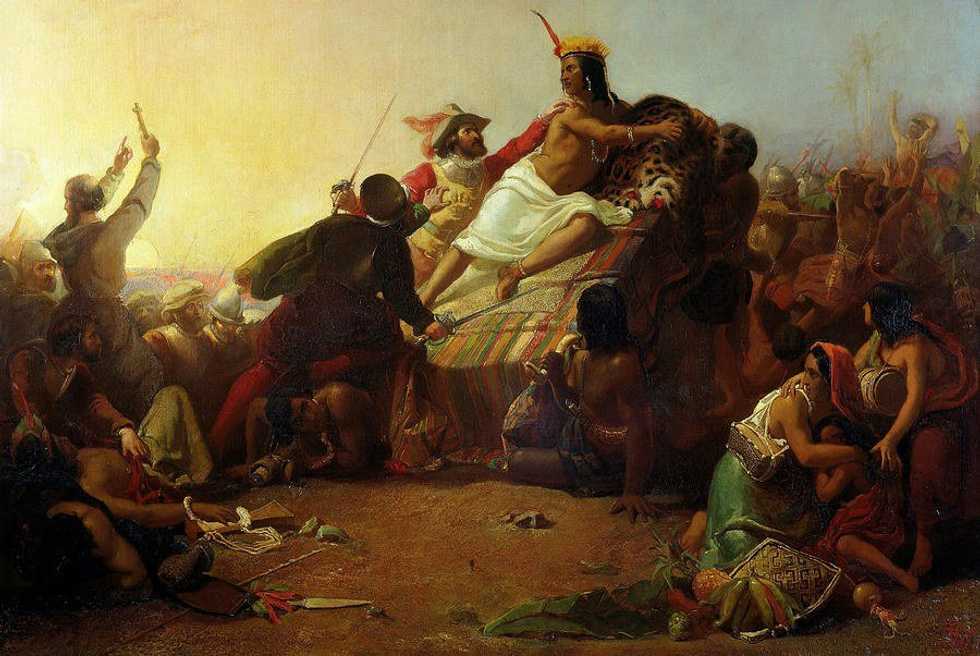
American activist Alveda King once said, “Racism springs from the lie that certain human beings are less than fully human. It’s a self-centred falsehood that corrupts our minds into believing we are right to treat others as we would not want to be treated.” This is the root of racism. Through the belief that certain races are superior to others in terms of intelligence, culture, and other aspects, inequality, bias, bigotry, and hatred arise. In our society, white supremacy unfortunately exists, and it is the main perpetrator of racism against people of colour. But how did it come to be? American scientist, Jared Diamond, has all the answers.
In his 1997 book, “Guns, Germs, and Steel: The Fates of Human Societies”, Diamond asked why Eurasian peoples conquered or displaced Native Americans, Australians, and Africans, instead of vice versa. The basic premise of the book is to explain why Eurasian civilizations have survived and conquered others, while refuting the idea that Eurasian hegemony is due to intellectual, moral, or genetic superiority. The book illuminated conditions that led to inequality in the modern world, and combated the broken logic that perpetuates these toxic beliefs. In his book, Diamond deconditioned the Eurocentric approach to history, and he debunked the biological fallacies on which the monster of racism feeds. He argued that the Eurasian civilization is not so much a product of ingenuity, but of opportunity and necessity. That is, civilization is not created out of superior intelligence, but is the result of a chain of developments, each made possible by certain pre-conditions. This outcome was not due to biological advantages of Eurasian peoples themselves, but instead to features of the Eurasian continent-- in particular, its high diversity of wild plant and animal species suitable for domestication, and its east/west major axis that favoured the spread of domestication, people, and technologies for long distances with little change in latitude.
The first part of the book focuses on reasons why only a few species of wild plants and animals proved suitable for domestication. The second part discusses how local food production based on those domesticates led to the development of dense and stratified human populations, writing, centralized political organization, and epidemic infectious diseases. The third part compares the development of food production and of human societies among different continents and world regions.
The first step towards civilization is the transition from a nomadic hunter-gatherer society to a rooted agrarian society. Several conditions are necessary for this conversion to occur: access to high-carbohydrate vegetation that endures storage, a climate dry enough to allow storage, and access to animals docile enough for domestication and versatile enough to survive captivity. Control of crops and livestock thus leads to food surpluses. Surpluses give people the liberty to specialise in activities other than sustenance and support population growth. The combination of specialization and population growth leads to the accumulation of social and technologic innovations which build on each other. Large societies can then develop ruling classes and supporting bureaucracies, which in turn lead to the organization of nation-states and empires.
Although agriculture arose in several parts of the world, Eurasia gained an early advantage due to the great availability of suitable plant and animal species for domestication. In particular, Eurasia has barley, two varieties of wheat, and three protein-rich pulses for food; flax for textiles; and goats, sheep, and cattle. Eurasian grains were richer in protein, easier to sow, and easier to store than American maize or tropical bananas.
As early Western Asian civilizations began to trade, they found additional useful animals in adjacent territories, most notably horses and donkeys for use in transport. Diamond identified 13 species of large animals over 100 pounds (45 kilograms) domesticated in Eurasia, compared with just one in South America (counting the llama and alpaca as breeds within the same species) and none at all in the rest of the world. Australia and North America suffered from a lack of useful animals due to extinction, possibly by human hunting, shortly after the end of the Pleistocene geological epoch, whilst the only domesticated animals in New Guinea came from the East Asian mainland during the Austronesian settlement some 4,000-5,000 years ago. Sub-Saharan biological relatives of the horse, including zebras and onagers, proved untameable and although African elephants can be tamed, it is very difficult to breed them in captivity. Diamond described the small number of domesticated species (14 out of 148 “candidates”) as an instance of the Anna Karenina principle, which describes an endeavour in which a deficiency in any one of a number of factors dooms it to failure; consequently, a successful endeavour (subject to this principle) is one where every possible deficiency has been avoided. This meant many promising species have just one of several significant difficulties that prevent domestication.
Eurasians domesticated goats and sheep for hides, clothing, and cheese; cows for milk; bullocks for tillage of fields and transport; and benign animals such as pigs and chickens. Large domestic animals such as horses and camels offered the considerable military and economic advantages of mobile transport.
A crucial and unintended product of animal domestication was the transmutation of viruses from livestock to humans. Smallpox, measles, and influenza were the result of close proximity between dense populations of animals and humans. Through chronic exposure, and centuries of intermittent, but non-decimating, epidemics, Eurasians developed significant resistance to these viruses. Although malaria is often considered the most dangerous micro-organism to humans, it is geographically limited. Smallpox is geographically unlimited, and Eurasians took it with them wherever they went.
Eurasia's large landmass and long east-west distance increased these advantages. Its large area provided it with more plant and animal species suitable for domestication, and allowed its people to exchange both innovations and diseases. Its east-west orientation allowed breeds domesticated in one part of the continent to be used elsewhere through similarities in climate and the cycle of seasons. The Americas had difficulty adapting crops domesticated at one latitude for use at other latitudes (and, in North America, adapting crops from one side of the Rocky Mountains to the other). Similarly, Africa was fragmented by its extreme variations in climate from north to south-- crops and animals that flourished in one area never reached other areas where they could have flourished, because they could not survive the intervening environment. Europe was the ultimate beneficiary of Eurasia's east-west orientation: in the first millennium B.C.E., the Mediterranean areas of Europe adopted Southwestern Asia's animals, plants, and agricultural techniques; in the first millennium C.E., the rest of Europe followed suit.
The plentiful supply of food and the dense populations that it supported made division of labour possible. The rise of non-farming specialists-- such as craftsmen and scribes-- accelerated economic growth and technological progress. These economic and technological advantages eventually enabled Europeans to conquer the peoples of the other continents in recent centuries by using the guns and steel of the book's title.
Eurasia’s dense populations, high levels of trade, and living in close proximity to livestock, resulted in widespread transmission of diseases from animals to humans. Natural selection forced Eurasians to develop immunity to a wide range of pathogens. When Europeans made contact with the Americas, European diseases (to which Americans had no immunity) ravaged the indigenous American population, rather than the other way around (the "trade" in diseases was a little more balanced in Africa and southern Asia: endemic malaria and yellow fever made these regions notorious as the "white man's grave"; and syphilis may have originated in the Americas). The European diseases – the germs of the book's title – decimated indigenous populations so that relatively small numbers of Europeans could maintain their dominance.
Diamond also proposed geographical explanations for why western European societies, rather than other Eurasian powers such as China, have been the dominant colonizers, claiming Europe's geography favoured balkanization into smaller, closer, nation-states, bordered by natural barriers of mountains, rivers, and coastline. Threats posed by immediate neighbours ensured governments that suppressed economic and technological progress soon corrected their mistakes, or were outcompeted relatively quickly, whilst the region's leading powers changed over time. Other advanced cultures developed in areas whose geography was conducive to large, monolithic, isolated empires, without competitors that might have forced the nation to reverse mistaken policies-- such as China banning the building of ocean-going ships. Western Europe also benefited from a more temperate climate than Southwestern Asia, where intense agriculture ultimately damaged the environment, encouraged desertification, and hurt soil fertility.
Agriculture
“Guns, Germs, and Steel” argued that cities require an ample supply of food, and thus depend on agriculture. As farmers do the work of providing food, division of labour allowed individuals freedom to pursue other functions, such as mining and literacy.
The crucial trap for the development of agriculture is the availability of wild edible plant species suitable for domestication. Farming arose early in the Fertile Crescent since the area had an abundance of wild wheat and pulse species that were nutritious and easy to domesticate. In contrast, American farmers had to struggle to develop corn as a useful food from its probable wild ancestor, teosinte.
Also important to the transition from hunter-gatherer to city-dwelling agrarian societies was the presence of 'large' domesticable animals, raised for meat, work, and long-distance communication. Diamond identifies a mere 14 domesticated large mammal species worldwide. The five most useful (cow, horse, sheep, goat, and pig) are all descendants of species endemic to Eurasia. Of the remaining nine, only two (the llama and alpaca-- both of South America) are indigenous to a land outside the temperate region of Eurasia.
Due to the Anna Karenina principle, surprisingly few animals are suitable for domestication. Diamond identifies six criteria including the animal being sufficiently docile, gregarious, willing to breed in captivity, and having a social dominance hierarchy. Therefore, none of the many African mammals-- such as the zebra, antelope, cape buffalo, and African elephant-- were ever domesticated (although some can be tamed, they are not easily bred in captivity). The Holocene extinction event eliminated many of the megafauna that, had they survived, might have become candidate species, and Diamond argues that the pattern of extinction is more severe on continents where animals that had no prior experience of humans were exposed to humans who already possessed advanced hunting techniques (e.g. the Americas and Australia).
Smaller domesticable animals such as dogs, cats, chickens, and guinea pigs may be valuable in various ways to an agricultural society, but will not be adequate in themselves to sustain large-scale agrarian society. An important example is the use of larger animals such as cattle and horses in ploughing land, allowing for much greater crop productivity and the ability to farm a much wider variety of land and soil types than would be possible solely by human muscle power. Large domestic animals also have an important role in the transportation of goods and people over long distances-- giving the societies that possess them considerable military and economic advantages.
Geography
Diamond also explains how geography shaped human migration, not simply by making travel difficult (particularly by latitude), but by how climates affect where domesticable animals can easily travel and where crops can ideally grow.
Modern humans are believed to have developed east of the Great Rift Valley of the African continent, at one time or another (see Out of Africa theory). The Sahara kept people from migrating north to the Fertile Crescent, until later when the Nile River valley became accommodating.
Diamond continued to explain the story of human development up to the modern era, through the rapid development of technology, and its dire consequences on hunter-gathering cultures around the world.
Diamond touched on why the dominant powers of the last 500 years have been West European, rather than East Asian (especially the Chinese). The Asian areas in which big civilizations arose had geographical features conducive to the formation of large, stable, isolated empires which faced no external pressure to change which led to stagnation. Europe's many natural barriers allowed the development of competing nation-states. Such competition forced the European nations to encourage innovation and avoid technological stagnation.
Germs
In the later context of the European colonization of the Americas, 95% of the indigenous populations are believed to have been killed off by diseases brought by the Europeans.
How was it then that diseases native to the American continents did not kill off Europeans? Diamond posited that the combined effect of increased population densities, (supported by agriculture) and close human proximity to domesticated animals, resulted in European societies acquiring a much richer collection of dangerous pathogens. Pathogens that European people had acquired immunity, through natural selection, for a longer time than was the case for Native American hunter-gatherers and farmers. He mentions the tropical diseases (mainly malaria) that limited European penetration into Africa as an exception.
With an eye to social, environmental, and educational opportunities that shape the intellectual destiny of human beings, Diamond argued that our notions of intelligence are not only gravely skewed by the Western perspective but just about inverted. The IQ tests on which technologically advanced societies, like our own, do better than technologically primitive societies, like aboriginal cultures-- results on which many racist claims are predicated-- actually measure cultural learning rather than innate cognitive ability.
At the heart of Diamond’s work is the notion that in order to understand any one society, we must contextualize it in the larger ecosystem of humanity. Therefore, we must understand all societies. Only by grasping the richness and diversity of the entire ecosystem can we begin to dismantle our assumptions about the value of others, and realize that people from different groups fared differently in history-- not due to their innate abilities, but due to a complex cluster of environmental and geopolitical forces.