


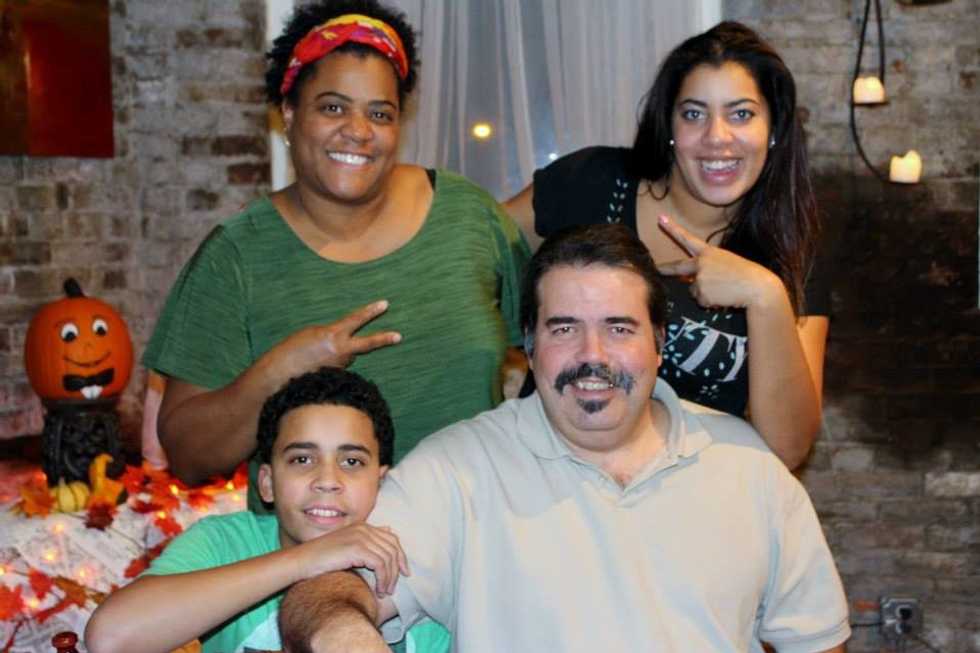
As a multiracial individual soon to be 20-year-old, I believe I can say that I’ve grown up mixed. As a minority within other minorities, I’ve encountered many obstacles, but I have become a better person from them. That said, compared to many I’ve had it easy. The real heroes are the interracial couples that paved a path for their children behind them.
Interracial marriage was legalized in 1967 by the US Supreme Court. Before this important milestone it was frowned upon by most of society, although this didn't stop interracial couples from existing, it just pushed them into the shadows. The first major public interracial couple was Mildred and Richard Loving. In 1963, they took their case to the Supreme Court and won. Since then there has been steady growth within the interracial marriage spectrum. The percent of all marriages that were interracial rose from 1 percent in 1970 to 6.3 percent in 2013. Also, in 2013 a record high was set by newlywed interracial couples who came in at 12 percent. On a more personal note in a poll by Gallup in 2013, 87 percent of the people they polled approved of black and white marriage.
Even looking past all the numbers in some situations people forget about the products of interracial marriage, in most cases, a mixed race child. Another major milestone in the eyes of many multiracial individuals is the ability to pick more than one race on official paperwork. Growing up, whenever I filled out paperwork or took state tests I was only permitted to pick one race, but who wants to do that when you're made up of so many great things?
Only in the recent 2000s did the US census allow participants to check off more than one race, more than 30 years after interracial marriage was legalized. That was on a national scale, it still took another 10 years for that to trickle down to state schools and into standardized testing. That creates a problem within the mixed race children because it is forcing them to pick one race or be labeled as "other." No one wants to be "other." Thankfully this insensitive trend is fading away as more logical instructions are provided. Instead of "pick one" we've moved to "mark as many as apply."
Despite this exciting milestone, there are still problems that need to be addressed, the ever present “what are you mixed with” question being one of the most pressing matters. That question can be defined as a micro-aggression. Psychology Today states that “microaggressions" are the everyday verbal, nonverbal and environmental slights, snubs or insults, whether intentional or unintentional, which communicate hostile, derogatory or negative messages to target persons based solely upon their marginalized group membership."
As a multiracial individual, you get used to "what are you mixed with." This question comes with many assumptions, instead of asking who we are as individuals they only care to know what we are “made of.” Just like race doesn't define anyone else our races don't define us. In many cases, society wants us to identify as everything, when depending on your upbringing, you might only identify with one part of your mixture. Racial identification doesn't only come from what we are literally made of, but also what we become due to our environment. An individual might be black and Puerto Rican but have grown up in Puerto Rico and define themselves as Hispanic but not Black. This isn't because they don't want to be black, but because they only experienced their Puerto Rican culture. This micro-aggression problem could be solved by simply asking “who are you” instead of “what are you.”
Another problem that occurs is mixed people being told they don’t identify with a part of their culture because they are “not ______ enough.” Sometimes people think that to really understand their ethnicity's problems they must be solely that ethnicity, but this simply isn’t true. Just because we don’t look exactly the same doesn’t mean other people don’t categorize us as the same. If you are mixed with Asian descent and the dominate feature of your face follows that then you will be perceived as Asian and accordingly. Just because we are mixed doesn’t mean we don’t understand.
In spite of "the question," being mixed is still pretty fun. Many mixed people have a unique perspective of various cultures. Take me for example, because of my Italian heritage I love eating pasta, but equally enjoy anything off the menu of a soul food restaurant. When you are surrounded by several different cultures you pick up the best of both; the best food, traditions and facial features! This is what makes growing up mixed so much fun, despite the problems.

















