

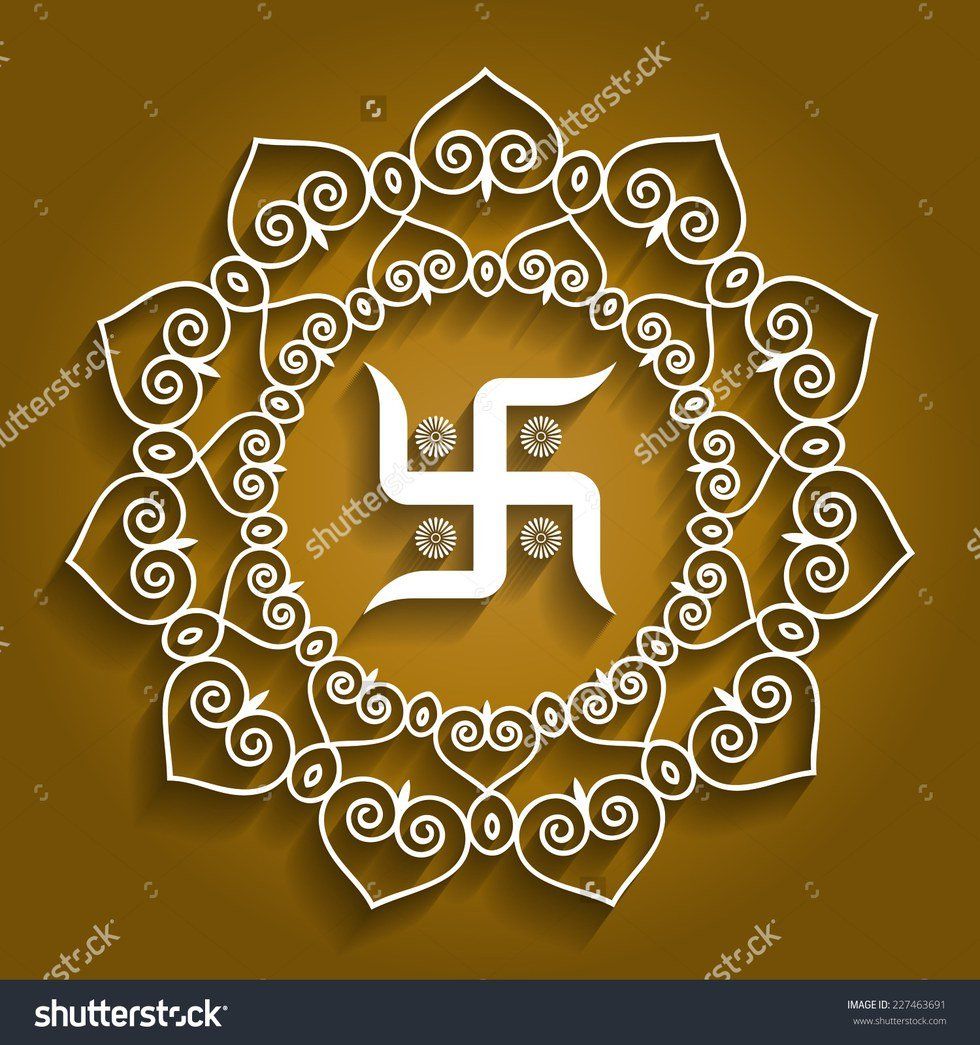
I can say it with almost absolute confidence that when someone says the word 'swastika' or sees the symbol, one immediately thinks of Adolf Hitler and the Nazi Germany Party. One thinks of hatred and close-mindedness and inequality. One thinks of discrimination against Jews and people with disabilities, among many others whose lives were tragically taken away from them. But little is known about the true meaning of the swastika and what it really stands for. In fact, the swastika has become so heavily associated with Nazi Germany, that many folks, even renown scholars, think of the symbol as one that is negative and highly controversial. It is about time that we all know this truth so we can dispel any fear and anxiety associated with the word and symbol.
The swastika is an Indian religious symbol that dates back thousands of years, before the Aryan Era. It was and still is prevalent in religions such as Hinduism, Buddhism, Jainism, and Odinism. The word swastika comes from the Sanskrit word svastika, which means well-being or good fortune. It is a common sight in houses, on temples, or in stores as a symbol for prosperity and fortune in places such as India and Indonesia. For example, when a person embarks on a new part of their life, a pooja, or veneration ceremony is often conducted. There, the swastika is used to decorate religious items in order to form a deeper connection with God.
Though the symbol was used in ancient Indian culture, years later, the völkisch movement took up the swastika symbol and made it representative of the “Aryan identity." Then, the Nazi Germany party as well as other, far-right, nationalist movements adopted the symbol, changing its meaning and perception for all. It is said that the symbol, for the nationalists, became one that now stood for racial purity and homogeneity, distorting its true meaning.
It needs to be understood that the meaning of the swastika does not involve hatred or extermination of a race that is "inferior" to another. The meaning of the swastika needs to be understood in its entirety. Only then will we be able to be more accepting of different cultures in an open-minded fashion.
What people do not realize is that Indians or people who use the symbol do not follow or believe in the agenda of the Nazi party. Not even close. So the next time you see a swastika hanging on the wall of your Hindu friend's house, do not freak out, thinking that they are Hitler-loving individuals. Instead, learn the symbol's true meaning, history, and importance.