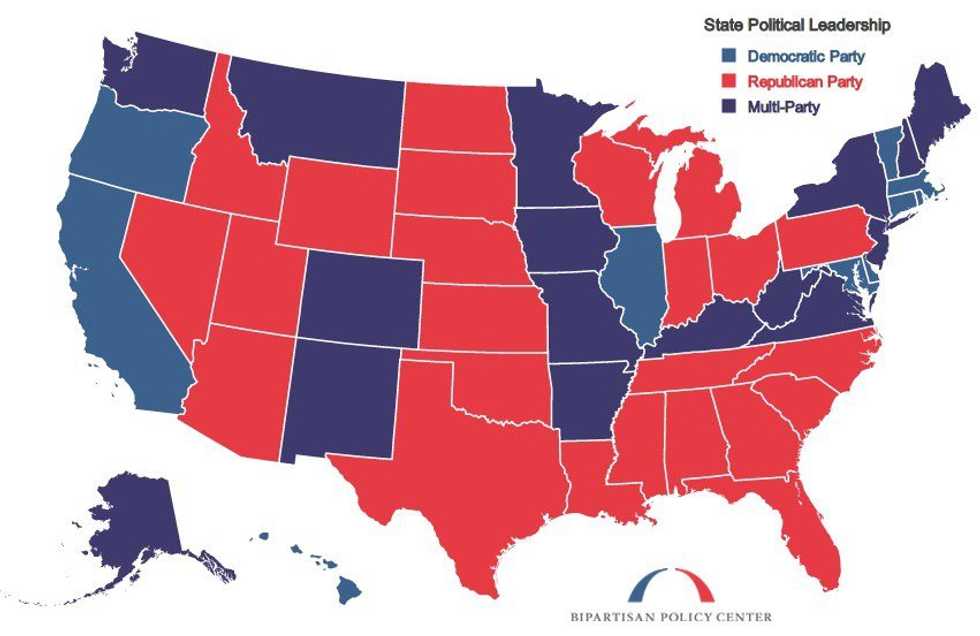
Bipartisanship, America’s current two-party system, has been regarded as a "political solution." This may have been a plausible solution in 1776, but in today’s age with 50 states and a population exceeding three hundred million, this is not as effective as intended. As citizens, we must remain grateful we have the opportunity to live in a democracy and in a country with such great freedoms. However, in terms of elections, this partisanship should be eliminated or at least reconsidered to an extent.
We talk about politics and religion in hushed tones, trying not to offend one another. The separation of church and state means religion will always be a different story. Now, how come politics has become such a highly debated issue? For the most part, we seem to elect individuals on the basis of whether they declare themselves Republican or Democrat. I hope that more people elect their leader on the basis of their political ideals rather than constructed parties. Hopefully, we all vote based on political platforms and try to leave our prejudices out of the election. The United States can only hope that day will come soon enough.
When individuals register to vote, they must select a political party, the two most popular remain
On controversial topics such as the death penalty, abortion, or health care, someone can easily distinguish the conservative versus liberal view. Amongst students on campus or characters on a television shows, the most common phrase from a stereotypical liberal woman is, “I told myself I’d never date Republican.” Conservative women may say the same about liberal men. You won’t let yourself fall for a man because you associate a list of conservative values with the term Republican. Once again, this only reiterates that we should eliminate a system rooted in preconceived notions.
America seems to use the bipartisanship as some sort of
“I have already intimated to you the danger of parties in the state, with particular reference to the founding of them on geographical discriminations. Let me now take a more comprehensive
Our first President