

As a teenager, I would consistently shock my parents whenever I asked them what a certain sexual phrase meant. There would often be words written on the inside of the slide, terms shared between my friends and other terms I just heard in passing but would then spend the rest of the day trying to understand. All in all, I'm sure I nearly gave my mother a heart attack every time she had to explain terms like "ménage à trois" to her 12-year-old (thanks, Katy Perry). As shocking as most of my questions must have been, I've always been incredibly grateful to have parents I knew I could turn to whenever I wanted honest answers.
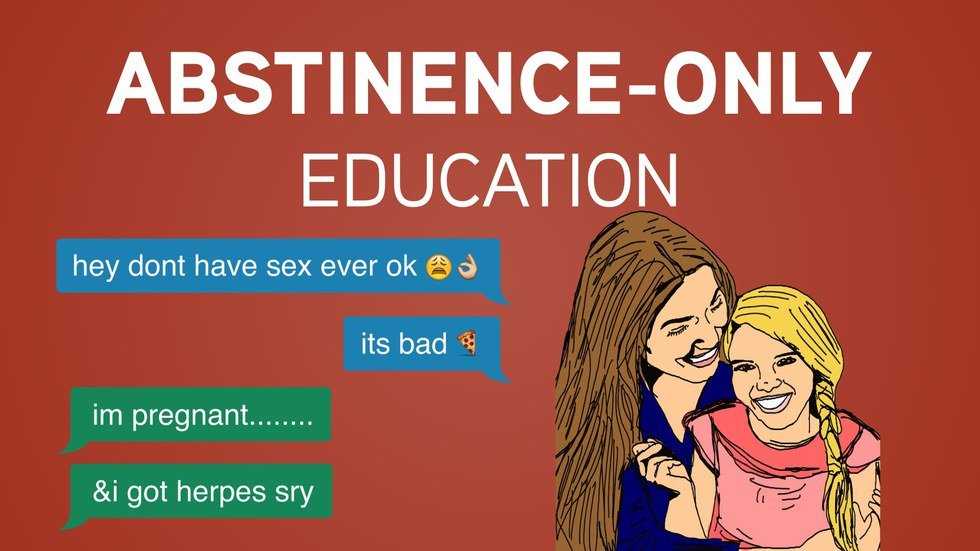
Now, as I hear stories about politicians advocating for abstinence-only education, I think about how I was raised and cringe. Children, teens, preteens don't stop having questions simply because they are being taught that not having sex is the answer but instead will search out other means to have these questions answered. Pornography, friends, and the media contribute to the mixed messages these teens are getting, and none of it is healthy or even realistic.
From porn, women learn to see themselves as sexual objects of the male fantasies. We must enjoy every sexual act a man desires, openly give ourselves to them, and be both virginal and worldly in our sexual encounters. Women are not companions, but lustful fantasies, and through this, young women begin to believe that safety, security, and saying "no" to any sexual activities a man may want are wrong. As for lesbianism and bisexuality, these are too often portrayed as the ideal male fantasies where he is able to have sexual relations with both women or simply watch. Sexual orientation is viewed as a sexual device for films rather than a serious preference, forcing same-sex relationships between women to be viewed as erotic rather than loving. While I say all this from a woman's perspective, pornography isn't just destroying women but it is destroying men, too.
Young men who learn about sex through pornography instead of from having open communication between families and educators may have a very skewed view of relationships and sexuality in real life. These videos play off of harmful idealizations of women, leading men to have a hard time grappling with what sexuality is like in the real world. How much control do they really have in their relationships and sexual encounters? Are women really like these women in the videos, or is there something more to sex than that? The gentle, loving, tender sides of a relationship that involve hard work and communication are lost in pornography, and if that is the only education young men are getting, their future relationships are going to suffer in the process.
Pornography addiction affects men and women, and it is a serious, often underplayed addiction. There is so much social stigma behind talking about porn and what it does to the brain, and what it means for those who watch it, that many choose to suffer in silence instead of seeking help dealing with the addiction that threatens to destroy them. In churches, we should embrace those who admit that they are suffering, and instead of acting in judgment, we should ask what we can do to help them and rally around them without hostility. As young adults, we should be open in saying we need help and we need to talk about porn, instead of hiding our problem as it grows larger. If we choose to be transparent about pornography addictions, then together we can work to end the taboo that oppresses many.
Men or women, sexual and pornography addiction are real in our communities. Choosing to lead with abstinence-only education pushes young men and women to find the answers for themselves, and right now, porn says it has those answers. Instead of choosing to be uninvolved, we should all actively raise our children in an environment open about sexuality. It can be embarrassing, uncomfortable, and even painful at times, but the more open we are about the beauty and realism that happens in sex, the more likely we are to raise a generation that can respect sexuality, sexual orientation, and foster healthy, safe relationships.