The week of November 8th will undoubtedly be one remembered by the history books. In the past seven days, among many other things, a president and a chancellor of a university resigned from their positions and a journalist was assaulted by a journalism teacher. The cause? PC culture.
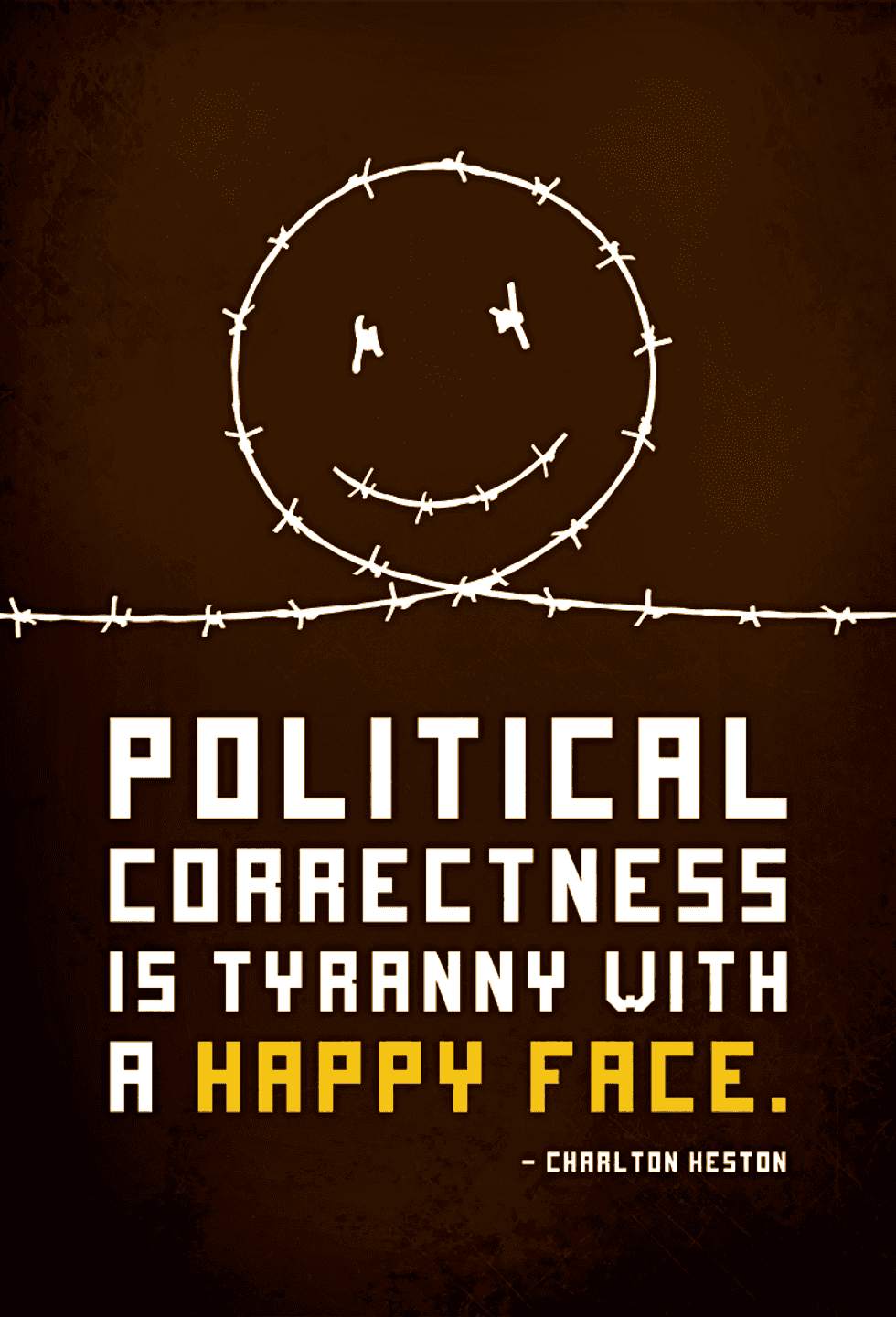
For those who don't know, PC culture, or politically correct culture, is a resurging movement in the United States in which people adhere to restraining certain forms of speech and expression that are considered offensive or discriminatory. Sounds pretty good on the tin, right? It should be a good thing that Americans don't want to be raging a**holes to each other, right? To a certain extent, yes.
However, there's a certain 52 word paragraph that makes this restriction of ourselves a bad thing. It goes a little something like this:
Congress shall make no law respecting an establishment of religion, or prohibiting the free exercise thereof; or abridging the freedom of speech, or of the press; or the right of the people peaceably to assemble, and to petition the government for a redress of grievances.
That's the first amendment of the Constitution of the United States. The expression of ideas, no matter how controversial, was so important to the founders of this nation that it was the first topic on their document guaranteeing our freedoms.
At first, PC culture didn't really have an effect on freedom of speech. Those who said offensive things were called jerks and ignored and then people moved on with their lives. And the offensive nature of what said jerks said typically seemed just that.
But then, things began to escalate. More and more things were deemed offensive and actions began to be taken towards said offensive symbols.
In July, the battle flag of the Confederate States of America, more commonly known as the Confederate flag or "The Stars and Bars," was banned on a federal level. All production of the symbol was halted in several states, and it's now incredibly difficult to purchase the symbol if one were so inclined.
To all but the most diehard of southerners, this shunning and subsequent bans of the flag make sense like Germany banning the Nazi flag. The battle flag was a symbol of slavery and a rejection of the United States (or a symbol of state's rights, depending on who you ask). But this began progress down the slippery slope.
Soon, the American flag was banned in many school districts and universities across the nation. That's right, the symbol of our nation was banned ... within our nation. The purpose of said bans? It might offend some people.
This escalation continued until it seemed like every word in the English language offended someone. Yet despite the number of offended individuals reaching an all time high, a person was never directly affected.
Until this week.
Tim Wolfe, former president of the University of Missouri, was forced to resign from his position for enabling a "racist institution on his campus".
After this resignation, a group of students, calling themselves "ConcernedStudent1950" protested the racism at the University of Missouri. They protested on the campus quad, a public place.
Naturally, journalists tried to cover the events. But the students wouldn't let them. A video posted by a student journalist shows the protesters forcing the journalists away from the protest. The reasoning? The protesters didn't want the journalists to "corrupt their message" and the journalists were invading their "safe space".
What is a safe space, one might ask. According to Advocates for Youth, "a Safe Space is a place where anyone can relax and be able to fully express, without fear of being made to feel uncomfortable, unwelcome, or unsafe on account of biological sex, race/ethnicity, sexual orientation, gender identity or expression, cultural background, religious affiliation, age, or physical or mental ability."
Sounds great for when you're by yourself or with a group of close friends. However the protesters aren't in either of those settings. The Missouri protesters are at a university, an institution meant to challenge those who attend mentally and broaden their line of thinking. If we stop all challenges to this line of thinking how can individuals expect to grow?
If you fear your ideas and ideals being challenged then that questions how strong your ideas and ideals actually are. It devolves serious intellectual discussion into a game of "I'm right, you're wrong." And if you silence any opposition with, "that hurts my feelings", then your intellectual and rational points further devolve into an issue of emotions and lacking backbone.
Instead of silencing the opposition to an idea we need to open a dialogue. Instead of saying "that offends me" the offenders should be asked, "Why do you think that way?" By challenging our thought process, we open ourselves up to new ideas and new points of view we would have never considered in the first place. Then, we grow as a people and we come to a conclusion that best benefits everyone.
It's time to stop trading freedom for emotional safety. It's time to stop polarizing each other and instead start understanding one another.
Above all, it's time to stop taking offense at everything.