
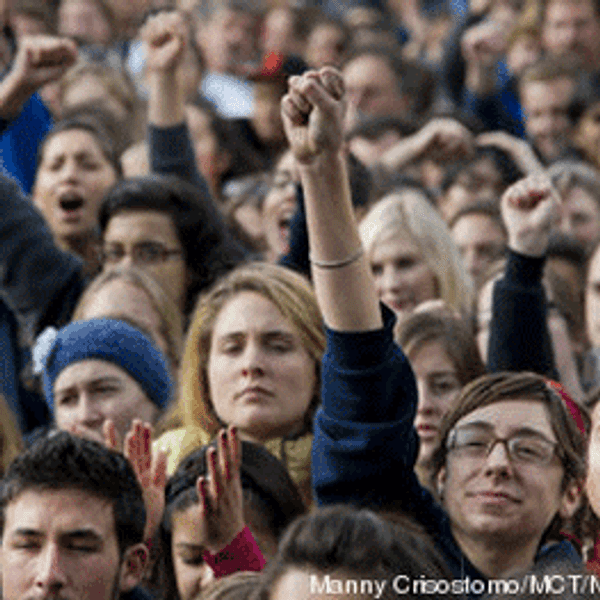
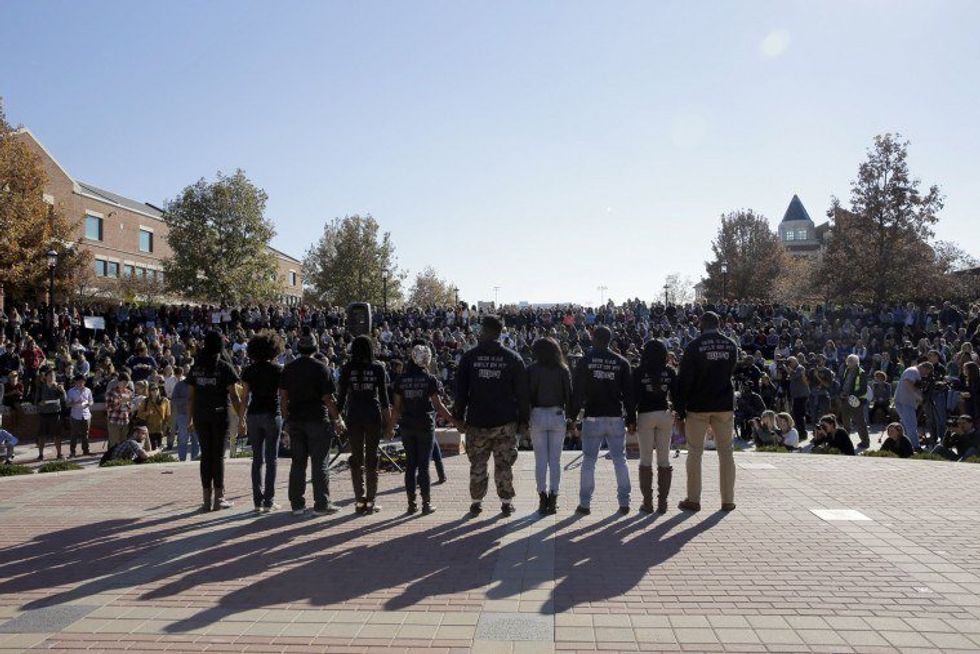
On campuses across the country, students are erupting into protests over student debt, discrimination, and inclusion. These are real issues that are in need of addressing and discussing.
However, in order to foster discussion, one needs to create an atmosphere in which such discussion is possible. That means having to listen to people with whom you do not agree. That means seeing opinions in your newspapers, your Facebook newsfeed, and your email that you find flawed, or even appalling. That means starting the conversation, instead of suppressing it by dismissing or firing those who are not on your side.
This is not to say that the students’ anger is unjustified. For decades, minority students have been marginalized on mostly white campuses, despite efforts by several institutions to increase diversity and create a more accepting atmosphere for all students. Several institutions boast diverse student populations and brightly colored pamphlets where those of all cultures and backgrounds mingle with each other seamlessly. However, when a minority student steps foot on a campus like the University of Delaware, it’s hard to ignore the fact that most of the people they encounter are white, native-born Americans. It does not mean students of color do not encounter disgusting remarks and insults on campus, either in the form of words or actions. Cultural sensitivity is not built into the American psyche; we do not think about it as much as we should. Collectively, no one can agree on how or when to deal with it, and administrators do not even know what actions to take when these issues surface.
College students, particularly minorities, should be outraged. We should be demanding action. We should be holding open discussions about these topics within our communities and out in the public.
The protests at schools like the University of Missouri, Yale, Amherst, and Ithaca are necessary to start these discussions. The way in which they are going about making changes, however, is up for discussion in itself.
Is it conducive to our purposes to simply fire those who disagree with us? For example, Yale Associate Master Erika Christakis and her husband, who is a professor at the university, were recently criticized after challenging the Intercultural Affairs Council’s discouragement of culturally offensive Halloween costumes. In her email, Christakis condemned them, but encouraged the community to, instead of banning such atrocious choices, initiate an intellectual discourse.
Her idea makes sense: when you prohibit someone from doing something, you are not changing his or her mind. It is only when they understand what makes their actions offensive that they then change their behavior. It is how university culture in general begins to change its behavior.
Even if Christakis' plea angers you, calling for her resignation does little to remedy the real problem. Asking for the resignation of presidents, chancellors, and professors stifles voices at a time when we should be listening to each other. Leaders of universities across America are choosing to step down because it is the easy thing to do, and as students, we should not let them take that easy route. Instead of giving into these demands and leaving the issues faced by campus communities to the next administrator, they should accept the challenges this new decade has brought to our country and take the necessary initiatives: pay attention to protestors and their complaints, organize committees on diversity, and work with the campus community to confront all the difficulties to best serve everyone.
For our part, we must at least give them the opportunity to try.
To create real change, we must not shut out those who oppose us, nor must we cry “offensive” over everything, just so that we have something to rant about on Facebook. When we make every little thing worthy of a demonstration, nothing seems worthy of attention, and that is how others get the ammunition to call us privileged and weak PC police officers who have no real problems.
We do have real problems, but in order to get them heard, we have to learn how to hear others.