

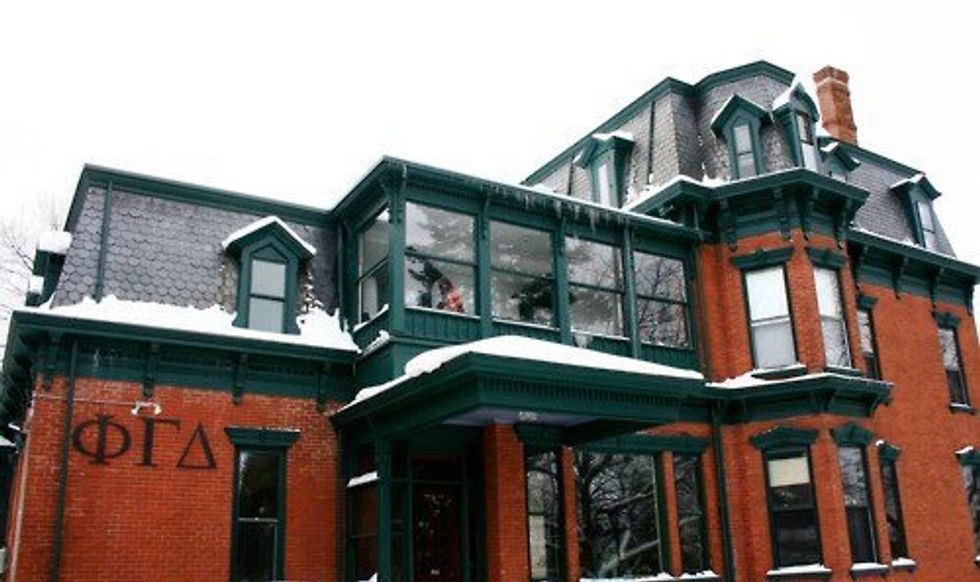
Just as most groups or organizations have the propensity to attract followers and enemies (take political parties for example), Greek life in colleges as a whole attracts a rather nasty stigma from misinformed outsiders. The only appearance of Fraternities and Sororities in the media is when a horrible law suit springs up, property was destroyed, ethical boundaries were transcended, or anything else with extreme negative connotations. It is synonymous to what the media does to the Muslim religion among our population, causing “politicians” (yes those are quotes) to feel the need to register anyone of that faith like a car or truck within our own country. Because of the disparity in opinion between those involved and those not involved, it’s hard to find a middle ground where lofty stereotypes revolving around fraternities aren’t the basis of opinion.
As a member of a fraternity, I can speak on behalf of those folk who see the positivity and good that comes from strong and honest brotherhood (pardon the sickening clichés). I can also speak from the perspective of somebody who never considered a fraternity as part of the fiber of their being. Somebody who scoffed upon the sheer pretentiousness of the thought, the idea that a bunch of dudes pay to be friends with other dudes, and those dudes haze new dudes and those dudes are supposed to think it’s cool? This of course was all hypothetical to me, as I had not been exposed to anything besides stereotypes.
Prior to joining FIJI second semester of my Freshman year, my opinion of fraternities laid very low. I’m talking like, Trump denoting John McCain’s war accolades low. The sheer thought of being a “Frat Boy” made me quake and seize up. To remain clad in clown-colored vineyard vines perpetually and strut around while everybody gazed upon you in disdain was not an attractive thought to me, however it was the only thought I had been exposed to. It took a few good friends of mine joining fraternities for me to open my mind up to the idea; before I knew it I was eating wings in a 19th century war general’s mansion turned frat-house exchanging conversation with “frat-boys” whom now all of which I can confidently call my close friends. It’s funny how things change.
On an individual basis, it’s very feasible for opinions to change, minds to open up to new thoughts, and new endeavors to be sought. On a widespread basis however, the general opinion fluctuates with far more sluggishness and requires a great deal more of an effort to change. When it comes to fraternities, the general opinion of the public sways towards the negative side. If fraternities can be so life-changing and helpful for some people, how come people still view them as a stigma within the education system? In society today, the general theme is that a good opinion is far more difficultly contrived than a bad opinion. When something negative happens regarding fraternities, everybody’s eyes all shift to the spotlight and pay no attention to whatever good has come from the place. Don’t worry, I’m not going to rant over another e-mail.
A few weeks ago, I heard a story from a few brothers who trick-or-treated with the organization Unicef; travelling door to door asking politely for donations to the non-profit organization benefiting mothers in developing countries. At one door, my friends were denied a donation because the lady “did not support fraternities.” Regardless of the fact that any normal person could have done this for UNICEF, whether Greek affiliated or not, this woman still chose to deny my friends. I needn’t waste more energy brooding over this story to show you how little sense was made.
Here at UVM Greek-Life makes up about 8% of the student body, however it makes up about 50% of our philanthropy. Pike had a table selling cookies for Alzheimer’s organizations, Kappa Sigma raised money for breast cancer by perpetually having brothers at a table in the Davis Center, Sigma Phi began the “MOvember” fund among fraternities, and all other organizations have pitched in to make up the staggering statistic. How many people do you think remember all of that? Alas, people have a greater tendency to remember horrific media spew involving casualties during pledging, institutionalized racism, viral videos of drunk college kids making decisions from rock bottom, fights, law suits, and other follies that occasionally spring up. Am I saying that all of those things are justifiable? Absolutely not. Everything you hear about on the news is probably close to as horrible as they say it is, however it changed the way you look at us as a whole, and that just isn't fair.