
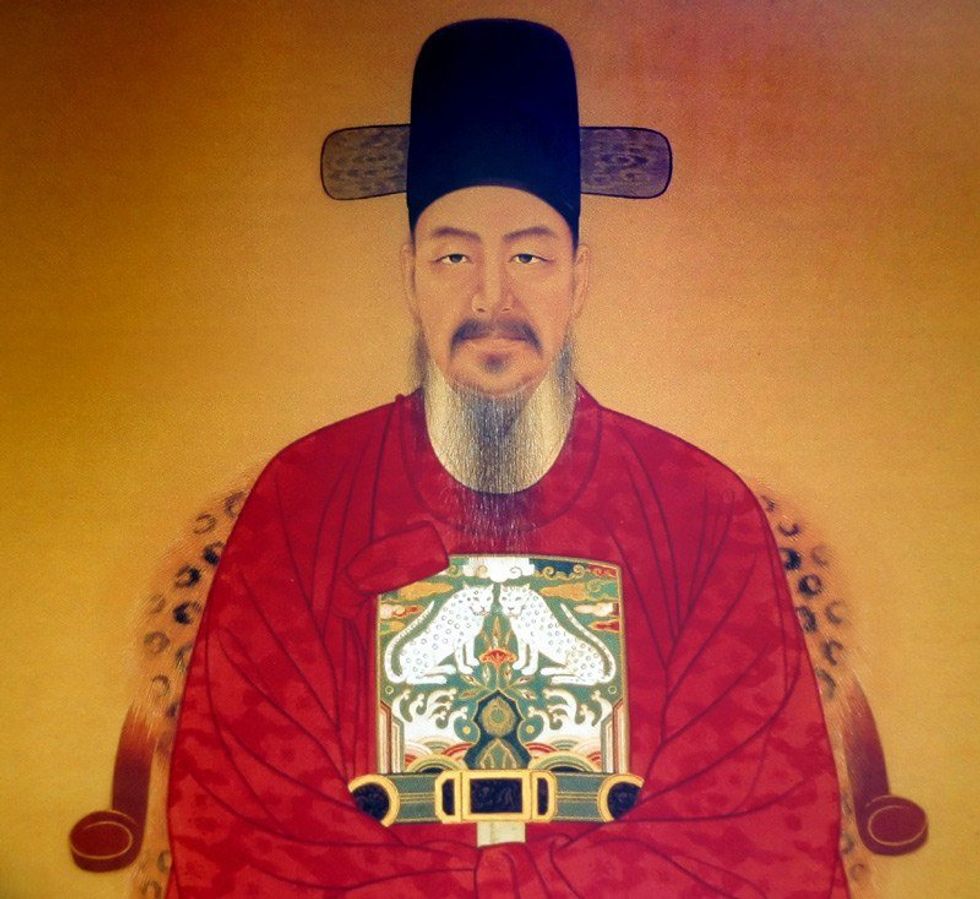
Sometimes, all it takes is bravery, dedication, loyalty, and a pinch of military genius. Thankfully for the entire Korean peninsula, Admiral Yi had all of that and more.
Yi was born a nobleman's son, into a family that was traditionally in service to the Korean government - as was common at the time for the nobility. Instead of being glorified warriors, as was common in Japanese or European cultures, Korean nobility were government servants and bureaucrats. Yi defied expectations, and instead of pursuing a career as a politician he entered into the Military Academy in the hope of becoming an officer in the Korean army.
Yi passed his exams in 1576, after failing the first time for falling off his horse and breaking his leg. After becoming an officer and receiving a provincial position, Yi gained a reputation for being staunch and incorruptible. At the time, Korea's military and government were both notoriously corrupt, but Yi refused to sacrifice his integrity by bribing the higher ups or suck up with nobles to gain favors. As a result, his career was nearly destroyed multiple times. He was once removed from a position for refusing to participate in illegal actions at the order of his commander, and soon after was demoted to the rank of a humble foot soldier after another official blamed Yi for his own mistake.
Eventually, Yi climbed his way back up the ranks, and became the commander of a naval outpost. He trained his troops rigorously and built up the strength of his fleet, despite the fact that Korea hadn't faced a naval threat in the entirety of its history. It hadn't even faced a serious war in over two centuries.
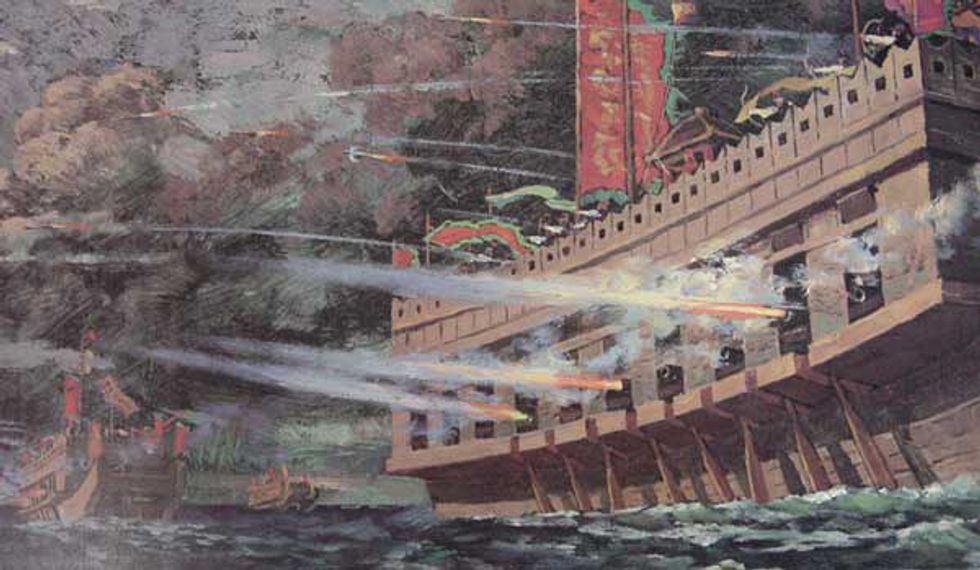
But that long period of peace ended suddenly and dramatically, when the recently unified Japanese Empire decided that it was high time they conquer Korea. In 1592, a huge Japanese armada descended upon Korea... and the Korean navy did nothing. The naval commander in charge of the area where the Japanese arrived didn't respond at all to the invasion - he just let the massive Japanese army land in Korea. Within three months, the Japanese were in the capital of Korea, and the Korean King was forced to evacuate to Pyongyang-- but within three weeks, the Japanese had conquered Pyongyang as well. The war was basically over before it began.
The Japanese victory would have been assured... if it hadn't been for Admiral Yi. With less than 50 ships, against the Japanese fleet of thousands, Yi began leading daredevil assaults on Japanese raiding parties and supply lines. Time and time again, Admiral Yi crushed the Japanese with his superior tactics.
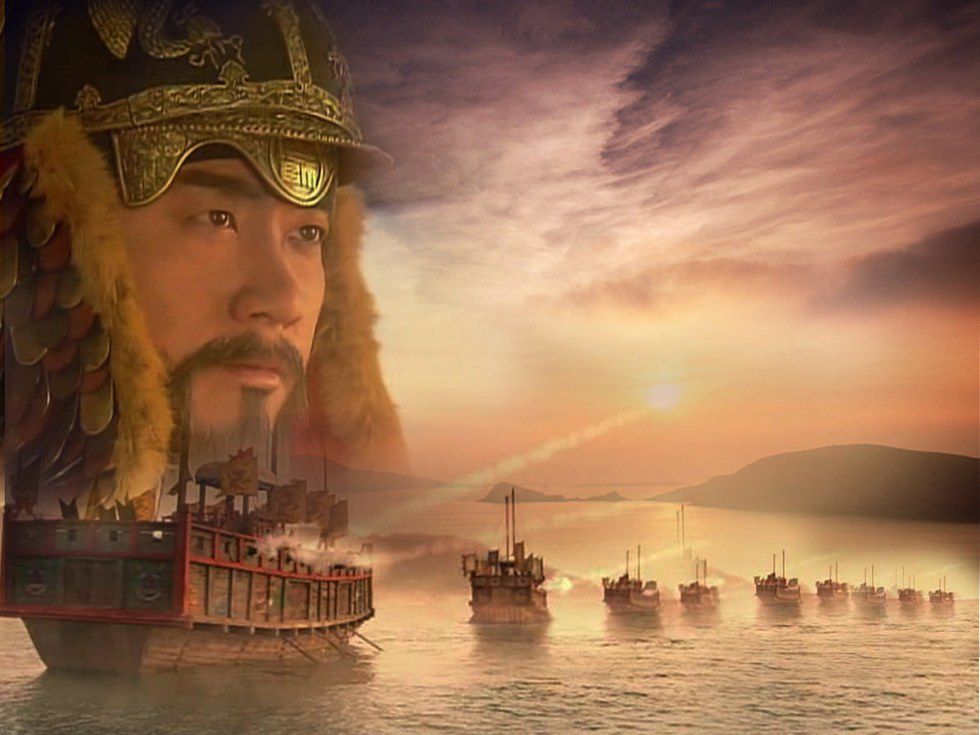
Yi racked up a military record that no other commander in history can compare to. Even the greatest generals of the greatest emperors of the world lose every now and then, but Yi never tasted defeat throughout his entire naval career. Out of twenty-three of the battles he personally commanded, every single one was a Korean victory. Furthermore, Yi never lost a single ship to the Japanese, though the Japanese losses quickly rose to hundreds of vessels.
However, the corrupt Korean government continued to plague Yi. He was brought to trial on falsified charges of treachery, and was demoted to the lowliest rank of footsoldier... again. The Korean navy was put under the command of the same commander who had done nothing when the original Japanese invasion force arrived. He quickly screwed everything up, and reduced the Korean navy down to just 13 ships.
The royal court realized its mistake, and put Yi back in charge of the navy, and it was with these 13 vessels that Yi eventually crushed the last remnants of the Japanese invasion force, and won the war for Korea.
In the middle of the last battle of the war, Yi was struck by a stray bullet, and fell to the deck of his flag ship. His last words were spoken to either his son or his nephew: "The battle is at its height. Keep beating the war drums. Do not announce my death."
To this day, for his staunch defense of his homeland despite overwhelming odds and constant government obstacles, Yi Sun-sin holds three posthumous offices - Prime Minister of Korea, and Prince of the Korean Court - and one of the most prestigious titles a Korean could ever be given: the Martial Lord of Loyalty.