Once, I was asked to name the one thing I would miss the most about California if I were to ever move away. I had a minute to contemplate what it was, but instinctively and immediately, I blurted out “the California burrito.” As odd as it may seem, I will shamelessly admit that this particular burrito has earned a special place in my heart, even if it contributes to stopping it; I need people to understand my great appreciation for it.
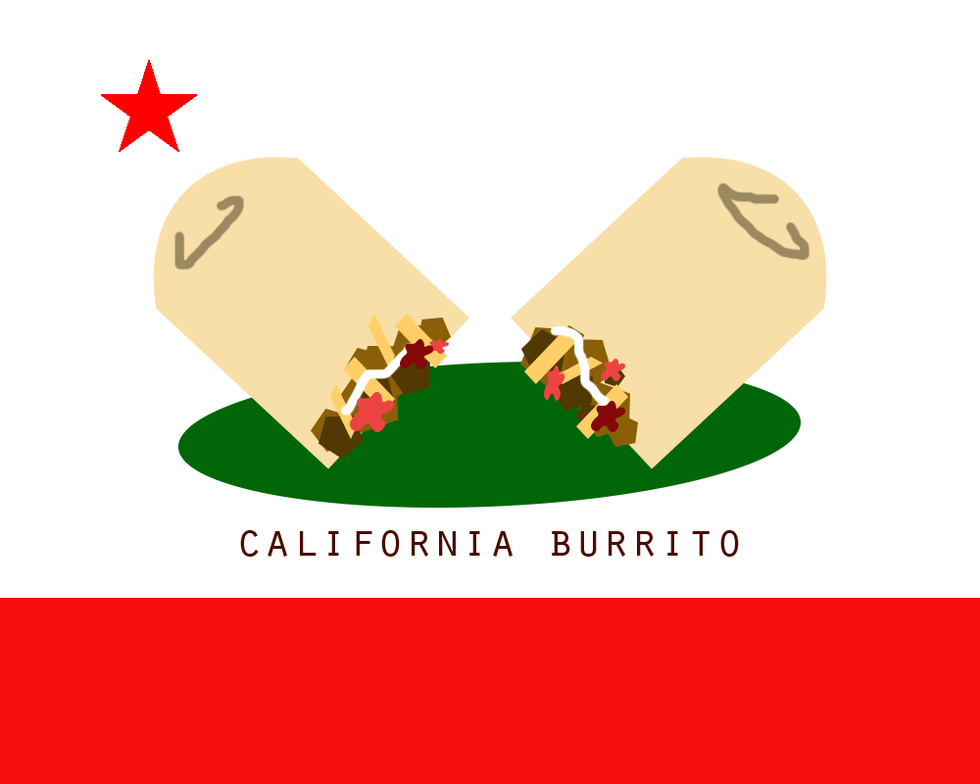
The California burrito is a six-dollar delicacy for all the local students in my hometown of Imperial Beach, San Diego, the most southwesterly city in the United States. Its composition is simple: carne asada, sour cream, cheese, guacamole (of course), and one key ingredient that separates it from all other burritos—french fries.
If you want to try a California burrito, I’d recommend you go straight to San Diego and hit every Mexican food joint with one on its menu (except for La Salsa in Coronado; they know nothing about California burritos). I believe it’s also important for those who might generalize Californian cuisine to understand that the California burrito is more of a Southern than Northern California food—anywhere outside of San Diego is most likely to deliver you no luck with the California burrito experience.
But why is the California burrito so important? Is the simple addition of french fries to this delicious burrito so revolutionary?
I can still recall the first time I enjoyed one: it was a lunch date with T.S. Eliot and his pal, J. Alfred Prufrock.
My AP Language teacher had just poured out all his passion in a PowerPoint that day, exploiting the topic of burritos to teach us eight modes of rhetoric. In the end, I learned only this: he liked breakfast burritos and sad songs, but considered the California burrito an “abomination.” Since I’d never tried one before, I had to question his disgust for that particular burrito, but he offered no explanation for his opinion other than “burritos aren’t supposed to have fries.” I still didn’t inherit the disgust. The fries made things more appealing.
When the bell rang, my class and I all had a love song to listen to by the next day; I had a burrito to bite into, as well.
That afternoon, I indulged myself in the not-so-little love song while my mind still found room to entertain the idea of that burrito. And then, T.S. Eliot spoke to me:
“Let us go then, you and I,
While you’re craving the taste of a French fry
As well as Mexican food on the table
Let us go, through certain half-deserted streets,
For that glorious taste of carne asada meat”
I must have read those first few stanzas over and over again before I declared myself “mangry” (mad and hungry). Eliot swayed me, still:
“Of restless nights with your stomach, ringing bells
After meals at restaurants with merely oyster-shells
Thoughts that follow like a tedious argument
Of curious intent
To lead you to an overwhelming question ...”
Oh, do not ask, “What is it?”
Let us go and make our visit.”
So I trekked to my local Sombrero’s shop (a popular Mexican food chain in San Diego) and ordered myself one California burrito. It didn’t take long for them to whip together those magical ingredients in an oh-so-soft flour tortilla.
I'll describe the California burrito to you in three words: successful cultural fusion. The Mexican and American elements of the burrito work fantastically, and it receives almost universally rave reviews from people of all backgrounds. More importantly, the burrito has served as an incentive for all types of people to come together at a local shop to eat and engage.
People can define the standard burrito in any way they would like, but they cannot deny that the California burrito serves as its reformed, “hip” grandchild. It’s innovative, attractive, and represents a union of two cultures that I pray to God and all His/Her contemporaries that Donald Trump won’t ruin.
So I wouldn’t be surprised if every time I take a seat at Sombrero’s with my friends, the cashier thinks,
“In the room the women come and go,
Talking of… the California burrito.”
Editor's note: As a fellow SoCal native, I have to add that Don Carlos in La Jolla has a California burrito with carnitas instead of carne asada and it's as legendary as it sounds. -Anna Shuster