If you've been watching the news lately you've probably been hearing a lot about the Iowa Caucus. From the polls, to the rallies, the media is basically having a frenzy. However, it seems like most Americans don't actually know the history of the caucus, or why it is so important.
The History of the Caucus
The use of Caucuses as a primary system dates all the way back to 1769, when the system was used in all states. This new system came about due to the creation of political parties, and was used state-wide until the early twentieth century when the parties were being controlled by party bosses. The party bosses were seen to be taking advantage of the caucus system and used their corruption to control who the parties nominees were. In order to get away from this corruption, states began changing their system from a caucus system to either a, hybrid system, a closed party system or an open party system, with most states settling with a hybrid system. The first state to switch from the traditional caucus system was Florida, which did so in 1901. This change paved the way for the American primary system we have today.
Why Is Iowa So Important
So why such a focus on Iowa? Well, the importance of the Iowa Caucus stems firstly from its timing and secondly, from its uniqueness. Throughout the past decade, Iowa has fought to keep its tradition of being the first primary, and has succeeded in doing so. In being the first primary, Iowa has been able to establish itself as a state which "predicts presidents" in that the winner of their primaries is likely to become the next POTUS. Although the Iowa caucus makes for a good predictor, it is not always correct. Losers of the Iowa Caucus include two term President Bill Clinton.
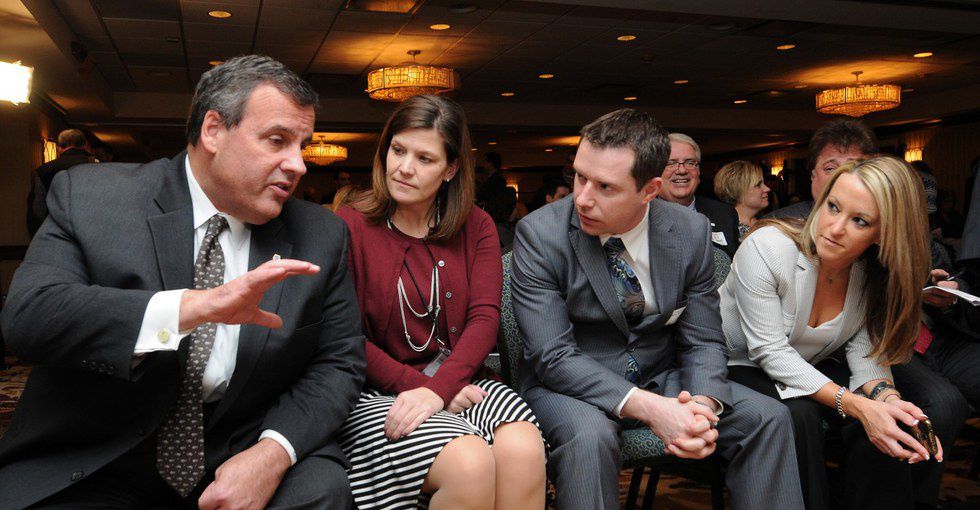
The uniqueness of the caucus system also makes Iowa one of the most, if not the most, important primaries. Unlike the voters in many other states, the voters in Iowa seem to have a more personal stake in their primaries' winners. This stems from the connections they make with the candidates through the caucus process. In Iowa the voters have the chance to sit down with the candidates, and truly discuss the problems that are facing the nation in a more one-on-one environment, where the candidates are likely to seem more natural and less rehearsed. This clearly helps the voters to better get to know the candidates but can also help candidates, who, like Hilary Clinton, are sometimes accused of seeming disingenuous. However, it could also harm them if they do not come across as understanding and willing to listen to the concerns of the average american.
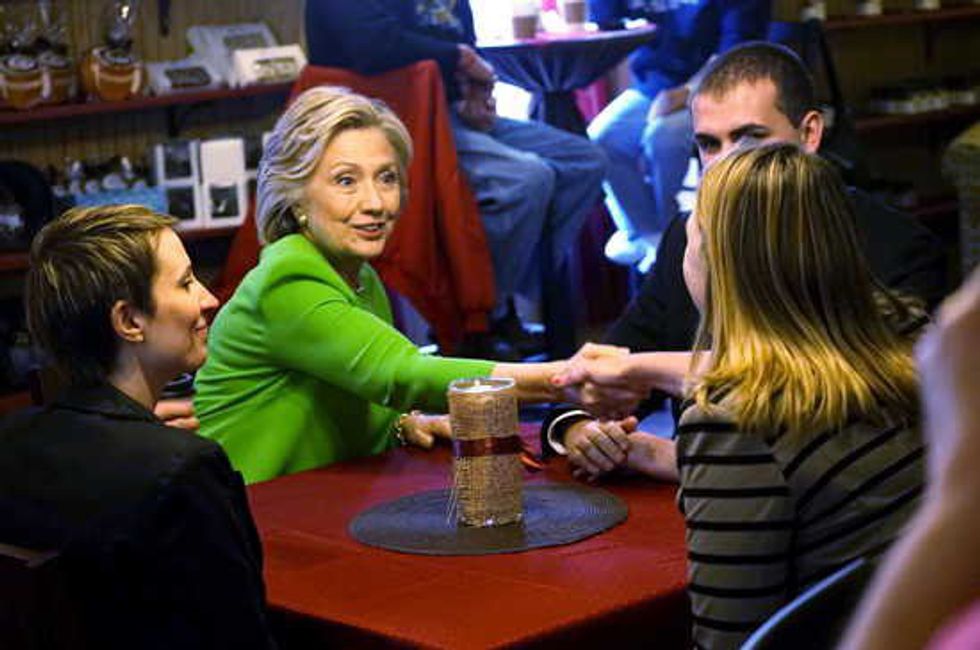
Through these forums, personal conversations, and rallies, the Iowans seem to establish a strong connection with the candidates in which they are able to better and more honestly see where they stand on many issues. This type of primary system in some cases may help voters to understand where the candidates truly stand, without their rehearsed "one liners" clouding their true intentions, therefore leading to a more honest vote, and one that is likely to predict out next president.
What The Field Looks Like Now
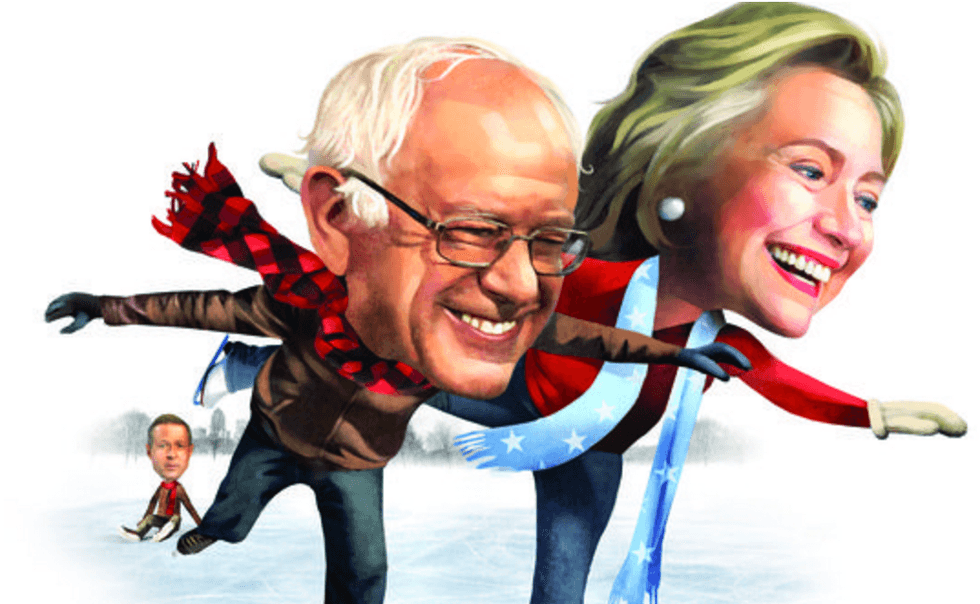
When it comes to the Democrats, there is a head-to-head race between the previous Secretary of State, Hilary Clinton and Vermont Senator Bernie Sanders. A poll recorded by the Des Moines Register has the difference between the two candidates at only two percent, with Hilary in the lead with a likely 42 percent of the votes, and Bernie close behind with 40 percent. This increasingly small margin is very different than how the field looked only a month ago, when Bernie was trailing by nearly 10 points. Although Clinton is leading with two percent, the poll has a margin of error of 4.4 percent, showing that when the numbers are this close, it truly is anyone's game. Only time will tell, but it is now, more than ever, very possible that Hilary Clinton will lose, as her husband lost, one of the (if not the) most important primaries in the country. If she does loose, this will be a huge step forward for the more liberal leaning members of the Democratic part, and may show a new trend of more left leaning support from a party that typically supports more moderate democrats (like Clinton) over social democrats (like Sanders).
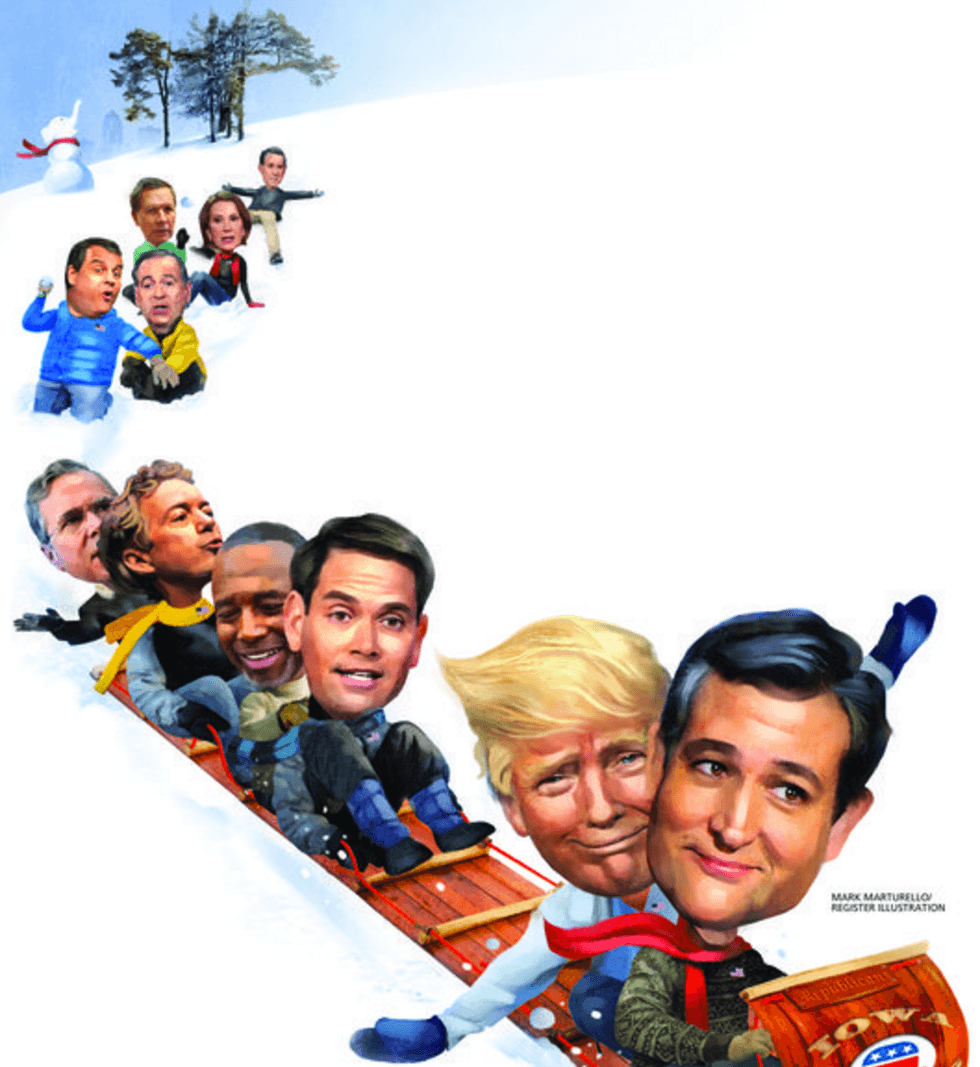
When it comes to the Republicans there are a few more possible choices; however, the real race seems to now be between Texas Senator Ted Cruz, and Real Estate Mogul Donald Trump. The most recent poll conducted by the Des Moines Register, one of the leading papers in Iowa, has Cruz up three points. This is one of the first times that anyone has come out in front of Trump, and the first time this has happened in Iowa. Cruz is now leading the pack of eleven possible GOP nominees with 25 percent, while Trump follows close behind with 22 percent, and Rubio coming in next with 12 percent. Although the GOP's field seems to be as full as possible, the attention has seemed to be on these three when it comes to Iowa in particular, with Trump seeming to have no support from the establishment, Cruz seeming further right than establishment, and Rubio seeming like the establishment's best bet. These three candidates are all extremely different, and their growing popularity is continuing to show the fractions within the Republican party. Although Cruz is, according to this poll, in the lead, there is a margin of error of 4.4 percent which makes it evident that the three point difference between Trump, and his own numbers may not be completely accurate. Along with this, the poll was taken before the most recent Republican debate, and it is likely that some Iowan's have changed their stance on who they will support in the caucus.