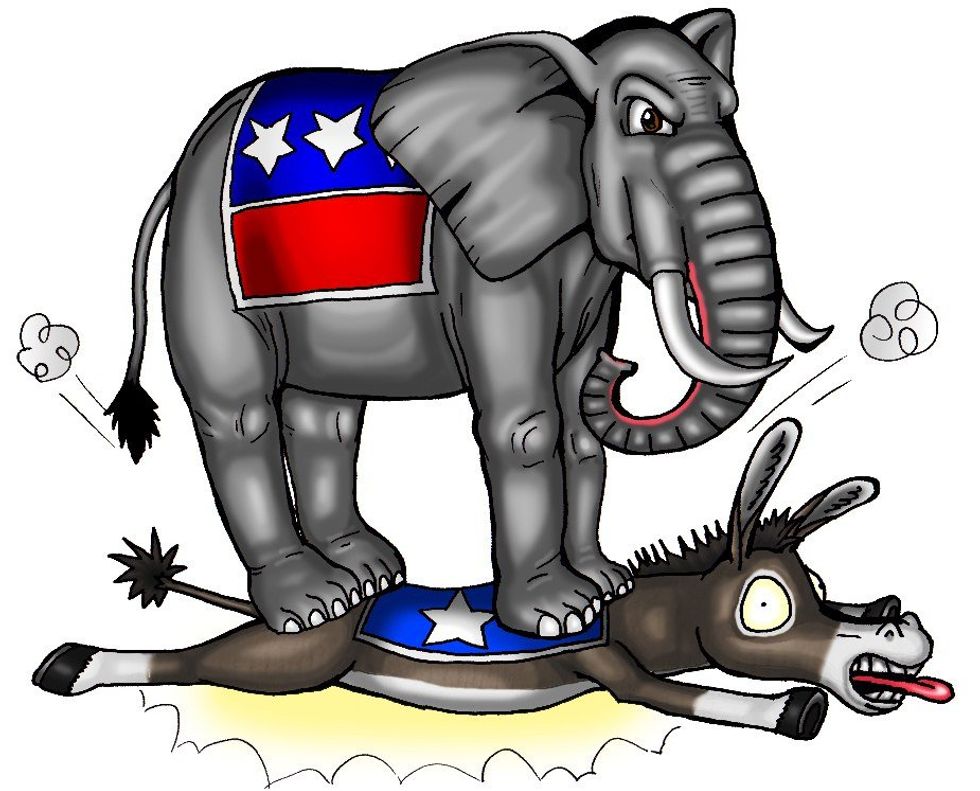
The most infamous political symbols would have to be the donkey and the elephant; both equally powerful, but representing different parties. This story takes place in 1828, during the time of Andrew Jackson and John Quincy Adams. Those months leading up to the election are still known as one of the dirtiest campaigns ever run in American politics. Adams and his fellow Republicans enjoyed using slurs towards his opponent to try and win the favor of the people (doesn't sound like there's much of a difference between the 1828 election and this year's election!) Adams would steal votes from Jackson by saying that Jackson had married his wife before she was "officially" divorced, and later that Jackson happened to have murdered a man for bringing up the rumor. They labeled him a "jackass", whilst comparing him to an obstinate donkey. However, there were good aspects for having this nickname; Jackson was also seen as hardworking and able to carry a burdened load. The name stuck, and as a result, he began to litter the faces of his campaign posters with images of this average animal.
The elephant, on the other hand, didn't rise up until it was featured in a pro-Lincoln newspaper in 1864. The picture showed Abraham Lincoln leading an elephant carrying a banner, celebrating the Union victory. An artist by the name of Thomas Nast began to spread the knowledge of these symbols and proceeded to share them through his drawings. Nast was an influential political cartoonist looking for a reel to draw in the upcoming Harper’s Weekly. Even though Nast was illiterate, he still managed to get his point of view across in the way he knew best, in a cartoon labeled Third Term Panic.
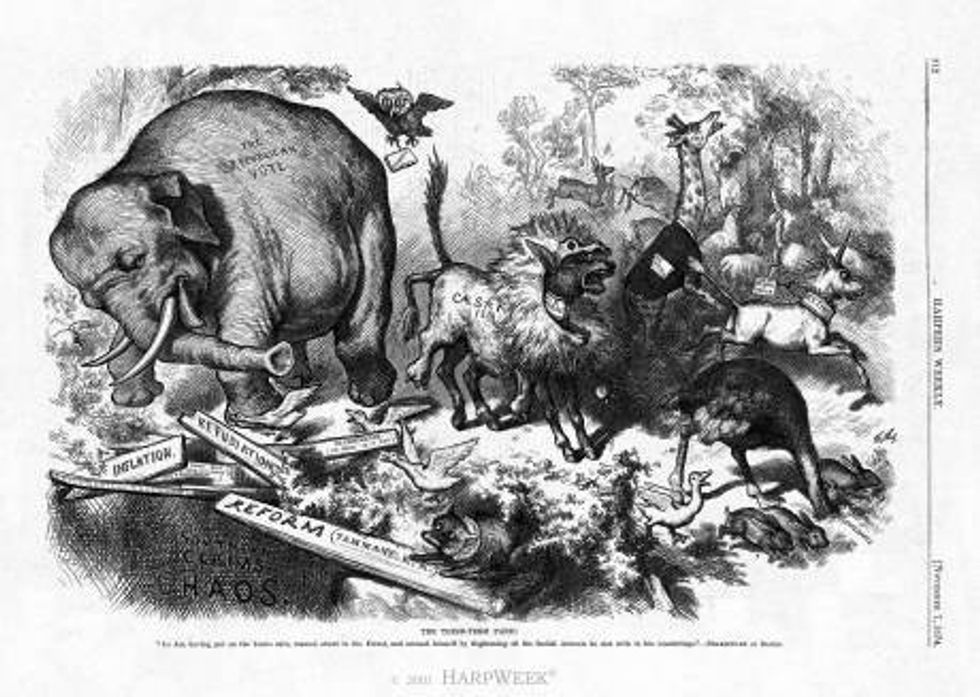
The elephant made another emergence in this newsletter. The pachyderm was shown wobbling back and forth, about to fall in a hole. It was labeled as inflation and chaos, whilst the donkey was scaring him, as mentioned earlier, while wearing the fur of a lion. The elephant had always represented the Republican Party ever since Abraham Lincoln took office. It wasn’t until Nast drew the cartoon, that it immediately became the household symbol for the Republicans. In the cartoon, the donkey was shown wearing a lion's pelt and chasing other animals away. Being compared to either one of these animals is not very flattering.
Things don't seem to have changed very much since 1874, but thanks to Nast, we have a way to differentiate between two very opposite political parties. Without him, where would we be?