

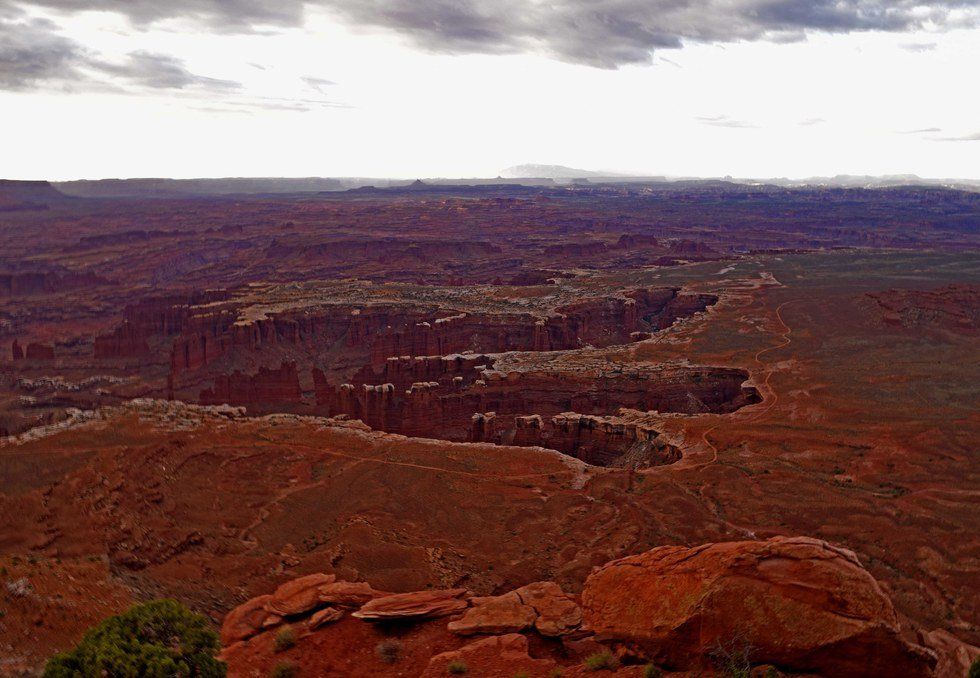
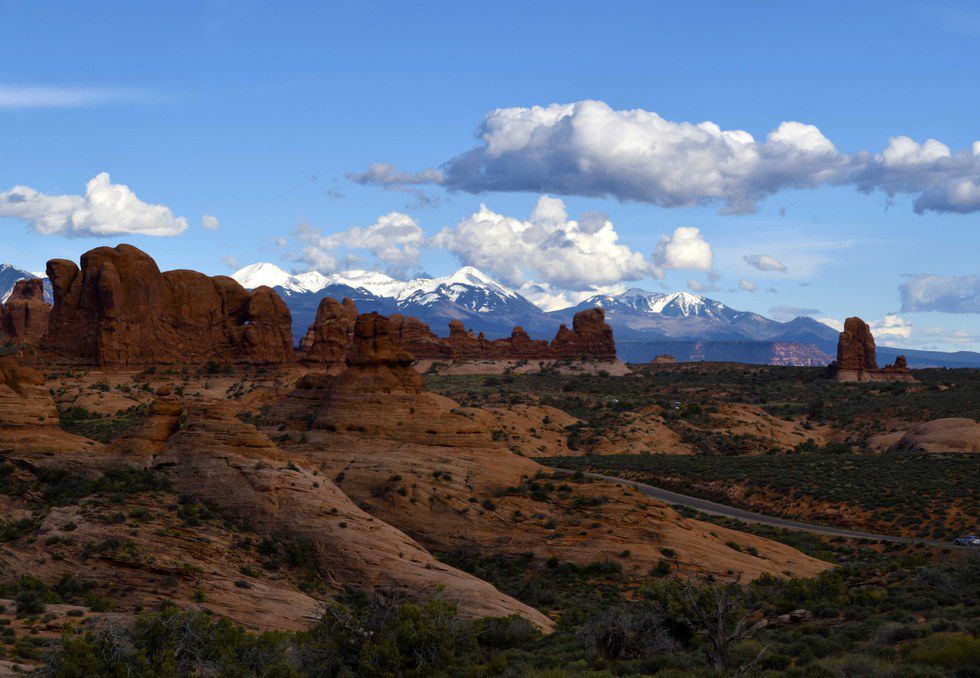
(Photo taken by me in Arches National Park, Moab, Utah)
This summer, I had the incredible opportunity to travel out to Southern Utah for a class with Berea called "Photography and Writing: Tools for Conservation". For a week and a half we traveled around the landscape of Utah's biggest National parks, and got a taste of what each had to offer.
At first, the hype was in the travel. I had never seen any of the states to the west of the Mississippi river before, and so seeing Las Vegas in Nevada, the tip of Arizona and the Southern part of Utah was a huge opportunity. It was thrilling to get up at 3:30 AM to catch a plane! Needless to say, after having gone 30 hours without sleep by the time sunrise came on our first day in Utah, I was already through with travel.
The name of the class suggests it all: we would be writing and photographing what we see. But where does the conservation part come in?
In Moab, my entire view of the importance of the trip changed, and where the conservation part kicked in. Arches National park, as seen above, was the first park we stopped in for the class. It was beautiful! (And I assume it still is!) Everything about it was aesthetically pleasing, from the red rock, green foliage and the majestic blue mountains in the distance. (Yes, that is snow!) But there was something wrong in that park. It wasn't until the next day of the trip that we would find out what.
Our instructors introduced us to Dr. Jayne Belnap, a researcher who works for the National Park Service, and had her talk with us about the problems facing our National parks today. One of the biggest problems, in her opinion, is the overcrowding of the parks. Every year, Arches alone gets more than a million visitors. According to their site, last year they received 1,399,247 visitors. That's just one park! Utah has several! And while the revenue is good in terms of keeping the parks clean and well run (as opposed to the Smoky Mountain Nat'l park, which has no incoming revenue), they are unable to compensate for the massive amount of people going through every day.
What are they compensating for? The destruction of the environment.
We often think that going off trails and hiking our own paths is fun, and challenging, but in reality, it's a danger to the environment. In Utah, the desert is held together by micro-organisms called Biological Soil Crusts. These little creatures, including lichens and fungi, keep the desert soil in place when there is wind and rain...And they are everywhere! Stepping out into the flat land of the picture above, I did not know what damage I was going to do. But it happens every day. Visitors step on them without knowing what they are, but the deed is done. It takes several years for the Bio Crust to return. As a researcher on the Bio Crust, Dr. Belnap is constantly trying to find a solution to the problem of overpopulation in the parks, which causes the unwanted foot traffic off of the trails. No solution is an easy, and plausible, one, but she believes there is something we can do to protect the environment of Southern Utah.
There is no monetary value we can place on the natural beauty of this country. This class taught me that there's more to the fascination behind nature than just a pretty face. There are many facets of stability that an environment needs, and in order to conserve those resources, we must conserve that which is keeping it alive. While we may not be the ones that can make the change overnight, we can start by taking the first steps: stay on paths, don't litter, don't take things from a natural environment...Small, gradual changes in this generation will spread to the next, and eventually, impact the way that people think. But it starts with us.
(Thanks to Professors Libby Jones and Alan Mills, and Jayne Belnap of the NPS. To learn more about Bio Crusts, visit http://www.soilcrust.org/)