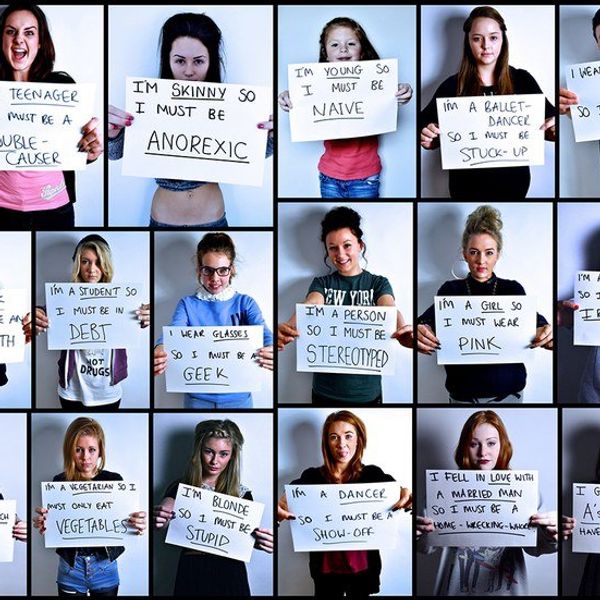

Depression is a nasty word to hear, and a worse thing to suffer from. People, young and old, are vastly undereducated on what exactly depression is, and how it looks in real life. We think someone who is depressed is in a constant state of apathy, sleeps unhuman amounts, is antisocial and generally pessimistic in every sense of the word.
We were fed a lie.
People with depression can laugh, and they can smile. They go out with friends on the weekend and appear just as socially functioning as those who are perfectly well. Depression does not have one form in which it takes appearance; it doesn’t look a certain way or have explicit tell signs. Depression looks different in every person, and someone suffering from it might not even know they are depressed.
Depression isn’t something to joke about and make sad, but relatable, tweets about because the depression you may have or have seen could be the same depression making it nearly impossible for the girl who follows you on Twitter to get out of bed that morning.
We live in a culture making a condition like depression somehow less valid in our eyes; our elders just call it, “being sad” as if it is something we somehow get over in a matter of hours. Our parents call it a phase, or a rut, in our lives that will pass soon enough. We are so desensitized to the possibility of depression being a truly crippling disease, we just try to convince ourselves we don’t have it, or that we’re just feeling sick or tired. We say, "School is just really stressful right now," or we have PMS.
We think by admitting we struggle with falling into depression’s trap we must conform to the image of depression fed to us in our society. I told myself I was fine for weeks, and that I couldn’t possibly be depressed because I had friends, and I laughed at jokes. and I smiled when people passed me in the student union. I didn’t fit the depression stereotype I was shown, and so I denied the internal battle happening within me.
I didn’t wear black clothes, and keep my head down, and stay quite all the time. I was the girl who wore overalls and Christmas sweaters to class; the girl with the obnoxiously high ponytail who laughed so hard, she cried in the cafeteria with her friends; the sorority girl who went to chapter and talked to everyone. I was nowhere near the picture of what depression ought to look like, and yet, there I was... fighting the same battle, struggling with the same temptations as those who did adhere to the stereotype.
So, to you who feel as though you are fighting some internal battle, know your fight. You are not the only one who unknowingly struggles with depression. There are hundreds, thousands even, of us who do not know what we fight against because we have never seen it before. We never see a lively girl laughing in the middle of the street with her friends and think, “She could struggle with depression.” Instead, we see her and think, “I wish I was as happy as her.” Sometimes, depression doesn’t present itself in obvious ways, and you think surely you couldn’t suffer from it, but it plagues you in discrete ways you don’t recognize or notice.
Depression does not lead you to an endless pit of despair. There are moments of joy and happiness, but they are just that - moments. People who struggle with depression are just as functional in the social sense as the rest of us, but they fight an internal war you cannot imagine. It is not something with one universal look, but rather, takes so many shapes and forms.
Do not be afraid to admit you struggle with depression, even if it doesn’t look like the depression you saw in others, because we are all so very different. Depression isn’t something to be ashamed of - it’s just a side effect of the human condition.
You do not have to walk around alone wearing dark clothes, with your head hung low, to have depression. Your vibrant, goofy, overall-wearing self can suffer from the same illness so many others do. Be willing to accept yourself completely: your strengths, and your flaws, your accomplishments, and your struggles.
Depression is a battle which looks vastly different in every person, but a battle which can be won. So acknowledge the conflict that traps you, and fight it boldly without the intimidation of having a different presentation than everyone else.
Depression does not have one look. You can laugh with depression, smile, and dance. You are not restricted to a single expression of your human condition. Don’t be afraid to accept the fact you struggle with depression, but rather, know your battle, and fight to overcome it.