

Love is complex. It's thorny, euphoric, nirvana, chaotic, and, most notably, complicated. Coming from someone who has zero experience in the emotional roller coaster ride known as love, let alone dating, I can say with confidence that everyone has a different definition of love.
For many, love is strictly traditional: Roman Catholic rules on sex and intimacy, church-style wedding, raising three kids named Tom, Michael, and Sarah who attend Youth Group on Sundays, and exhibiting unconditional devotion "for better or for worse" above all. For others, love runs its own course of passion, problems, and rules. More often than not, couples experience "gray" areas that veer far away from the "black and white" conventional standards bestowed upon us and are just fine. For me, love is a first bite of a Big Mac.
But I digress.
Each definition varies, and no group of women investigates, analyzes, and is enthralled by this subject more than the NYC, mid-30 year old socialites in "Sex and the City." The show reveals the complexities of both love and New York itself as well as how characters Carrie Bradshaw, Charlotte York, Miranda Hobbes, and Samantha Jones deal with this reality. They handle dating, relationships, sex, intimacy, and love differently from one another, yet bond over the mutually shared experience of being screwed over in the game of love again and again.
And so, from their different experiences and upbringings, they each have their own meaning of love that shapes their identities.
1. Carrie Bradshaw
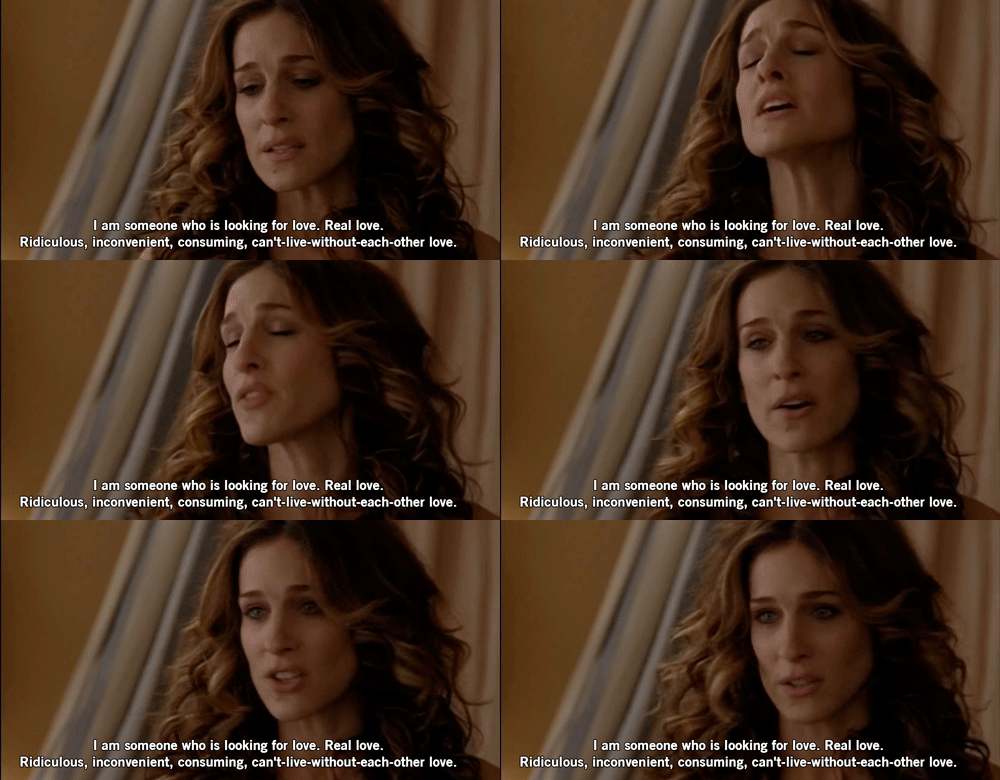
Carrie Bradshaw is textbook definition of an idealist. With an addiction to Manolo Blahnik shoes and cigarettes, Bradshaw devotes her life to writing and analyzing love, how to find it, what it does to someone, and everything it entails. She believes in soul mates, that everyone has "the one," and that it takes time, effort, and lots of dating and sex to find that special lover. She's all about passionate and intense romance, sometimes impairing her decision-making skills and enhancing her impulsivity. Aside from her career, friends, shopping, romance, love, and everything in between is her sustenance, along with issues of Vogue. If a man fails to provide in that department, then the relationship is impasse and rendered dead in a graveyard. Over the show's course, Bradshaw exhibits almost little to no change in character and ultimately follows her heart in everything she does.
2. Charlotte York
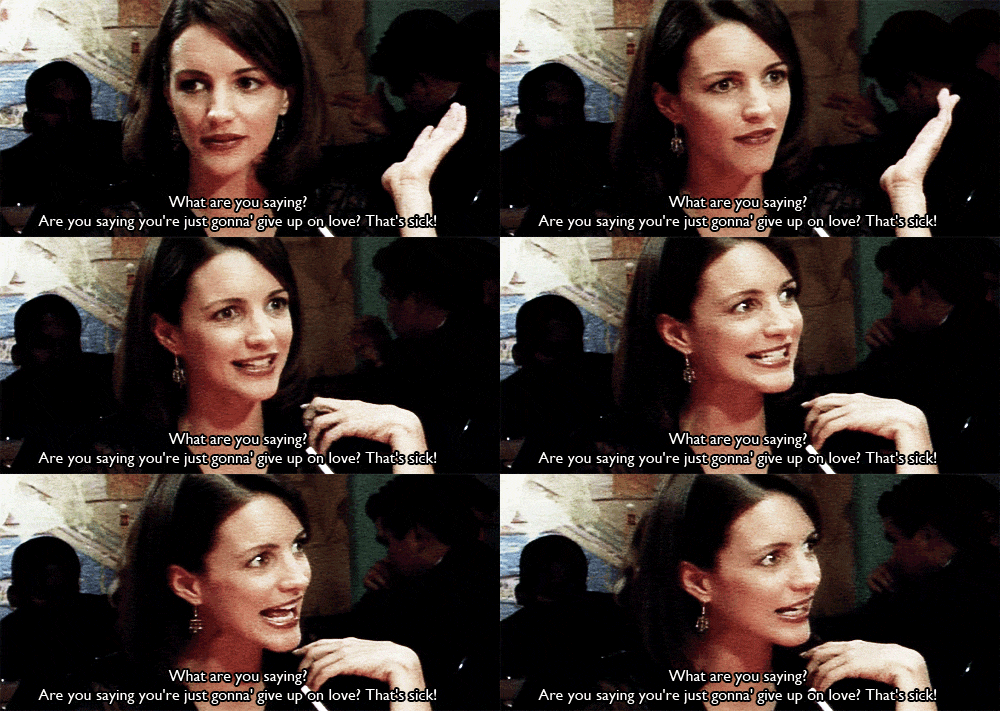
Charlotte York emulates Bradshaw's idealistic notions on love, but follows a more traditional, safe guide of rules. As a born and raised New England WASP with horses, wealth, delicate cardigans, and a Connecticut blue-blooded upbringing, York has strong convictions in tradition. York is a conservative optimist who dotes on true love and finding a "knight in shining armor" for life. She applies this traditional love mindset in and out of the bedroom, often being more missionary and prude in comparison to her friends. She believes in fairytale endings, large Tiffany engagement rings, and love that never dies. However, her faith is tested when she copes with divorce and meets Harry Goldenblatt, a lawyer who is an antithesis for every one of York's ideals. Despite this, York falls madly in love with Goldenblatt, marking a digression in her traditional values. Ultimately her version of love morphs into a balance between tradition and unorthodox passion.
3. Miranda Hobbes
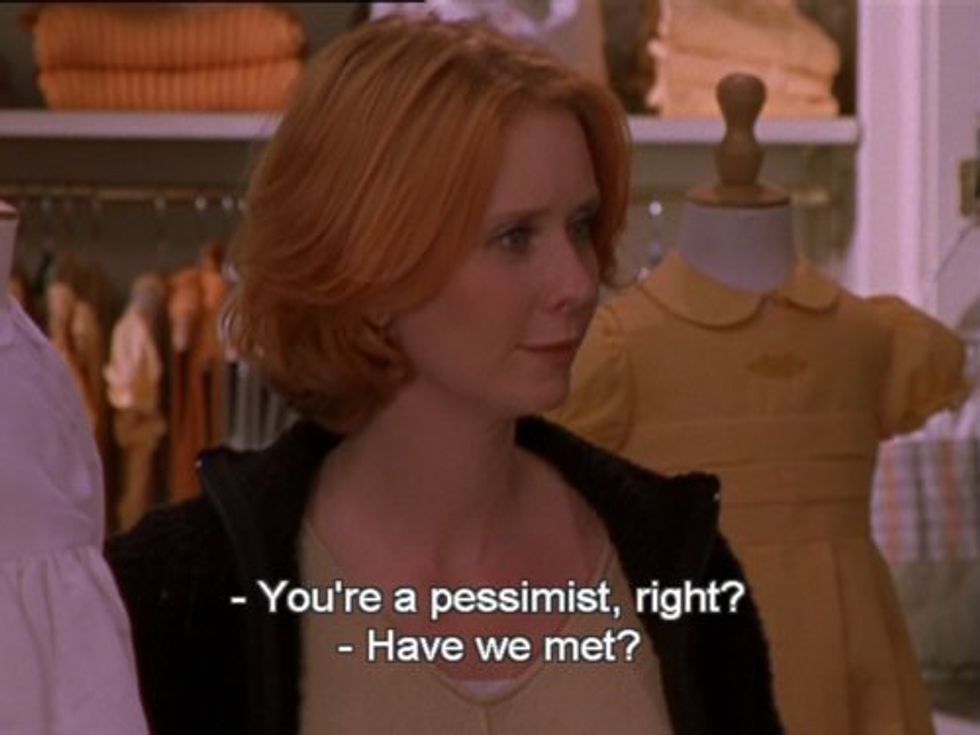
Miranda Hobbes' views on love are glaringly different from that of Bradshaw and York. Serving almost as a foe to true love and fairytales, Hobbes holds cynical, pessimistic views on relationships and men. She is a type A, career-driven woman who avoids BS like every borough besides Manhattan, especially when it comes to dating and sex. Due to her prior experiences, Hobbes conveys distrust and resentment towards men and their general treatment towards women; she therefore follows a practical, sardonic approach to love, seeing the chance of having "flowers and sunshine" romance as simply impossible. However, like Charlotte, Hobbes undergoes a change in character and softens up her rather harsh views on love with the birth of her son and marriage to on-again, off-again boyfriend, Steve Brady. Nonetheless, Hobbes is not into cheesy, cliche, and ostentatious acts of romance, such as large weddings and tacky bridal traditions.
4. Samantha Jones

It can be argued that Samantha Jones doesn't believe in the idea of falling in love; she boasts on her pride and sexual liberation, seeing her partners as "in and out, one and done" prospects that fulfill her innate sexual desires. While the other women circumscribe their lives around love, the good and bad, Jones focuses solely on lust-based sex. She despises the idea of marriage and the thought of confining herself to one man. She views intimacy and developing relationships as threatening and avoids exposing herself emotionally at all costs. The one concept of love Jones truly believes in is self-love; out of all the women, Jones is by far the most confident and least afraid to show off her libertine, raunchy, and lewd antics and beliefs. At the end of the series, Jones allows herself to fall in love with Hollywood actor, Smith Jared, but ends up reverting back to her old ways in the first "Sex and the City" movie when she declares that she'll always love herself more than a man. This essentially is a testament to everything she stands for.
Love, intimacy, and sex are all ideas with similar guidelines attached that have become common practice, however, these three concepts are contrived and constructed differently by people's experiences. Therefore, while your definition on love may align with or sharply contrast from that of each "Sex and the City" characters, to them, it's their version of Marshall Law. Find yours and run with it.