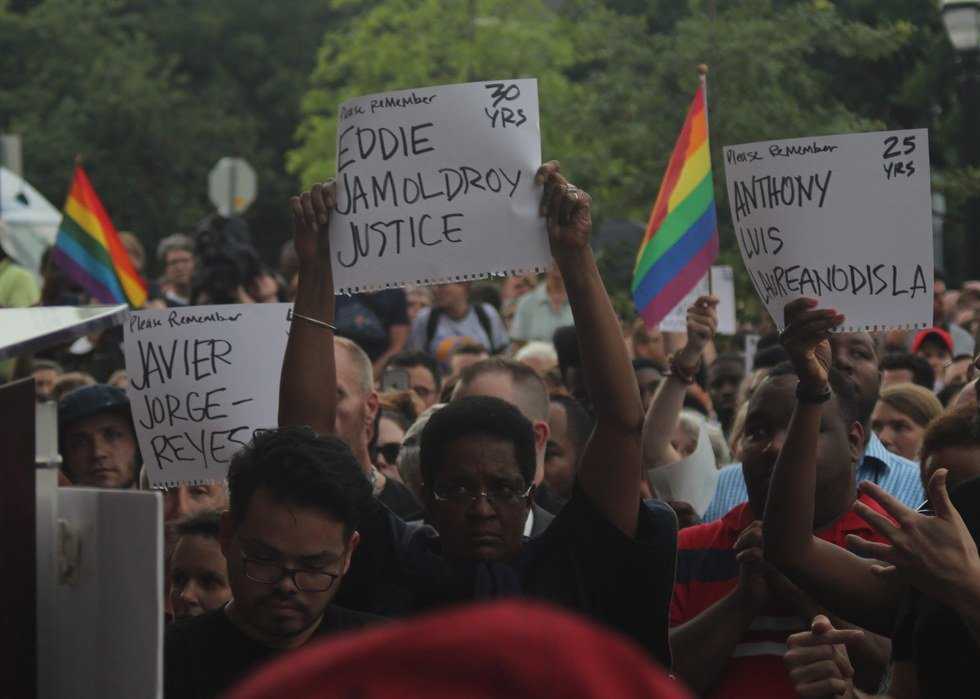
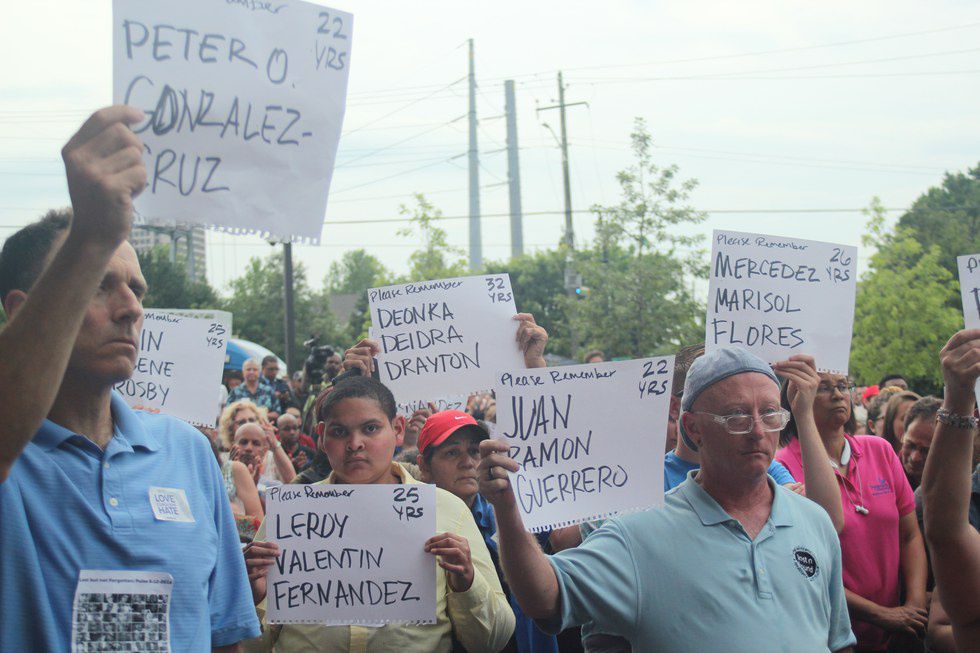
Gatherers hold signs that display the names of the Orlando shooting victims at a vigil at the Atlanta Civil Rights Museum on June 14, 2016.
In 2012, the third installment of the Batman trilogy, “The Dark Knight Rises,” finally came to fruition. I, like many of you, were calling friends and making plans to be the first in line at the midnight release. My plans panned out accordingly and I basked in the ambitious and thoughtful action that was Christopher Nolan’s final piece as the director of the critically-acclaimed Batman series.
Giddy like a schoolgirl, I started to browse the Internet reading every little nugget about Bane or Catwoman, but suddenly all the news that would appear on my phone was heart-breaking. Twelve moviegoers were gunned down during a midnight screening of Batman in Aurora, Colorado. Twelve people, killed, who just had the same idea as me.
Many Americans were dispirited on the event, overtook by irrational emotions and anger about gun control and movie theater security. Vigils streaked across the country as gatherers prayed for the lost souls of the innocent. Emotions peaked and major media networks argued their points. Television stations listed the victims of the tragedy and prompted donation channels. A dismayed Obama addressed the nation, disheartened by the lack of humanity. We gathered ourselves and moved on as a country.
It is December of the same year when school students were beginning to prepare for Christmas. Suddenly, news breaks of another mass shooting in Newtown, Connecticut. Twenty school children, between the ages of six and seven, mowed down at Sandy Hook elementary. Again, Americans were overcome by emotions. Again, vigils streaked across the country. Again, Obama addressed the nation. Americans argued over gun control and security. Nothing is done. We shook the dust off and moved on.
September, 2013: 12 people are murdered in cold blood at the headquarters of the Naval Sea Systems Command within the Washington Navy Yard. Vigils ignite. Sure enough, Obama addressed the nation. Media outlets argued over gun control and military base security. As you may expect, nothing is done. More and more defeated, we moved on.
It has been nearly a year when we discovered nine church-goers were murdered during a prayer service in South Carolina.
Cue the routine.
Mass shootings are developing like trends and these events are no longer mind-blowing pieces of information. The process of addressing a mass shooting to a beaten nation seemed habitual for the media. President Obama appeared unruffled and beaten by this typical cycle of tragedy.
This month, Orlando became victim to the terrors of mass violence. A gunman stormed a gay nightclub gunning down 49 individuals.
Americans just licked their wounds from the last shooting in San Bernardino, CA. Government security officials engaged in heated battles with Apple over iPhone security. Obama appeared furious over gun control legislation and Americans argued with each other over their rights.
In no less than two weeks after Orlando, the ship of tragedy is beginning to set sail into a bay that holds all of America’s forgotten tragedies. After the initial outrage of tragedy, most Americans move on and nothing changes.
Nothing. Changes.
A quick look at Google trends reflects the public anxieties and fascination America has with tragedy. Of course, life is filled with ever-changing events, all rapidly overtaking the last bit of news you consumed. Right when the momentum for a tragedy is reached, interest quickly declines. The media machine feeds off of our short attention spans, quickly transitioning their stories to a Kardashian days after an exploit of America's weaknesses.
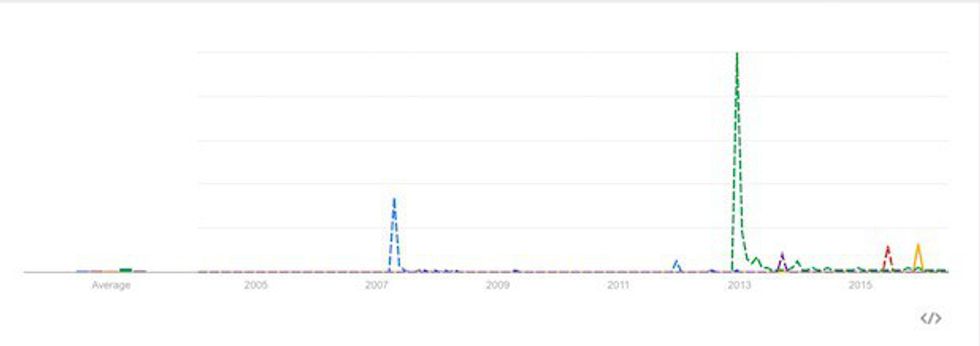
Shown: Click the image to get a deeper look at the graph (opens in new window).
The data represented in the graph shows the total number of searches for a specific inquiry in comparison to the total number of searches done in Google over time. The spikes in the graph represent interest in a highly publicized mass shooting, which is typically the day of and the few days after. However within a month, the silence is remarkable.
Understandably, we cannot grieve forever. What kind of sick life would that be? Moving on is a natural part of recovering from tragedy and we all handle recovery differently. When you add in factors such as international tragedy or smaller, local or personal tragedy, the equation becomes much more complex.
We, as a people have grown quite numb to tragedy. There are few things actually being accomplished to slow down the rates at which these tragedies occur. To receive a breathing hope of constitutional deliberation, we must keep the events at the forefront of attention. If we fail to do this, the calls of these victims' families will only sail away until we experience the next tragedy with the same exact routine as before.
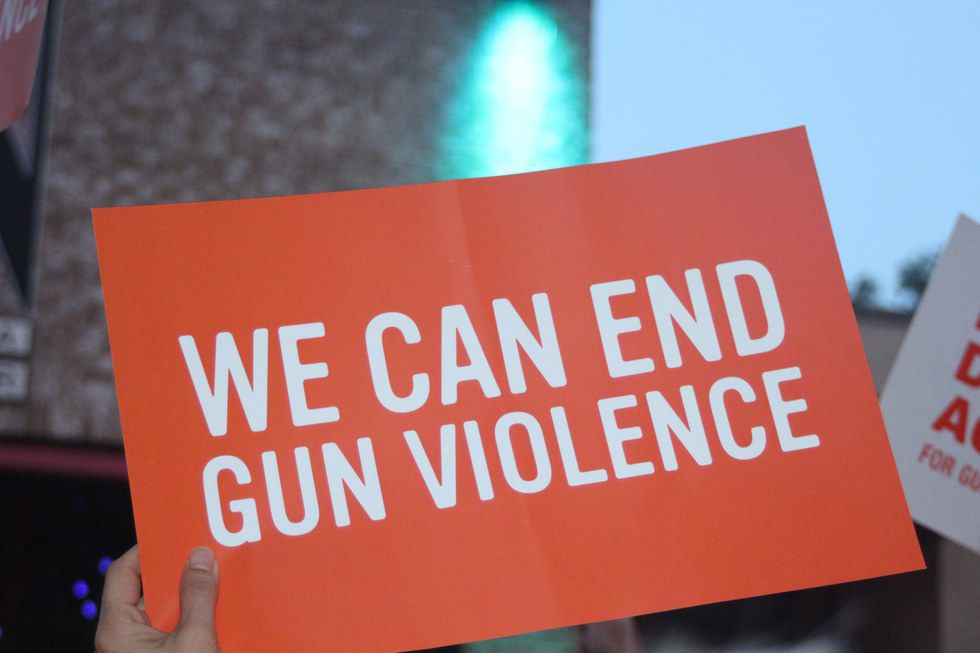
A sign calling for an end to gun violence is held up during a vigil at Ten Atlanta.
We must do more than offer our thoughts and prayers. Offer help in the form of charity and social charity. Offer concern and offer opinions. Offer results. I may not be able to provide the answers, but working alongside a devoted community may help me find those solutions.
Do we just become numb or do we become compassionate?