

Assimilation is a word I learned earlier than I should have. My family is Latino so the only language I knew going to school was Spanish. Instead of being able to learn in my native tongue, I was stripped of my language and had to learn English. Though I am grateful for being able to learn two languages, I am also saddened whenever I hear, "You're in America now, we speak English" and "If you come to America, you should know English" or any variation of that phrase. As if America wasn't a melting pot and as if America's ancestors only spoke English.

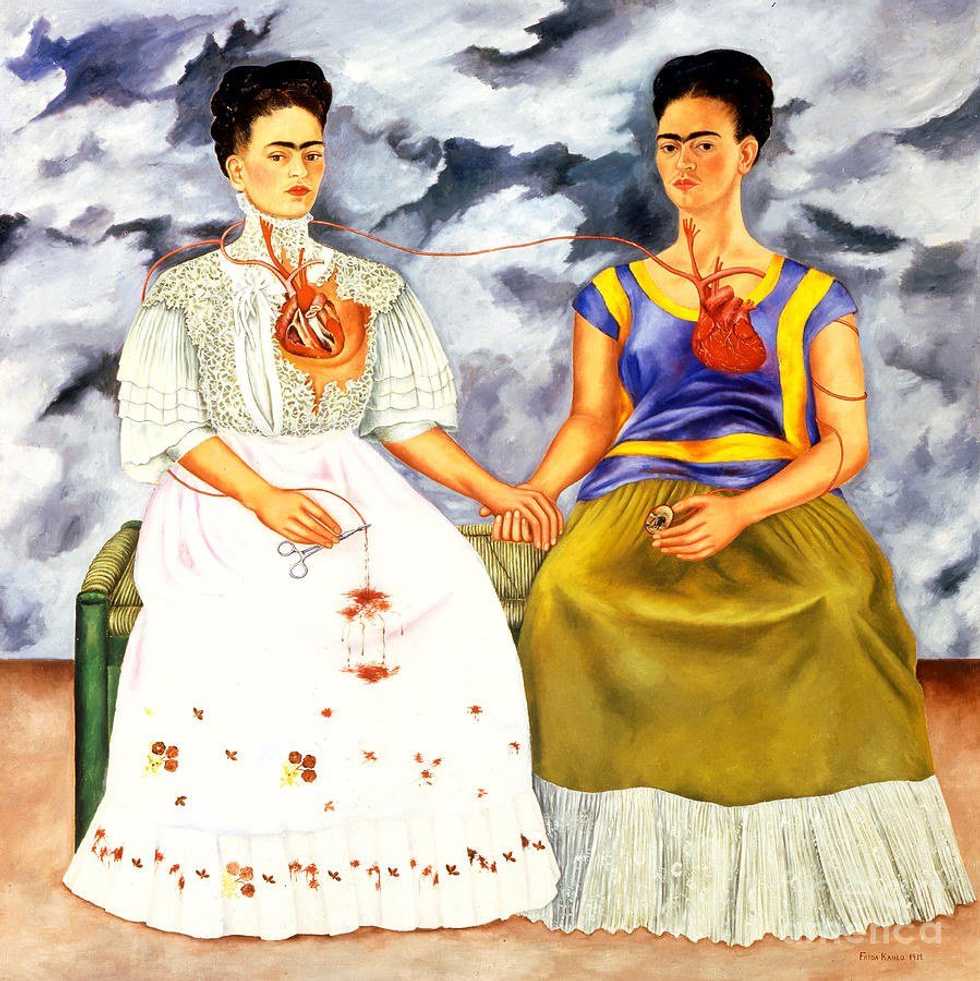
Frida Kahlo by Joanna Sierka Fillipowska
It angers me because I always thought, "Why don't people learn my language?" In our minds, learning our language is only reasonable when we were forced to learn yours. For a long time up until my last year in middle school I would spend the majority of time in class, then during my free time I would be pulled out by a tutor, and after school I would have to work an extra hour or more on learning English. Most of my life was about learning this language, and to my family I was becoming "whiter," or "gringa" as they say.
The good thing that came out of learning the English language was that I outperformed many native English speakers who always whined that they swear they were better than me.
The second good thing is that they usually teach other languages in high school. So, without extensively going through learning languages throughout your life it was hard for people who only knew English to learn another language. I knew Spanish and English which made it easier for me to learn French in high school. Which I did gloat about for a long time, because it made me feel better for having to learn English in the first place.
Another point on the bright side is that when schools actually try to be diverse and they make you do cultural projects or talk about your point of view, you get to be completely different. I once sat in a class where I was the only minority and as everyone shook their heads agreeing with each other, I got to be the only opposing view. (If you think that sounds intimidating to go against a whole class, it is. That's the life of a minority in America though, always in opposition to the "norm").
In high school, I began having an identity crisis. Who was I? It wasn't until my second year of high school that I noticed I knew nothing about my own culture, and our history classes make it so we only learn "white" history. So I learned about Europe, Britain, Germany, and America. Most of world history was about Christopher Columbus sailing around and the African Slave Trade. But, what about the rest of what happened to the minorities? What about the brilliant things we invented? I was tired of hearing about how minorities were used and murdered with a teacher smiling happily in the front of us, speaking English. I harbored that anger for a long time, and I still do. My history and every other minorities history should not be an elective for people to choose from. As if one person's history is more important than anyone else's. I was in a war with myself and with everyone else. I kept thinking I had assimilated and I didn't like it at all. That's when I tried to sink my boots into my roots, and I still am trying to this day to keep grounded. I don't want my culture to die with me, I don't want to completely assimilate.
If you are an English speaker and you feel empathetic towards us, here are some things that will make us more comfortable in a society that values your language over ours. If you hear me speaking Spanish, or anyone else speaking another language, I'm not speaking about you behind your back. So many English speakers will stop everything they are doing to try to listen in, which is super intrusive. So stop worrying and don't ask me what I said when I got off the phone just because you don't know my language, if I wanted to share it I would have done so. Don't ask me if my family knows English after hearing me speak another language to them. Yes, they do and even if they don't it really doesn't matter. We prefer to speak in our own language, that's it. Just because you cannot understand what I say doesn't give you to right to ask me millions of questions on what I did say. One last note, stop asking me what other Latino's said, stop asking me to translate people's conversations, stop asking me to eavesdrop on other Latino's. It's invasive and rude. You'd never eavesdrop on an English speaking conversation, nothing I say is more "interesting" than the next person just because I'm speaking in a different language. This is the gist of it. Imagine you're passing by millions of people in an airport or at school speaking English, you don't eavesdrop, you don't stop to listen, you don't stare at the person when they speak, and you don't walk up to them and ask if they know a different language. Just imagine getting off the phone yourself and people eagerly waiting for you to tell them what you say and people saying things like, "I almost understood what you said" because they were listening in on your private phone call. Intrusive much?
My last thought is a positive one though. Though minorities are still facing assimilation, there is a little more acceptance for us still. We are given the choice of Spanish speaking options in places there used to not be. There is a high demand for diversity in colleges and programs in general, and scholarships for people who are as diverse as us (of course there wouldn't be if society just saw us as equals and gave us more opportunities, but that's another matter). There are also policies that state non-discrimination against us (though it's iffy if that actually works). All in all, I just want y'all to understand that our language is sacred and we are never going to give it up.