I have always been hungry. There hasn't been a time in my life that I can recall in which I haven't daydreamed about chicken stews, spiced vegetables and fragrant rice. It was easy, too; loving food was so second nature because I grew up in a family where my mother cooked outstanding meals from all over the world every night. Even when my relationship with food was at its worst, I could never lose my deep appreciation for flavor. Food is an event, and in the current social landscape, hunger seems to be more of a thing to suppress than to feed. But hunger is something that should be celebrated, not discouraged.
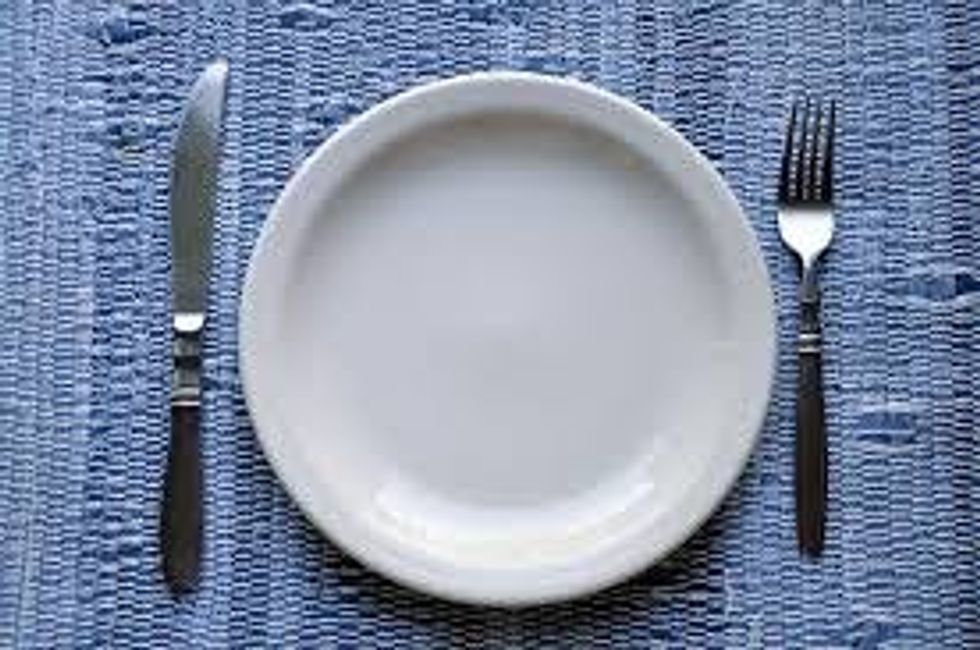
The term "Clean Plate Club" wasn't something I initially celebrated, however. The term was first brought to my attention when I was out to eat. After the meal was over, and I'd eaten all my food, the waiter came to take all the plates away. Without incident or comment, he'd taken up everyone else's plates with the usual gentle clamor of dishes that always accompanies trying to stack ceramics quietly. Then he shuffles over to collect mine. He picks up the plate and smiles, seeing it crumbless, and says to me amused, yet approvingly, "Yeah, clean plate club over here." And I smiled, probably laughed politely in agreement, and nodded as well for effect. But inside my head I was absolutely dumbstruck. What does that even mean? Honestly, I was offended, and the comment has stuck in my mind now for years. But now that I'm older, I think the clean plate club has something palpable to it. And I'm not offended anymore. I think it has power, a lens of positivity placed over the kaleidoscope view of food and how we eat it.
When I was a child, after I'd eaten a particularly filling meal, I'd strut around with my full stomach puffed out comically, encouraging my mom or grandma to touch it and behold the fullness. And they'd gasp and praise me every time without fail. Yet, somewhere on the twisted path of adolescence, that changed. I was sensitive about how much I ate. I was quiet about it, too. Somehow I got the idea in my mind that eating less was good, desired even. That eating less was something I had to do in order to receive praise. And I know now that that's completely false, but I was just learning again how to be kind to myself when that waiter said what he did and it struck a nerve. It reminded me of how powerless I'd felt before. Yet, here I was, clearing a plate, and I didn't feel so powerless anymore.
As a woman in the United States, I feel there are specific pressures cast on us when it comes to eating. We can't eat too much, especially if what we're eating is unhealthy. We're not allowed to publicly express our hunger, as if we're beings without craving. These negative attitudes are even in the way food is presented to us: chocolate is "naughty;" we're eating cake together, we're so "bad." Our desire to be fed has to be a secret. "It'll be our little secret," we'll say before diving into a cheeseburger. It's nonsensical. We have to eat to live.
That's what the clean plate club has come to represent for me. None of this nonsense about counting calories or going out of your way to keep your waistline in check. It's about celebrating our hunger. We are organisms who need sustenance. We live because we eat! The clean plate club is a shoutout to all the people, women especially, who own their hunger. Be proud. Be hungry. Be loud about being hungry. You are not an apology, so don't fold under your hunger like one. It's time to finally like eating food again.