
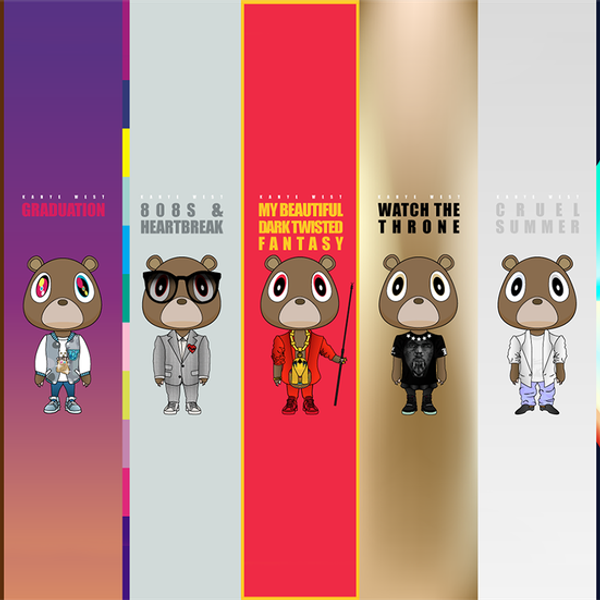
To call Kanye West a groundbreaking artist would be an understatement. As a producer, West has sampled songs from countless genres to produce his incredibly varied tracks. In keeping with a theme, each of his more recent albums have been experiments in differing, related genres of music. While his “College Dropout” series was undoubtedly a classic endeavor in hip-hop, projects like “808’s and Heartbreaks” have explored a more R&B sound, and West’s 2013 album “Yeezus” is an Industrial-influenced album. Even “My Beautiful Dark Twisted Fantasy,” considered by many to be West’s crowning achievement, was not in the standard markers of “hip hop,” sampling from Indie artists like Bon Iver and Intelligent Dance Music (IDM) artist Aphex Twin. And with the release of West’s eighth studio album (counting “Watch the Throne”) “The Life of Pablo,” our Lord and Savior Yeezus has staked his claim in an unlikely place: Gospel Music.
It should come as no surprise to long-time Kanye fans that much of "The Life of Pablo" draws on Gospel influences: West’s Christian upbringing is often a subject of his music, both in positive and negative lights. “Jesus Walks,” the breakout hit of “The College Dropout,” has a profoundly strong message about the need for religion in the violent world that West describes. However, songs like “No Church in the Wild” and “Devil in a New Dress” see West denouncing God for the worldly pleasures of his fame. “Yeezus” saw West comparing himself to God and Jesus Christ, and even has Christ asking West “What up, Yeezus?” on the track “I am a God.”
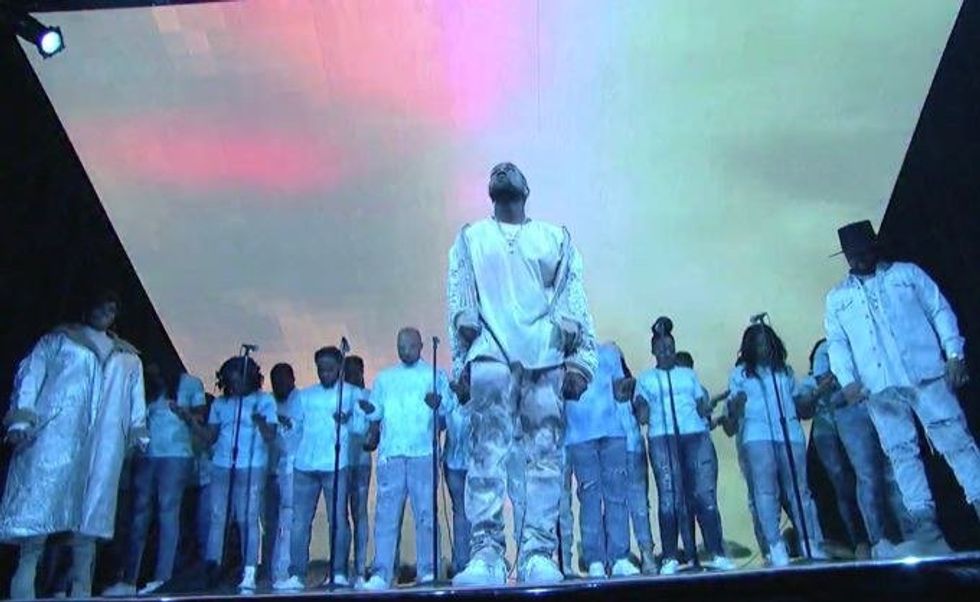
“The Life of Pablo” marks yet another chapter in the complicated background of West’s public and musical character. Working with Gospel legend Kirk Franklin (who recently defended his work with Kanye) and R&B star Kelly Price on “Ultralight Beam,” the first track on TLOP is demonstrative of the religious nature of the album. Franklin’s use of a gospel choir and the opening lines of the track being delivered by an impassioned child exclaiming “We want the Lord” establishes the album as in part about West’s struggle for peace in his own life. West asks for “serenity” and explicitly tells the listener that what we are listening to is West’s “God dream.” Price condemns those who “persecute the weak because it makes you feel so strong,” and acts as the gospel soloist, asking God for his grace in West’s life. The most moving part of this song comes from rapper Chancellor Bennett, aka Chance the Rapper. Chance’s verse details his appreciation for the things that God has given him, such as his daughter, Kanye’s influence on his career and his life. In “Ultralight’s” closing, Franklin describes the song as a “prayer” for the weak and disheartened, and the choir’s bellowing of faith to close the track leaves “Ultralight Beam” as the standout track on the album.
The album’s gospel influence is heard throughout its tracks and titles. In “Father Stretch my Hands Pts 1-2,” the backing of West’s sexually explicit lyrics are filled with gospel choirs, and the exit of “Pt. 2” is a sample of yet another choir from Nina Simone’s “Do What You Gotta Do.” “Low Lights” is a track whose monologue is rumored to be modeled after the Apostle Paul’s writings in Romans 8, which West has mentioned explicitly on his Twitter. “Waves”, who you can thank Chance for, is an almost ethereal track, its use of synthetic effects and singer Chris Brown’s vocals visualizing what I would describe as an ascension to heaven. It is after “Waves” that TLOP takes a dark turn, with tracks like “Real Friends” and “30 Hours” detailing many of the regrets West has in his life and discussing his relationship with his family and past self. It is perhaps for this reason that West chose to explore Gospel influences for the album, as the themes of self-reflection, liberation and salvation are central in West’s message.
This is an album, however, where West and company reveal lives that are anything but sinless. Tracks like “Famous” and “No More Parties in LA” are full of drug usage, gratuitous sex and West’s trademark braggadocios misogyny. However, it is this mixing of message and music that makes TLOP a genius project for West. Like a modern Durkheim, West mixes the sacred and the profane to give a powerful look into his own psyche, revealing a man struggling to find balance and reconciliation with his past. He is unapologetic, living a grand, public life and putting his success in the faces of those who have doubted him. West is unafraid to show his struggles, demonstrating that even “gods” bleed. But at the end of the day, West’s combination of gospel, R&B and hip hop demonstrate his skill as a producer, his vision as an artist and his message as a man. In short—Yeezus is here to stay.Note: Interpretations of tracks off TLOP have been in part based on the Slate article "Your Track-by-Track Guide to Kanye West's 'The Life of Pablo.'"

















