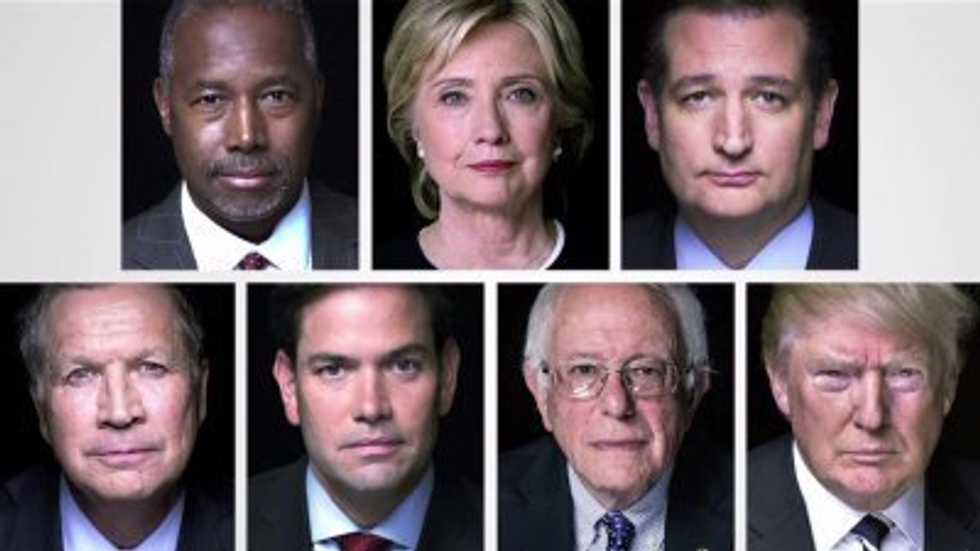
In the past week, the news has seemed to revolve around Super Tuesday, a day when a dozen states held their primaries. However, it is much more than that because the winners of Super Tuesday have always become the parties’ nominee. Ever since 1984, there has been a "Super Tuesday," or rather, a day where a good chunk of states hold their primaries. This is important because it shows which candidates have the momentum to carry them onto the nomination, and because there are some pretty large states, like Texas and Alaska, which have a lot of delegates at stake.
That being said, the individuals who have won the most states on Super Tuesday have always gone onto being their parties’ nominee. This means that it is very likely, based on past elections, that Donald Trump will be the Republican nominee, and that Hilary Clinton will be the Democratic nominee. However, if this election were anything like past elections, Donald Trump would not be the Republican frontrunner, rather someone like Marco Rubio or Jeb Bush would be. Bernie Sanders also wouldn't have as much support as he now does. Due to this, it is clear that this election is nothing like those of the past, and it is possible that if the Republicans can rally support around one candidate, the winner of Super Tuesday, Donald Trump, will not be the parties nominee. That being said, a lot about the direction of the race, of the parties, and of the candidates can be seen by examining the results from this influential day, so what can we take away from this years Super Tuesday?
1. Trump is on the rise.
With seven primary wins, Tuesday was a great night for the Trump campaign. He now has 329 delegates and is picking up momentum with over 30 states still needing to vote.
2. Hilary is gaining momentum.
Like Trump, Hilary was able to secure seven primary wins, including all of the southern states up for grabs where she knew she'd win big. With the addition of Tuesdays delegates Clinton has increased the gap between her and Sanders dramatically. She now has 1,058 delegates and only needs 2,383 to secure the parties nomination.
3. Ted Cruz has been given a second chance.
As Super Tuesday drew near it was very unclear how Ted Cruz would perform. This is especially true in Texas where frontrunner Donald Trump was leading in the polls. However, the Cruz campaign was able to rally support in Texas, and nearby Oklahoma, giving him two more primary wins. This has left Cruz with 231 delegates, not very far behind Donald Trump. When looking at the numbers it seems he would be the best to go up against the frontrunner, but will he be able to rally support from the more moderate and establishment republicans to beat Trump? Only time will tell.
4. Bernie needs to gain support of African Americans.
Bernie came away with four primary wins on Tuesday; however, his message still seems to be falling short for black voters, who support Clinton over Sanders by 74 to 17. If he wants to shrink the gap between himself and Clinton he needs to gain much more support from the African American community. With only 431 delegates, Bernie is falling behind,
5. Marco wins his first state, but is falling behind.
Like Bernie, Marco is falling behind, leaving a large gap between himself and the frontrunner. As the more moderate, somewhat "establishment" candidate, Marco is having a hard time connecting with the more right wing members of the party. He did however win by a large margin in Minnesota, granting him 110 delegates.
6. Hilary is adopting Bernie’s more progressive agenda.
There is no question that Bernie Sanders' candidacy has pushed Hilary Clinton in a more progressive direction. However, her speech after winning big on Tuesday was more progressive than ever. Watch her powerful speech here.
7. The Republican field must unify to beat Trump.
The differences between the Republican nominees is telling of the differences within the party. However different their policies and opinions may be, they must consolidate and unify if they plan on beating Trump. This is very evident when looking at the amount of delegates Trump has not won, 374, which is more than he has won. If one candidate (likely Cruz or Rubio) could unify the party there is a chance Trump will not be granted the nomination.