
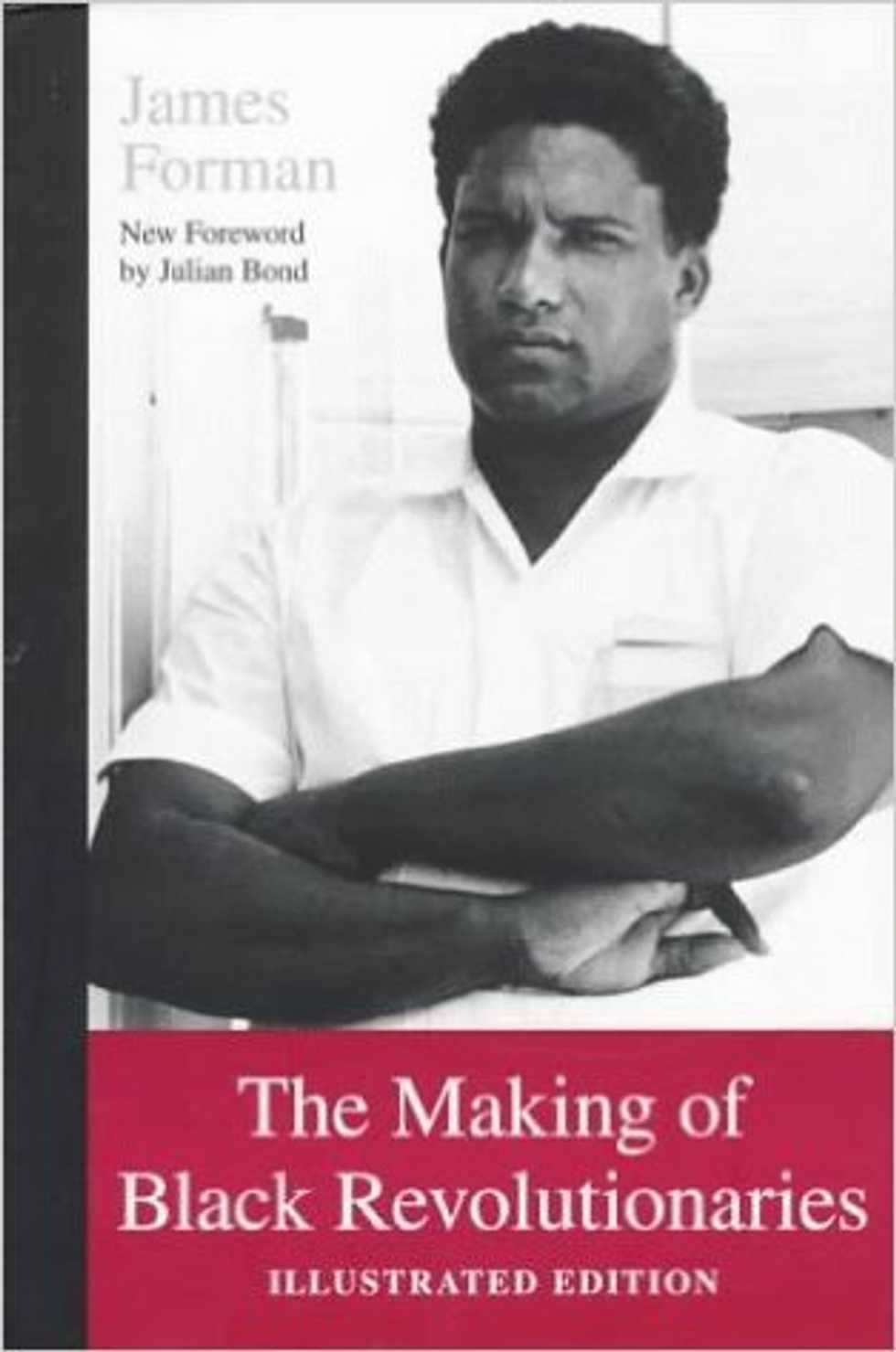
With the examples that I was given, I was convinced that to be a leader came with great responsibility. Within the United States, being a leader who is black seems to come with an even greater responsibility. Navigating with this underlying sentiment that things here were never meant for us to begin with, identity becomes both a theme and constant inner conflict within black literature. This, particularly during Segregation and now. James Forman's "The Making of Black Revolutionaries" addresses a lot of misconceptions that some may have about the Civil Rights Movement. In addition, it documents who did what, including various testimonies from individuals who were major keys during the Movement. Pinpointing one overarching theme throughout the entire book is difficult for that reason. Although, he does do an excellent job at humanizing the leaders who we like to think of as heroes.
The beginning of the novel speaks on his personal experiences growing up in Chicago in the 1930's and 1940's. Already, James is unpacking what it means to “come of age” as a black masculine being. As he recalls his earliest sexual encounters, painting a picture of an early sexualizing of black girls and the part that peer pressure plays in the hyper-masculine behavior of some black boys (without necessarily using those terms). The author talks about how "sexual play" was commonplace, how the older boys threw his younger cousin, Juanita, to the ground and insisted that he should be next, whether this be with Juanita or with the fist of one of those older boys. They boys blur together and become a shout that says "Pull up her dress! You better," (on page 16). It states, from then on, James believed that sex should be behind doors and that women shouldn't be mauled.
A few pages earlier, James is being charged for a crime that he did not commit. Cops pull him over, refer to him as nothing but a "Chicago slick" or a nigger, try to get him to confess to the crime that he did not commit, punch him in the stomach, and then proceed to punch him in the stomach, like the cop forget something in his belly. The book states "This is Los Angeles and white cops are white cops...and I am tired and there is nothing to tell," (on page 9). This scene doesn't actually end. Much like now, the police here are giving this author a baton party and are calling it “enforcing the law”. Much like now, the police are forcing an innocent black male to choose between either jail, or an unfair fight with the disproportionate chance of being killed at the end of it.
Interestingly, the book does not hail Dr. King. In fact, James delivers a critical view of Dr. King that usually goes unheard. It mentions the efforts of some of the countless black folk that worked towards the passing of the Civil Rights Act, such as the students of the Student Nonviolent Coordinating Committee (SNCC), whose work often gets credited to Dr. King. In regards to Dr. King, it states that "the masses of young people who were the backbone of the protest in Birmingham and throughout the South had been cheated once more," (on page 319).
This book serves as a reminder of how much there is to learn about the Civil Rights Movement, a reminder especially for those that advocate for either equality or a justice that should be derived from it. Therefore, it should be taught in schools. People of color are not accurately taught their history by McGraw-Hill. Black history and US history were never mutually exclusive. Black history should be a black person's birthright. We should not be fed a whitewashed history in every month but February, or forced to be apathetic about that. "The Making of Black Revolutionaries" can spark someone to pick up where some of those mentioned in the book left off.