This is not a piece about how to deal with death, but it is about death.
I was going to enter with what a cheery topic, but, let’s be honest. In the past I’ve written about graveyards, telling the future, and art-related breakdowns, so this really isn’t that much of a jump for my BrandTM.
When we take a look at death through an anthropological lens, the rituals surrounding it are surprisingly similar. We all want to honor our dead- but there is no universal idea of life, death, and personhood.
There’s a concept that I very much like called liminality. Liminality is the transitional or initial state of a progress, or occupying a position at or on both sides of a boundary or threshold.
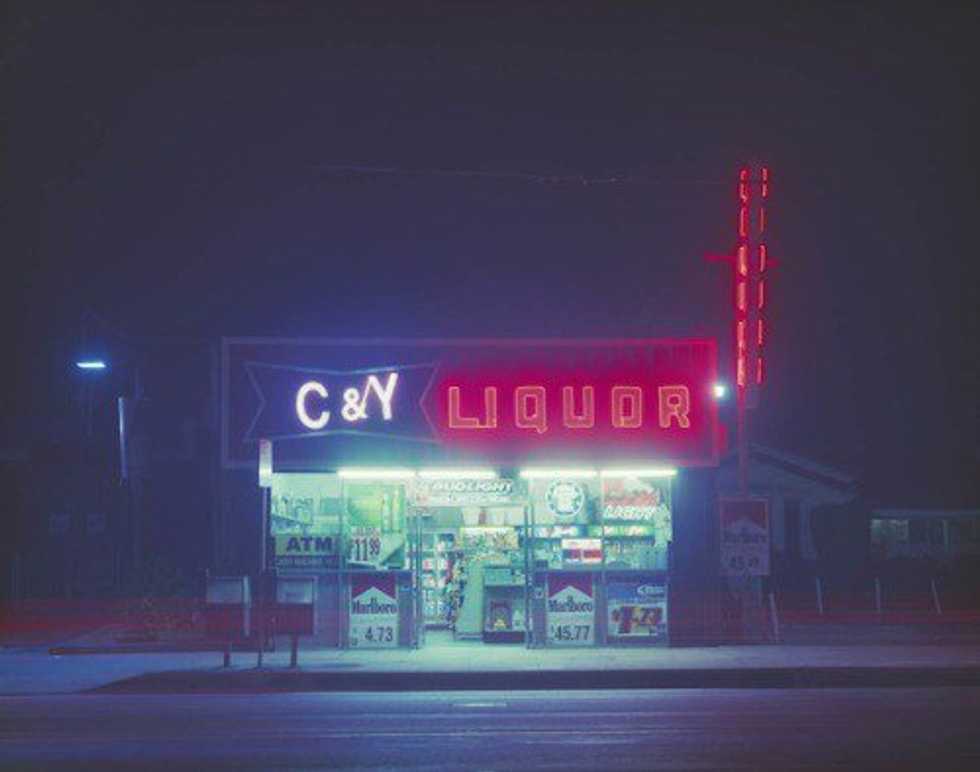
Have you ever had to stop at a gas station, or a truck stop late at night, for food or for water or for fuel? This works best when it’s sort of foggy or misting, so that the neon glows take on a weird otherworldly quality. And when you get out of the car and you stand by the gas pump, even the metal feels weird under your fingertips, like something alive-but-not, and there’s no one around that you can see, and maybe at this moment you’re the only person left alive in the world.
Liminality is where time seems to slow, where we can straddle the line of life and death. I think every person, regardless of background or geographic location, has experienced this weird transitional phase at some point in their life.
The last time I experienced this I had just dropped my grandmother off at her home- my grandfather had died somewhat recently, and she doesn’t like to drive. He was always the one that drove. I was driving home, along this dark and serpentine road, and I had this overwhelming idea to just shut the headlights off and drive in the dark.
The windows were open and all that was pouring in was the wind, loud enough and freezing, it was probably December, snow was on the way- and all I could hear was white noise and the urge to turn off the lights.
I didn’t, of course, and a second later a car with too bright headlights crested a hill and I was blinded, for a moment, kept my hands steady on the wheel and just kept driving. I hit like 6 red lights on the way home and didn’t turn on the radio.
Maybe it happened to you, when you were walked outside after the snow and the sky was pink and seemed all at once overbearing and too far way. Or when you sat by your window and the street lights were smeared in the rain and there were no cars and no sirens on the intersection that’s always screaming. Or when you were sat in a subway car in the night by yourself and it seemed like the last stop was a very long time ago and for a moment you were struck dumb, completely sure that you would never pull into a station again, that you would ride these tracks forever.
But that’s what I’m talking about. Those moments, in the dark, by yourself, where reality seems to twist itself, just a little, like the border between worlds get a little thin.
I think the Day of the Dead is an excellent example of liminality. Easter, too. Any day we celebrate someone of the dead, or coming back from the dead, when we give the dead our attention and our thoughts, I think it affects us.
I’m headed to a funeral- an internment, if you’d like to be precise, as I do- tomorrow, which is probably the reason I’m ruminating on the concepts of death and liminality. So I don’t know. But death, as much as we sweep it under the bed and hide our eyes from it, is always there, in the background, and I think it might make things a little easier for us if we let the knowledge of it come inside, sleep on the floor, at least. This is not an piece about how to deal with death, but rather what happens when we do.