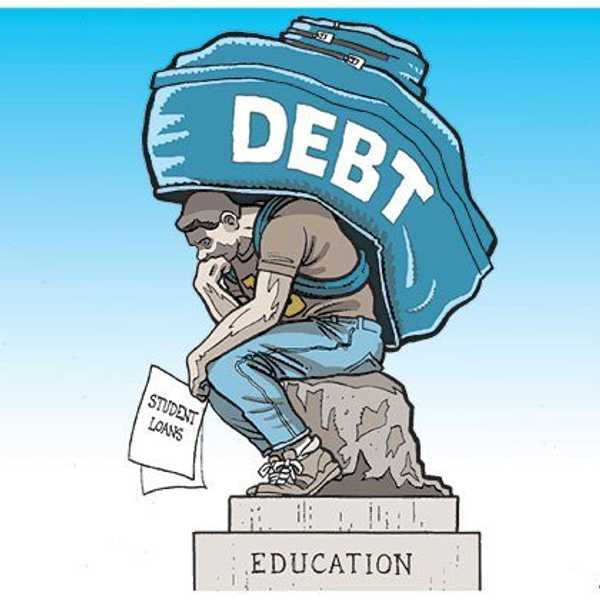

College is expensive. All across the country, students and their families alike have to figure out how to pay for it. Some of us apply for and receive scholarships and grants, and some of us take out loans, use work-study, get summer jobs--whatever it takes to cover the overall costs of attendance.
The amount of aid each student is eligible to receive is assessed through the CSS profile, which is managed by the College Board and through the FAFSA. These weigh parental income and the family’s potential financial contribution based on family and student assets. Based on this, a university will then assess a student's need for additional financial aid to pay for college.
Students can also cover their college costs with student loans through programs managed by the United States Department of Education. Although the system of Student Loans tries to remove financial barriers standing between students and their access to higher education, we all have to be cautious. Ultimately, we have to repay the loans with interest.
The U.S. Department of Education offers several types of student loans, according to its website, studentloans.gov. These can be granted to students directly as subsidized or unsubsidized loans. Direct Subsidized loans are granted to undergraduate students who demonstrate financial need, while Direct Unsubsidized loans can be made to undergraduate students as well as graduate or professional students, and they do not require the student to have any financial need.
Other loan options include the Direct PLUS loans and Direct Consolidation loans. Direct PLUS loans are lent to graduate or professional students as well as to the parents of undergraduates. These funds are intended to pay for expenses not covered through other forms of financial aid. Direct Consolidation loans combine the totality of a student's eligible funds to create a single loan to be lent to the student through a loan servicer, a middle-man company that collects payments and is responsible for maintaining student loans.
The other federal student loan program, the Perkins Loan, is for both undergraduate and graduate students who demonstrate what is known as "exceptional" financial need. This program is based within universities themselves, the actual lenders of the funds.
Students also have the option to take out student loans from private sources, often banks. However, the interest rates accompanying these loans are usually higher than those accrued with Federal loans.
If you are considering taking out a student loan, remember to first speak with your parent(s) to ensure that this is the best option for you. Secondly, try to predict and evaluate your financial position when you finally complete school so you can better foresee the role loan repayments will play later. Once you determine your loan eligibility, make sure you research the loan program, paying particular attention to the interest rates and repayment options.
For more information, speak with your university’s financial aid department, or visit studentloans.gov.