Last week, I was waiting in line at the post office when someone behind me noticed the Special Olympics t-shirt I was wearing. He asked me if I had attended the event myself, saying his brother participates in it each year. We started talking about what a wonderful experience it is for both volunteers and participants, which transitioned into a conversation about his brother and the challenges he faces as a young adult with a mental disability. While we were talking, someone across the room was messing with the wrapping paper display, and we heard the person he was with call him retarded for knocking it over. I quickly exchanged glances with the person I was talking to, and he shook his head and shrugged. “I hear it everywhere," he said. "It makes me so sad, because I imagine my brother and never once has he knocked over a wrapping paper display.”
The word "retarded" has evolved from its former clinical definition to an insult — a slang word used to mock something for its stupidity or to call someone out for his or her foolishness. As a result, people with disabilities are being stereotyped by the degrading adjectives the insult implies. The use of the word as slang perpetrates a culture of ignorance and insensitivity, and it’s having a substantial effect on those people and their families. It’s so important to remember that there’s a difference between definition and implication. Saying something is retarded and then trying to justify your word choice with a worn out definition doesn’t make your comment acceptable or any less insulting. It’s disrespectful, and the degradation of the word concurrently degrades those who suffer from disabilities.
On the other side of the coin, others are reacting to the slang word by calling for change. The word retarded is frequently censored as "the R-word" in a recent crusade against its negative connotations. Originally a clinical description used to describe patients with mental or intellectual disabilities, the R-word is no longer favored among people forced to cope with such disabilities. There is a growing effort to use "People-first Language," which aims to eliminate prejudice and retain the image of the individual by prohibiting their disabilities from serving as defining characteristics. It works to emphasize the person before the disability; it is to say "a person with a learning disability" rather than "a disabled person." I know I wouldn’t want to be defined by my disabilities, so I believe it’s important not to define others by theirs. Just as we say "a person with cancer" instead of "a cancerous person," we can stop using the word retarded to define people with disabilities. People-first Language could help eliminate the R-word in its entirety – including its place in the clinical world. Perhaps then the disrespectful implications of the slang word would not be as relevant, and people with disabilities would no longer be credited with alleged yet incorrect stereotypes.
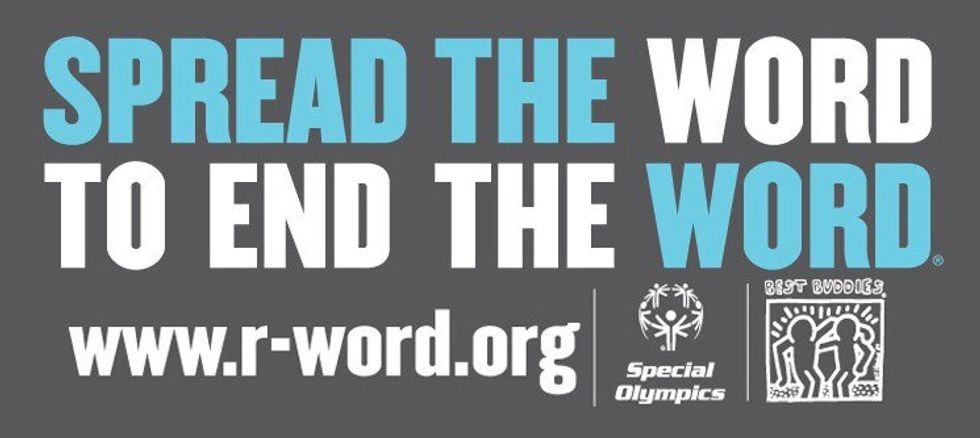
The Special Olympics and Best Buddies have created a campaign to help put an end to the derogatory use of this slang word. Take the pledge to stop and rethink your word choice.