I have struggled with both Bulimia Nervosa and Binge Eating Disorder ever since I was a young child, but I didn't seek help until I was 15-years-old. Treatment was expensive, and it was not covered by insurance because I was not "sick enough." In other words, I was not thin enough. Eventually, due to lack of funds and lack of understanding from my parents, I had to stop seeing my therapist. For three years, I had to embark on the journey of recovery without any professional help. Thankfully, I had the opportunity of volunteering for The Alliance for Eating Disorders Awareness, a nonprofit based in South Florida that offers free support groups and an annual treatment referral guide. Through them, I met so many incredible advocates and professionals who all work tirelessly to bring awareness to this deadly disease and help people recover. Thanks to The Alliance and my newfound treatment team at LSU (which is free, by the way), I am now very strong in my recovery and have endless support, which is amazing considering where I was just a few years back. Some of the advocates I have connected with are mothers who lost their children to an eating disorder. My heart breaks for them, and because of them, I am making it my mission to not only make sure that everyone has access to the treatment they need, but also bring awareness to the number one most fatal mental illness.
On my Facebook newsfeed, I see articles and long, heartfelt posts about this monster we call ED. Unfortunately, most (if not, all) of the people who are reading and sharing these posts are those who have struggled with an eating disorder themselves, or who are supporting someone who does. There has yet to be some big expose being shared among the masses educating those who have never even heard of an eating disorder. There have been a handful of Lifetime movies and a few documentaries, but they are all so old that you can literally watch all of them on YouTube.
About a year ago, all of us advocates started sharing the Nine Truths About Eating Disorders. Very quickly, the Nine Truths were published by major news outlets and the general public was finally being informed accurate information (truths) about eating disorders. Around the same time, the founders of World Eating Disorders Action Day posted a video on their website of some prominent actors reciting the Nine Truths. These actors were in the midst of filming the soon-to-be Netflix sensation, "To the Bone." Had I not seen this video, I would have never known about the film a year ago. But since I did, I've been researching this movie — finding out everything from where it was filmed to who the producers are. For the last year, I have been anxiously awaiting the trailer and the excited reactions from fellow advocates. Just last week, Netflix released the trailer. And to my surprise, the response from advocates to this film has been a lot of criticism. The same people who shared the video of the actors reciting the Nine Truths are suggesting Netflix not stream this movie.
"To the Bone" will not be officially released until July 24th, yet people are already making judgments against the producers and assumptions about the lead actress before actually seeing it.
A main concern is that "To the Bone" will be triggering. As any movie that covers a sensitive topic, yes, it most likely will be for some people. People who have struggled with an eating disorder should view it with caution. Another concern is that the information about eating disorder in the film will be inaccurate and perpetuate stereotypes. There have been questions about whether or not the cast will show diversity as well, or if it is just about a young, thin, middle-class, white girl who is very sick, but ultimately gets better in the end. People have valid concerns about whether or not other eating disorders, such as Bulimia Nervosa and Binge Eating Disorder are portrayed. Finally, people are concerned about the actress, Lily Collins, and how she lost weight for this film even though she previously suffered from Anorexia Nervosa herself. All of these concerns and questions are completely valid. The issue is people giving answers to these questions and speculating what this film is going to show before it has even be released.
Right now, everyone is reacting to a trailer. People are basing their judgments of a two-hour film off of a two-minute trailer.
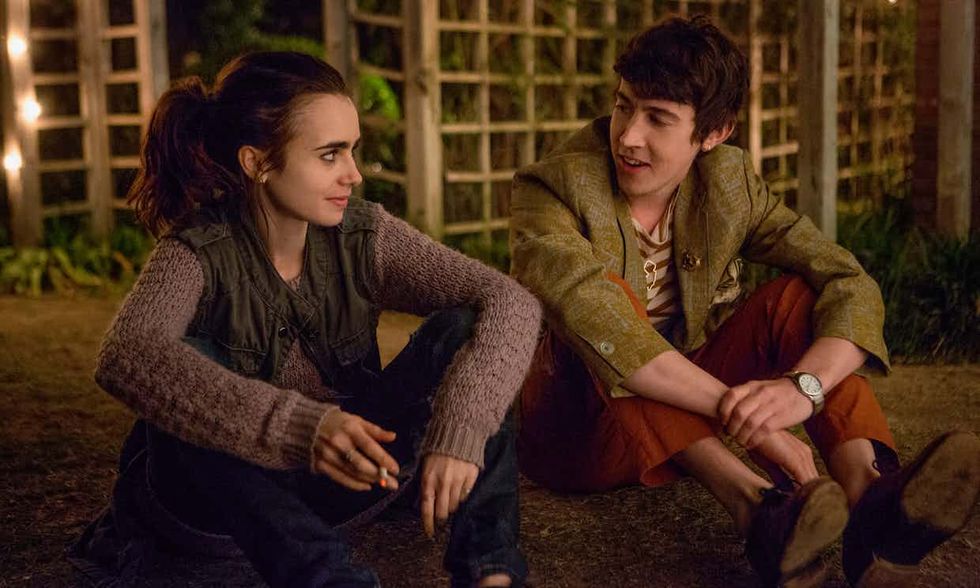
On Monday night, my dear friend, Sharon Hammer, a rising sophomore at Hamilton College, attended the screening of "To the Bone" in New York City, which was hosted by Project HEAL with the lead actress Lily Collins and actor Alex Sharp there to answer questions. Without revealing any details about the film, she believes that "To the Bone" does not glamorize eating disorders, unless of course, death is glamorous. She learned that the lead actress, Lily Collins, did not lose an extreme amount of weight for this role. She had a body double and the producers used CGI technology.
As for questions about diversity, her story was not the only one represented. There were other characters that played a big role. Bulimia, Binge Eating Disorder, and OSFED were represented. There were black and Hispanic women who played major roles as well as a straight man. The characters were also many different sizes, proving that you can be sick at any weight.
As for whether this film will be triggering, that can only be answered on a personal basis. Everyone has different triggers and I know that this movie will not be one of mine. But I have friends who believe it will be for them, and they are choosing not to watch it, which is completely okay and admirable. Sharon said regarding the possible triggers,
"The material may be triggering at some points, but because so many ED survivors were involved in the film (including Lily Collins and director/writer Marti Noxon) it does not veer into gratuitous suffering. I spoke to others at the screening to get an idea of the variety of perspectives and the general attitude was positive if apprehensive due to the triggering material, but when portraying a sensitive topic it comes with the territory."
Another reason why I believe this movie has gotten a lot of criticism is because of "13 Reasons Why." In high school, I had the opportunity to meet and hear the author, Jay Asher, speak, long before there was talk of a Netflix adaptation. The author originally intended for "13 Reasons Why" to be a thriller and later the publishers realized they could capitalize off of making it a Public Service Announcement. "To the Bone" is not the same as "13 Reasons Why." To quote Sharon again,
"To the Bone" shows the anguish of the families, the frustration of the lead character, and the ultimate choice between recovery or death… I suggest everyone, if they believe they can handle the material portrayed, watch it and develop their opinion from the film itself."
As an advocate, it is my primary goal to raise awareness to the general public, not people who are already experts about eating disorders. I personally believe that "To the Bone" will be very beneficial for those who do not know a single thing about eating disorders. I also think that there will never be a perfect movie or documentary about eating disorders that will accurately portray the hell people go through with an eating disorder without triggering someone. Earlier I spoke to Alisa Fliss, a woman who was featured in the 2006 documentary, "THIN" (which a lot of people also found triggering). Her words lined up with my thoughts best:
"Part of being in recovery is taking ownership of my actions. If something is going to 'trigger me,' and I make the choice to still engage in it, then I am not making choices that support my recovery. We are all responsible for our own choices and actions. For me, recovery has always been about not avoiding triggers but, rather, facing them head on, acknowledging how it makes me feel, and choosing not to act on my eating disorder — despite those feelings. Triggers do not have to result in steps backward. In fact, they could be huge opportunities for growth when confronted and not acted upon. I never used a 'trigger' as an excuse. In fact, early in my recovery someone once said something to me about my weight that they probably shouldn't have said. I could've played the victim but, instead, I remember telling my therapist that, the only way I was going to get better was for people to aim, pull that 'trigger', and shoot, over and over again. The real growth could only come from what I choose to do in that moment. Do I get back up, or do I allow it to keep me down...and in most cases, I got back up."
Since eating disorders are often fueled by competition, there will be people who will watch "To the Bone" to purposely trigger themselves. Unfortunately, that is one deadly part of this illness. These same people, however, are also going to search for a pro-ana website, especially if the movie is not available. If someone is intentionally triggering themselves, then I would prefer that the positive seed of recovery be planted in their brain, rather than the damage the latter option would cause.
To conclude, "To the Bone" is not a documentary, and will not accurately portray everyone's experience with an eating disorder. Some may relate it to it in its entirety, while others may relate to bits and pieces. To quote Sharon one last time,
"present at the screening where many healthcare professionals, ED survivors, and family members. "To the Bone" was under scrutiny and many admitted it toed the line between an individual, semi-autobiographical expression and informative piece well."
Again, I feel that "To the Bone" will be the most beneficial for people who know nothing about eating disorders. I am most passionate, however, that before we make assumptions about this film and who it will or will not benefit, we must watch it first and form our own opinions. If you are actively struggling with an eating disorder or are at a place in your recovery where you are easily triggered, talk with your treatment provider(s) before watching this film and always proceed with caution. Remember that the underlying message is not a "how to" guide for eating disorders, but instead, it's about recovery.
I will do everything in my power to raise awareness about this deadly disorder and never stop fighting until treatment and recovery are accessible to everyone. Remember, never judge a book by its cover, and that includes "To the Bone." I.K.S., this one's for you.
If you or someone you know is struggling with an eating disorder, please reach out to The Alliance for Eating Disorders Awareness: http://www.allianceforeatingdisorders.com/